
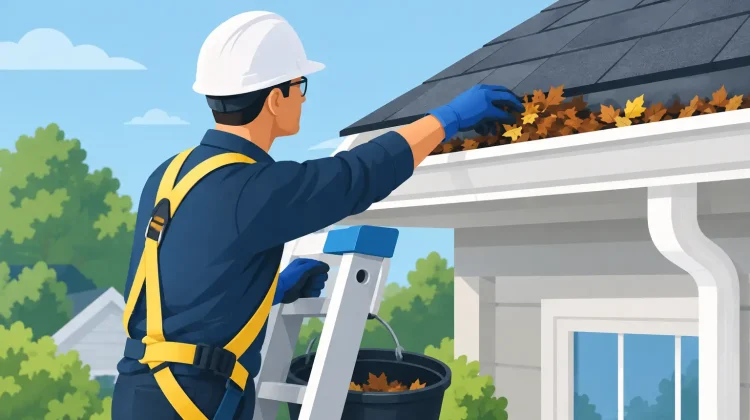
A clogged gutter can turn a hard rain into an overflow that stains siding, floods landscaping, or sends water toward the foundation. But a guide to gutter cleaning safety should begin with the risk that deserves the most attention: climbing onto a ladder to clear debris is not a routine chore if the conditions, equipment, or roofline are unsafe. A clean gutter is valuable. Avoiding a fall or damaging the gutter system is more valuable.
For homeowners and property managers in New Jersey and Staten Island, seasonal leaves, coastal wind, snow, and sudden storms can all create drainage problems. The right approach is to assess the work before starting, use stable equipment, and know when a professional gutter crew is the safer choice.
Start With a Ground-Level Inspection
Do not begin by setting up a ladder. Walk around the building first and look for signs of trouble from the ground. Overflow marks on fascia boards, water stains on siding, sagging sections, plants growing out of the gutter, and downspouts that discharge too close to the foundation all point to a drainage issue.
This inspection also helps you identify hazards. Look for soft soil, uneven pavement, loose pavers, sloped driveways, overhead utility lines, low branches, and areas where the roof edge is especially high. A ladder that appears stable from one angle can shift quickly when its feet are on wet grass or an uneven surface.
If you see gutters pulling away from the house, loose fasteners, cracked joints, or a section that is visibly bent, do not lean a ladder against it. Cleaning may not be the only job needed. Adding your weight or ladder pressure to a damaged system can make the repair more extensive.
Check the Weather Before You Work
Dry, calm weather is the standard for safe gutter cleaning. Wet roofing, damp ladder rungs, wind gusts, and icy surfaces raise the risk of a slip or ladder movement. Even after rain has stopped, moisture can remain on shingles, leaves, and shaded areas of the property.
Avoid cleaning gutters during thunderstorms or when lightning is possible. Also postpone the work when winds are strong enough to move a ladder, blow debris into your face, or make handling tools difficult. In late fall and winter, wait for frost and ice to clear completely. A gutter may be clogged, but rushing to clean it during unsafe weather is rarely the right answer.
Timing matters, too. Midday often provides better visibility and drier conditions than early morning. Give yourself enough daylight to complete the work without rushing.
Use the Right Ladder, the Right Way
Ladder safety is the center of any homeowner guide to gutter cleaning safety. For a one-story home, an extension ladder is often safer than trying to reach from a step ladder. It should extend at least 3 feet above the roof edge or landing point if you need access to the roof. For taller buildings, steep lots, or difficult rooflines, professional service is usually the better decision.
Place the ladder on firm, level ground and follow the 4-to-1 rule: for every 4 feet of ladder height, position the base 1 foot away from the wall. Secure the ladder if possible, and have another adult hold the base while you begin your work. A ladder stabilizer can help keep the ladder off the gutter itself while spreading contact across the wall or roof edge.
Never rest a ladder directly on the gutter. Gutters are designed to direct water, not support concentrated ladder weight. This can crush aluminum, loosen hangers, pull fascia boards, and create a repair issue where there was only a cleaning issue before.
Maintain three points of contact whenever possible, such as two feet and one hand. Keep your belt buckle between the ladder rails rather than leaning sideways to reach another section. The safer method is slow but simple: climb down, move the ladder, and climb back up. Never stand on the top rungs, and do not carry a heavy bucket while climbing.
Wear Basic Protective Gear
Gutter debris is often wetter and sharper than it looks. Gloves protect against jagged twigs, rusted metal edges, insects, and material that may contain animal waste. Wear sturdy, slip-resistant shoes or work boots rather than sandals or smooth-soled sneakers.
Safety glasses are useful when clearing compacted debris or flushing a downspout. A small amount of mud, grit, or water can easily fall back toward your face. Long sleeves can help protect against scratches and poison ivy near the roofline.
Use a small bucket with a secure hook or a tool belt for debris and hand tools. Do not overfill it. Heavy containers can throw off your balance and increase strain on the gutter or ladder. If the debris is packed tightly, remove it in small handfuls instead of pulling hard on a large mass.
Clean Carefully Without Damaging the System
Start at the downspout opening and work outward. Remove leaves, twigs, roofing grit, and other debris by hand or with a small plastic scoop. Metal tools can scratch protective finishes or puncture thin gutter material, particularly on older systems.
Once the loose debris is removed, use a garden hose to test the flow. Keep water pressure moderate. The goal is to confirm that water reaches the downspout and drains away from the building, not to force water behind the gutter or under roofing materials.
If water backs up at the downspout, the clog may be lower in the system. Try flushing from the top first. If that does not work, disconnecting the downspout may be necessary, but only if you can do so safely from the ground. Do not reach awkwardly from a ladder to pull apart fasteners or force a blockage loose.
Pay attention to what the water tells you. Water dripping behind the gutter can indicate a loose section, missing drip edge, or compromised fascia. Water that exits properly but pools beside the building may mean the downspout extension needs attention. Cleaning is useful, but it does not correct improper pitch, undersized gutters, failing seams, or poor drainage layout.
Know When the Job Is Not a DIY Job
Some gutter work is best left to a licensed and insured specialist. This is especially true for two-story homes, commercial buildings, steep rooflines, high rear elevations, and properties with difficult access. The same applies when a gutter is detached, corroded, severely clogged, or showing signs of roof or fascia damage.
Do not attempt gutter cleaning near power lines. Electricity can travel through equipment, wet surfaces, and metal components. Call a qualified professional if any part of the job would put you close to overhead service lines.
It is also wise to step back when you have a history of balance problems, are working alone, or simply do not feel comfortable on a ladder. There is no benefit in taking a chance to save a service call. A trained crew can clean the system, identify repair needs, and recommend practical solutions such as properly sized downspouts or gutter guards where they make sense.
Gutter guards can reduce the amount of debris that enters the system, but they are not a reason to stop inspecting gutters altogether. Different guard styles perform differently depending on tree cover, roof pitch, and the type of debris around the property. A system still needs occasional checks to make sure water is moving freely.
Create a Safe Maintenance Schedule
Most properties benefit from gutter inspections at least twice a year, typically in spring and late fall. Homes surrounded by mature trees may need more frequent attention, especially after heavy wind or leaf drop. Commercial properties should also be checked after major storms and before winter weather places extra stress on drainage systems.
Regular inspection can catch small issues before they become larger repairs. A loose hanger, a clogged elbow, or a downspout that has shifted out of place is easier to address before water begins damaging trim, masonry, landscaping, or foundations.
For property owners who prefer dependable maintenance without ladder work, Cavallari Gutters can provide professional cleaning support along with repair, replacement, and gutter guard recommendations tailored to the building.
A well-maintained gutter system protects more than the roof edge. When conditions are safe, work methodically and never push past the limits of your equipment or comfort level. When they are not, the right call is to keep your feet on the ground and have the drainage system handled by professionals.



Leave a Reply