

A gutter system usually gives you a warning before it fails. Water spills over the edge in a hard rain. Mulch gets washed out below the roofline. You notice staining on siding or a damp spot near the foundation. That is why so many property owners ask, how often should gutters be cleaned before small drainage issues turn into larger repair costs.
The short answer is at least twice a year for most properties. In many cases, once in the spring and once in the fall is enough to keep water moving properly. But the real answer depends on your trees, your roof design, your building type, and how your gutters have performed in past storms.
For homes and commercial buildings in New Jersey and Staten Island, that schedule can shift quickly. Heavy leaf drop, coastal weather, wind-driven debris, and freeze-thaw cycles all put more pressure on gutters than many people realize. A clean gutter is not just about appearance. It is part of protecting the roof edge, fascia, siding, foundation, landscaping, and walkways below.
How often should gutters be cleaned for most properties?
For the average residential property, cleaning gutters twice a year is a solid baseline. One cleaning in late spring clears out seed pods, blossoms, and debris that build up after winter. A second cleaning in late fall removes leaves before cold weather sets in and clogs harden in place.
That schedule works well when the property has moderate tree coverage and the gutter system is in good condition. If your home sits in an open area without many overhanging branches, you may not need more than that. If your building is surrounded by mature trees, especially pine, oak, or maple, twice a year may not be enough.
Commercial properties can be different. Flat roofs, larger roof spans, internal drainage points, and higher water volume can make buildup more serious. Property managers often benefit from a more regular inspection schedule, even if full cleanings are only needed seasonally. A clogged section on a larger building can create ponding, overflow, and exterior staining faster than expected.
When twice a year is not enough
Some properties need cleaning three or four times a year. That is common when gutters collect debris faster than normal or when one clogged section causes immediate overflow.
The biggest factor is tree coverage. If branches hang over the roof, debris does not just land in the gutter during fall. It can drop year-round. Pine needles, seed helicopters, twigs, and roof grit all add up. Gutters with low slope or problem areas near valleys also clog sooner because water carries concentrated debris into the same spots every storm.
Older gutter systems may need more attention too. If the pitch is off, seams catch debris, or downspouts do not drain efficiently, material builds up faster. In those cases, frequent cleaning helps, but it may also be a sign the system needs repair or replacement rather than repeated maintenance alone.
Properties near the coast or exposed to wind can also see faster accumulation. Even without heavy tree cover, wind-blown debris, granules from aging shingles, and dirt can create blockages that restrict flow. A gutter does not need to be packed full to stop working well. Sometimes a partial clog at the outlet is enough to make water back up.
Signs your gutters need cleaning sooner
A calendar helps, but the system itself usually tells you when it needs service. Overflow during rain is the most obvious sign. If water pours over the front edge instead of moving through the downspout, debris is likely blocking the channel or outlet.
You may also notice gutters sagging, plant growth inside the trough, staining on fascia boards, or water marks on siding. Pooled water near the foundation is another warning sign. In winter, ice formation along the gutter line can point to drainage problems that started with trapped debris.
For commercial buildings, warning signs can include streaking on walls, slippery areas near entrances, and drainage concentrating in the wrong locations. Those problems affect more than curb appeal. They can create maintenance issues, safety concerns, and unnecessary wear on exterior surfaces.
How often should gutters be cleaned with gutter guards?
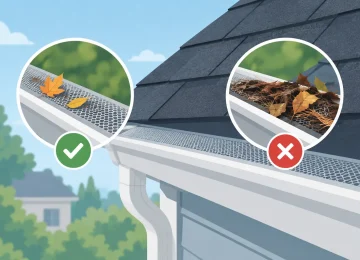
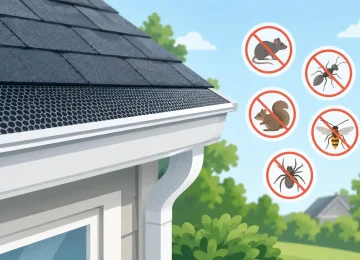
Gutter guards can reduce how much debris enters the system, but they do not eliminate maintenance. That is one of the biggest misunderstandings property owners have.
If you have guards installed, your gutters may need less frequent cleaning, but they still need periodic inspection and support. Fine debris can settle over the guard surface or work its way into openings. Pine needles and small seeds are especially good at finding weak points. Downspouts can also clog even when the top of the gutter looks relatively clear.
For many guarded systems, an annual inspection is still a smart minimum. On tree-heavy properties, twice-yearly checks may still be the better choice. The goal is not just to keep debris out. It is to make sure water is actually moving where it should.
Seasonal timing matters
If you only remember one rule, make it this: clean before heavy seasonal stress arrives. Late fall cleaning matters because leaves left sitting through winter become compacted, wet, and much harder to remove. Once temperatures drop, trapped water can freeze and add weight to the system.
Spring cleaning matters for a different reason. Winter often leaves behind roof grit, broken twigs, and leftover debris that can block drainage just as stronger rains arrive. Spring is also a good time to check for loosened hangers, separated joints, and damage caused by ice or snow.
Summer and early winter cleanings may be needed on certain properties. This is common for buildings under pine trees or sites that collect constant debris. It is also smart after major storms, especially if branches, shingle granules, or wind-blown material may have entered the system.
Why routine gutter cleaning protects more than the gutters
People often think of gutter cleaning as a small maintenance item, but the effects of neglect spread quickly. When gutters overflow, water does not disappear. It lands somewhere, and that somewhere is usually a part of the property you do not want soaked repeatedly.
Foundation areas are a major concern. Repeated runoff near the base of the structure can contribute to settling issues, basement moisture, and erosion. Siding and trim can stain or rot over time. Flower beds and shrubs can be damaged by concentrated runoff. On walkways and drive areas, extra water can create slippery conditions and surface wear.
The roof edge is at risk too. Water trapped in clogged gutters can back up under shingles or sit against fascia boards longer than it should. That can shorten the life of surrounding materials and lead to repairs that cost far more than routine cleaning.
The best cleaning schedule is based on your property
There is no one-size-fits-all answer for how often gutters should be cleaned. A newer home with few trees may do well with two cleanings a year. A heavily wooded property or a large commercial building may need three or four. A building with guards still needs inspections. A property with recurring overflow may need repairs in addition to cleaning.
That is why practical evaluation matters more than guesswork. Look at the tree cover. Think about how the system handled the last heavy rain. Pay attention to where overflow happens and whether the same sections clog repeatedly. Those details help determine whether your schedule is realistic or overdue for adjustment.
For property owners who want fewer surprises, a professional inspection can save time and prevent missed problems. A gutter specialist can tell the difference between a simple debris issue and a system that is undersized, improperly pitched, or worn out. At Cavallari Gutters, that kind of straightforward guidance is part of helping customers protect their property for the long term.
If you are unsure where your building falls on the schedule, start with two cleanings per year and adjust based on real performance. Gutters do not need constant attention, but they do need the right attention at the right time. A little maintenance before the next storm is often what keeps a manageable job from turning into water damage.

Leave a Reply