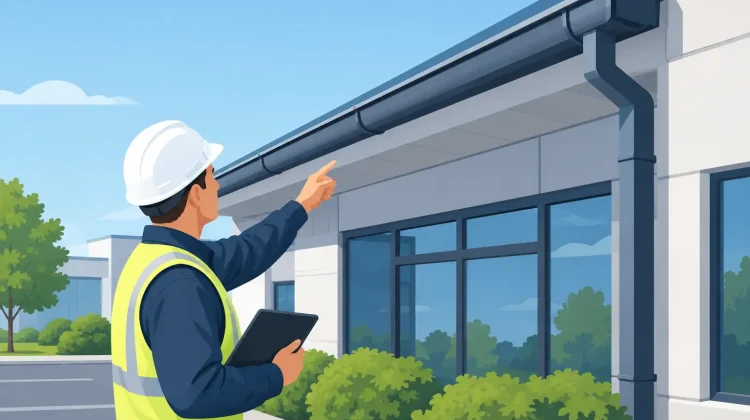
A gutter problem at a commercial property rarely stays a gutter problem for long. Water that spills over a clogged trough or drains too close to the building can stain masonry, damage siding, undermine landscaping, create slippery walkways, and find its way into vulnerable areas around the foundation. Regular commercial gutter inspections give property owners and managers a clear view of those risks before a heavy storm turns a manageable repair into a disruptive expense.
For offices, retail centers, mixed-use buildings, apartment properties, warehouses, and community facilities, the goal is not simply to keep gutters looking clean. It is to keep water moving away from the roofline, exterior walls, entrances, and foundation as intended. A professional inspection helps identify whether the existing system is doing that job and what should be addressed next.
Why Commercial Gutter Inspections Matter
Commercial drainage systems often handle more roof area, longer gutter runs, and higher water volume than a typical home. That means a small blockage, loose hanger, or poorly placed downspout can affect a larger section of the property. On a flat or low-slope roof, water may collect differently than it does on a pitched roof. On a multi-story building, access and safety requirements add another layer to the work.
Property managers also have practical responsibilities that go beyond the condition of the building itself. Overflow near a public entrance can become a safety concern. Water running down a facade can affect curb appeal and tenant perception. Poor drainage around loading areas, patios, or landscaped sections can lead to repeated maintenance calls.
An inspection creates a useful record of the system’s condition. It allows owners to prioritize repairs, budget for replacement when needed, and avoid guessing about whether a stain, leak, or drainage issue is isolated or part of a larger problem.
What a Professional Commercial Gutter Inspection Covers
A proper inspection looks at the whole water-management path, not just the visible gutter channel. The roof edge, gutters, downspouts, discharge areas, fasteners, seams, and nearby exterior surfaces all provide clues about performance.
Gutter alignment and pitch
Gutters need a gradual, correct slope toward the downspouts. If a long run is sagging or pitched the wrong way, water can stand in the gutter rather than drain. Standing water adds weight, encourages debris buildup, and can expose weak seams or corroded sections.
During an inspection, a contractor checks whether the gutter is pulling away from the fascia, bowing between hangers, or holding water after rainfall. These signs may point to loose fastening, insufficient support, improper installation, or a system that has reached the end of its useful life.
Seams, end caps, and connection points
Leaks frequently develop where sections connect. Seams, end caps, outlets, elbows, and downspout joints should be checked for separation, failed sealant, rust, or visible water staining. Even a slow leak can leave a mark on siding or masonry and cause deterioration over time.
Seamless gutters reduce the number of joints along a run, but they still need periodic inspection at corners, outlets, and end caps. The right recommendation depends on the building, roof configuration, and condition of the current system. A targeted repair may make sense when the system is otherwise sound. If leaks and failures are widespread, replacement can be the more cost-effective choice.
Downspouts and drainage discharge
A gutter is only as effective as its downspouts. Inspectors look for crushed sections, loose straps, clogged elbows, poor connections, and discharge points that send water back toward the structure. The ground at the bottom of a downspout can reveal a lot. Erosion, pooling, washed-out mulch, or recurring ice patches may indicate that water is not being directed far enough away.
For commercial properties, downspout placement should also account for pedestrian areas, drive lanes, landscaping, and entrances. Water should not be allowed to collect where customers, tenants, employees, or delivery personnel walk.
Debris, guards, and hidden blockages
Leaves, roof granules, twigs, seed pods, and nesting material can block gutters and downspouts. Nearby trees increase the maintenance demand, but even properties without much tree cover can collect debris after storms. A gutter may appear clear from the ground while an outlet or elbow remains blocked.
Gutter guards can reduce the amount of debris entering the system, but they are not a reason to skip inspections. Some guard styles work better for certain rooflines and debris conditions than others. Guards should be evaluated for secure attachment, proper water flow, and buildup on top of the system.
Roof-edge and exterior damage
An experienced gutter specialist also watches for warning signs around the system. Peeling paint, rotted fascia, stained soffits, deteriorating trim, water marks, damaged siding, and soil erosion often indicate a drainage issue. These conditions may not always require a full gutter replacement, but they should not be ignored.
If the roof edge has been affected, repairs may need to be coordinated with other exterior work. Addressing the gutter issue first helps prevent newly repaired surfaces from being exposed to the same water problem again.
When to Schedule an Inspection
Most commercial properties benefit from gutter inspections at least twice a year, typically in spring and fall. Fall service is particularly helpful after leaf drop, while spring inspections can reveal damage or blockages left behind by winter weather.
New Jersey and Staten Island properties may need additional attention after heavy rain, wind events, snow, or freeze-thaw cycles. Ice can loosen hangers, open seams, and shift downspout connections. A building surrounded by mature trees, or one with a large roof footprint, may require cleaning and inspection more frequently than a smaller, open-site property.
There are also clear signs that call for an inspection sooner:
- Water spills over gutters during rain or pours from an unexpected area.
- Stains appear on exterior walls, soffits, or around the roofline.
- Downspouts are loose, dented, disconnected, or draining near the foundation.
- Landscaping is eroding or water pools near entrances and walkways.
- Gutters visibly sag, pull away from the building, or show rust and separation.
Waiting until water is entering the building is rarely the best point to act. By then, the source may be harder to isolate and the repair scope may be larger.
Inspection Findings Should Lead to a Clear Plan
A useful inspection does more than identify defects. It should help the property owner understand what needs immediate attention, what can be monitored, and what may be worth planning for in the future.
For example, clearing a blocked downspout and securing a loose strap may resolve a localized issue quickly. Repeated overflow along a long gutter run may call for added downspouts, a larger gutter size, or changes to the system layout. If several sections are leaking, sagging, and showing age, replacing the system may provide better long-term value than making repeated small repairs.
Commercial properties should also consider appearance. Gutters and downspouts are visible parts of the exterior, especially on storefronts, offices, and multifamily buildings. Available sizes, materials, and colors can be selected to support both drainage performance and the building’s overall look.
Work With a Gutter Specialist
Commercial gutter work requires careful assessment, safe access, and attention to how water behaves across the entire property. General maintenance may address debris, but a gutter specialist can evaluate installation quality, capacity, pitch, connections, and the repair or replacement options that fit the building.
Cavallari Gutters provides professional gutter inspections, repairs, replacement, and cleaning support for commercial property owners and managers in New Jersey and Staten Island. As a licensed and insured local gutter contractor, the focus is on practical recommendations, dependable workmanship, and clear communication from the estimate through completion.
A well-timed inspection can protect more than the gutter system. It can help keep water away from the places where it causes the most expensive and inconvenient problems. If your property has seen overflow, staining, loose gutters, or recurring drainage concerns, scheduling an inspection now gives you time to address the issue before the next storm puts it to the test.

Leave a Reply