

A gutter system usually gets attention only after it fails. Water spilling over the edge during a storm, stains down the siding, washed-out mulch, or a wet basement tend to get a property owner moving fast. That is why understanding the benefits of seamless gutters matters before small drainage issues turn into expensive repairs.
For many homes and commercial properties, gutters are not just a finishing touch. They are part of the building’s water management system. When they are sized correctly, pitched properly, and installed with care, they help protect the roofline, foundation, exterior surfaces, and surrounding landscape. Seamless gutters have become a popular option because they address some of the most common problems found in older sectional systems.
Why the benefits of seamless gutters matter
Traditional gutters are assembled from multiple sections joined together along the run. Those connection points are often where trouble starts. Over time, seams can separate, trap debris, or begin to leak as weather and temperature changes put stress on the material.
Seamless gutters are formed to fit the dimensions of the structure with far fewer joints. That design change may sound simple, but it has a real impact on performance, appearance, and maintenance. For property owners trying to prevent water damage and reduce recurring upkeep, that difference is worth a closer look.
Fewer leaks and weak points
One of the clearest benefits of seamless gutters is right in the name. Because they are made in longer continuous runs, there are fewer seams where water can escape. That matters most during heavy rain, when a system is under pressure and any weak point becomes obvious.
With sectional gutters, every joint is a potential maintenance item. Sealants can wear down, fasteners can loosen, and small openings can grow over time. A seamless system still has joints at corners and downspout connections, so it is not leak-proof in an absolute sense. But it does remove many of the trouble spots that commonly lead to drips, staining, and water collecting near the foundation.
For homeowners dealing with recurring leaks in the same areas, replacing a patched-together system with seamless gutters often brings more dependable performance instead of another short-term fix.
Better protection for the home or building
Gutters have one main job – move rainwater away from the structure in a controlled way. When they do that consistently, they help protect several parts of the property at once.
Water that overflows or leaks behind the gutter can affect fascia boards, soffits, siding, trim, windows, entryways, and masonry. It can also saturate the soil around the foundation, which may contribute to settling, cracks, or moisture problems in basements and crawl spaces. On commercial buildings, drainage issues can create staining, slippery walkways, and deterioration around entrances and wall surfaces.
This is where the benefits of seamless gutters go beyond appearance. A better-performing system supports the larger goal of structural protection. It is not just about catching water. It is about directing it where it belongs before it has a chance to damage materials that are far more expensive to repair.
A cleaner look from the curb
Most property owners want functional improvements to look good too. Seamless gutters offer a more uniform appearance because they do not have visible joints every few feet along the roofline. The result is a cleaner, more finished look that fits better with both newer homes and older properties receiving exterior updates.
That can be especially important if you are replacing aging gutters as part of a roof, siding, or trim project. A system that is custom-fit to the building and available in colors that complement the exterior can improve curb appeal without calling attention to itself.
For realtors and property managers, this matters as well. Exterior details influence first impressions. Clean lines, proper drainage, and materials that look maintained all support the impression that the property has been cared for.
Less debris buildup in key areas
Leaves, seed pods, roof grit, and twigs can collect in any gutter system, especially in areas with mature trees. But seams often make that problem worse. Small ridges or connection points can catch debris and slow water flow, creating the kind of blockage that leads to overflow during storms.
Because seamless gutters have fewer interruptions along the run, water can move more efficiently toward the downspouts. That does not eliminate the need for cleaning, and any contractor who says otherwise is overselling it. Properties in wooded areas, or buildings with complicated rooflines, will still need regular maintenance. But fewer seams generally means fewer places for buildup to start.
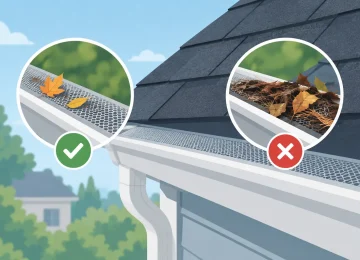
When seamless gutters are paired with the right gutter guard system and ongoing cleaning support, the maintenance burden can be reduced even further. The exact result depends on tree cover, roof design, and local weather, but the overall advantage is practical: fewer clogs, fewer overflows, and less frustration during storm season.
Custom fit means better overall performance
Seamless gutters are made to the measurements of the structure rather than assembled from standard pre-cut sections. That custom fit allows for a more precise installation, which matters because even a high-quality gutter can fail if the pitch, size, or placement is off.
A properly designed system takes into account roof area, water volume, downspout location, and how runoff should be carried away from the building. In New Jersey and Staten Island, where storms can be intense and seasonal debris is a real concern, those details are not minor. They directly affect how the system performs when the weather is at its worst.
This is also where working with a dedicated gutter specialist makes a difference. Seamless gutters are not a one-size-fits-all product. The right setup for a ranch home may not be the right setup for a mixed-use building or a larger colonial with multiple roof sections. Good results come from proper planning as much as from the material itself.
Lower long-term maintenance and repair costs
Seamless gutters usually cost more upfront than basic sectional systems. For some owners, that is the main hesitation. The better question is whether the lower upfront cost of sectional gutters leads to more patching, resealing, and repair work over time.
In many cases, it does. When seams fail, water damage does not stay limited to the gutter itself. The repair bill can extend to wood trim, landscaping, exterior paint, foundation work, or interior moisture issues. A stronger gutter system helps reduce the chances of those secondary costs.
That does not mean seamless gutters are maintenance-free. Hangers can loosen, downspouts can clog, and storm damage can happen. Aluminum can dent, and any gutter can struggle if it is undersized or neglected. But when installed correctly, seamless systems often give owners a more reliable setup with fewer recurring service calls.
Strong value for both residential and commercial properties
The benefits of seamless gutters apply across different property types, but the priorities can vary. Homeowners often focus on curb appeal, basement protection, and reducing seasonal maintenance. Commercial owners and property managers may be more concerned with liability, preserving exterior surfaces, and keeping entrances and walkways safer during rain.
In both cases, dependable drainage supports property value. Buyers notice signs of poor water control. So do inspectors. Overflow marks, rotted trim, and foundation moisture are not small details when a property is being evaluated.
That is why gutter replacement is often more than a maintenance item. It can be a smart capital improvement, especially when the existing system is outdated, leaking at multiple seams, or no longer matched to the building’s drainage needs.
When seamless gutters make the most sense
Seamless gutters are often a strong choice when an existing system has repeated leaks, visible separation at joints, or frequent clogging in seam-heavy runs. They also make sense when a property owner wants a cleaner exterior appearance and a system built for the structure instead of pieced together from stock lengths.
That said, there are situations where repair may still be the right move. If the issue is isolated to a small section, the gutter is relatively new, and the overall system is well designed, a targeted repair can be reasonable. The right decision depends on age, condition, budget, and how often the same problems keep coming back.
At Cavallari Gutters, that is the kind of conversation worth having honestly. A gutter system should do its job quietly, season after season, without leaving you wondering where the next leak will show up. If your current gutters are asking for constant attention, it may be time to look at a system built to protect your property with fewer weak points and better long-term performance.


Leave a Reply