
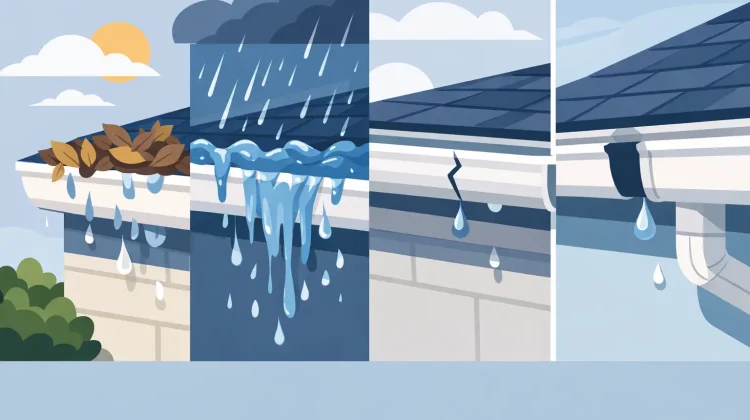
A gutter leak usually starts small – a drip at a seam, a line of water running behind the trough, a wet spot near the foundation after rain. Then one storm later, you are looking at stained siding, washed-out mulch, or water pooling where it should never be. If you are asking why are gutters leaking, the answer is usually not just “old gutters.” It is a specific failure somewhere in the system, and the sooner it is identified, the easier it is to control the damage.
Gutters are supposed to move water off the roof and away from the structure in a controlled way. When they leak, that control is lost. Water can spill near the fascia, soak soffits, weaken wood trim, and put extra pressure on the foundation area. On commercial properties, it can also affect entryways, walkways, and exterior maintenance costs.
Why are gutters leaking in the first place?
Most gutter leaks come from one of a handful of issues: separated seams, corrosion, clogs, improper pitch, fastener failure, or physical damage. Sometimes there is one clear problem. In other cases, several smaller issues are happening at once, especially on older systems that have not been serviced consistently.
The key is to understand that a leak does not always mean the gutter has a hole in the obvious sense. Water may be escaping because the system is pulling away from the home, because it is overflowing, or because it was never installed to drain properly in the first place.
Leaking seams and joints
Sectional gutters have connection points where pieces are joined together. Those seams are common failure spots. Over time, sealant breaks down from sun exposure, temperature swings, and repeated wet-dry cycles. Once that seal weakens, water starts slipping through the joint.
This is one reason seamless gutters are popular for many residential and commercial properties. Fewer joints mean fewer places for leaks to begin. That said, corners and end caps can still fail over time, so even seamless systems need inspection and maintenance.
Clogs that cause overflow
Not every “leak” is technically a puncture. Very often, gutters leak because they are clogged with leaves, seed pods, roof grit, and debris. When water cannot move freely to the downspouts, it backs up and spills over the front or rear edge.
Rear overflow is especially misleading because it can look like the gutter itself is defective, when the real issue is blockage. Water running behind the gutter can damage fascia boards and create hidden rot before the problem becomes visible from the ground.
Rust, corrosion, and pinholes
Older metal gutters, especially steel systems, can develop rust over time. What starts as surface wear can turn into tiny holes that allow water to drip through. Aluminum does not rust the same way steel does, but it can still corrode or wear thin in spots, particularly if water sits in the gutter for long periods due to poor drainage.
These small holes may seem minor, but they often point to a bigger issue. If one area is weakening, other sections may not be far behind.
Loose hangers or gutters pulling away
Gutters need to stay tight to the fascia to catch roof runoff correctly. When hangers loosen or fasteners fail, the gutter can tilt outward or pull away from the structure. That changes how water enters and moves through the system.
In heavy rain, even a small gap can let water run behind the gutter. In winter, snow and ice loads can make this worse. If the fascia has already started to rot, reattaching the gutter without addressing the wood behind it will not hold up for long.
Improper slope is a common hidden problem
A gutter system should have enough pitch to guide water toward the downspouts, but not so much that it looks uneven. When the slope is off, water collects in low spots instead of draining out. Standing water adds weight, speeds up wear, and increases the chance of leaks at seams and end caps.
This is one of the more frustrating issues for property owners because the gutter may look fine at a glance. But if water is sitting in sections long after a storm, the system may need to be re-pitched rather than simply patched.
When installation quality matters
Not all leaking gutters are old. Some systems leak because they were installed incorrectly from day one. Wrong hanger spacing, poor seam sealing, undersized gutters, or downspouts placed in inefficient locations can all create drainage problems.
That matters in places like New Jersey and Staten Island, where storms can be intense and seasonal debris can build up quickly. A gutter system has to match the roofline, water volume, and building layout. If it does not, leaks can show up much earlier than expected.
Damage from ladders, storms, and impact
Gutters take more abuse than most people realize. A ladder leaned in the wrong spot can bend the front edge. A branch can dent a section during a storm. Snow slides from the roof can loosen brackets or twist the trough.
Once the shape changes, water may stop flowing correctly. Even if there is no visible crack, a bent section can create pooling or force runoff over the edge. On commercial buildings, impact from maintenance equipment or nearby service work can also contribute to gutter damage over time.
End caps and corners often fail first
If you notice dripping at the end of a gutter run or at an inside or outside corner, the issue may be a failed end cap or corner joint. These areas manage directional changes in water flow, which means they see a lot of movement and pressure over time.
A fresh bead of sealant may help temporarily in some cases, but if the metal has shifted, separated, or deteriorated, a more durable repair is usually the better option. Repeated patching tends to become more expensive than addressing the section properly.
Why leaking gutters should not be ignored
A leaking gutter is easy to dismiss when the drip seems minor. The problem is where that water goes next. It can saturate the soil around the foundation, stain masonry, peel paint, damage siding, and create erosion around landscaping. If water is getting behind the gutter, it can also affect the fascia, soffit, and roof edge.
For property managers and commercial owners, leaks can create slippery pedestrian areas and increase liability concerns. For homeowners, it can lead to repair costs that have little to do with the gutter itself. The gutter may be the source of the problem, but the damage often spreads to surrounding materials.
Repair or replacement – which makes more sense?
It depends on the age of the system, the number of problem areas, and whether the issue is isolated or systemic. A single leaking seam or end cap on an otherwise solid gutter system is often worth repairing. The same goes for a minor pitch adjustment or re-securing a small loose section.
Replacement makes more sense when leaks are showing up in multiple places, the metal is corroded, the gutter is undersized, or the fascia behind it has been compromised. If a system has been patched several times and still overflows or leaks, the real value is usually in correcting the root problem, not adding another temporary fix.
This is where working with a gutter specialist matters. A true inspection should look at more than the visible drip. It should account for drainage capacity, roof runoff, downspout placement, attachment points, and the condition of the surrounding trim.
What property owners can watch for
Some warning signs are obvious, like dripping from the gutter bottom or water pouring over the edge in a storm. Others are easier to miss. Peeling paint near the roofline, dark streaks on siding, mildew near the foundation, sagging sections, and water marks on fascia boards can all point to gutter leaks.
If the issue only appears during heavy rain, that does not mean it is minor. In many cases, that is when a sizing or drainage design problem becomes visible. Gutters have to perform when conditions are at their worst, not just during light showers.
The best next step when gutters are leaking
If you are dealing with active leaks, the best move is to have the system evaluated before the next major storm puts more water where it does not belong. A proper assessment can determine whether the fix is a targeted repair, a re-sloping adjustment, debris removal, or a full replacement with a better-sized system.
At Cavallari Gutters, that kind of inspection is centered on protecting the structure, not just stopping a drip for the moment. The right repair should restore drainage, preserve the exterior, and hold up over time. If your gutters are leaking, taking care of it now is usually far less costly than waiting for the water damage to show you exactly where the problem has been heading.

Leave a Reply