
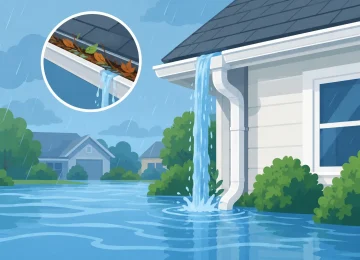
When you see water running behind the gutter instead of into it, the problem usually shows up fast – stained fascia, peeling paint, damp soffits, and puddling near the foundation after a storm. If you are trying to figure out how to stop water behind gutters, the right fix depends on why the water is getting there in the first place. In some homes, it is a simple maintenance issue. In others, it points to a gutter system that was installed incorrectly or has started to fail.
This is one of those problems that should not be ignored. Water slipping behind the gutter can work its way into roof edges, fascia boards, siding, and even interior wall areas over time. What looks minor during one rainstorm can become wood rot, mold, or structural damage if it keeps happening through the season.
Why water gets behind gutters
A properly working gutter system should catch roof runoff and direct it toward the downspouts. When water misses that path, there is usually a breakdown somewhere between the roof edge and the gutter trough.
One of the most common causes is a missing or ineffective drip edge. The drip edge is the metal flashing installed at the roof edge to guide water into the gutter. Without it, rain can curl back under the shingles or follow the roof decking and fascia line, sending water behind the gutter instead of out into the channel.
Another frequent issue is gutter placement. If the gutter sits too low or too far away from the roof edge, runoff can overshoot it or slip behind it. This often happens after poor installation, movement over time, or replacement work that did not account for the roofline correctly.
Clogs also play a major role. When leaves, seed pods, shingle grit, and other debris build up inside the gutter, water backs up and can spill in directions it should not. In some cases it pours over the front edge. In others, it lifts and rolls backward toward the fascia.
Pitch matters too. Gutters need a slight slope so water moves steadily toward the downspouts. If sections are pitched incorrectly or begin to sag, water can sit in the trough and overflow during heavier rain.
How to stop water behind gutters at the source
The best way to stop the problem is to identify whether you are dealing with water guidance, water volume, or system failure. The symptoms may look similar from the ground, but the fix can be very different.
Check for a drip edge problem
If water appears to hug the fascia board or runs behind the gutter even when the gutter itself is not full, the roof edge flashing is one of the first things to inspect. A proper drip edge helps break the surface tension of water and pushes runoff into the gutter opening.
If the drip edge is missing, too short, bent incorrectly, or tucked in a way that directs water backward, adding or replacing it can make a major difference. This is especially common on older homes or on properties where roofing and gutter work were done at different times by different contractors.
In some cases, an apron flashing may be used to help bridge the gap between the roof edge and the gutter. That can be an effective correction when the spacing is off, but it needs to be fitted properly. A patch that is poorly installed can create a new drainage problem instead of solving the old one.
Look at the gutter position
Gutters should sit close enough to the roof edge to catch runoff without interfering with shingles or trapping debris unnaturally. If the back edge of the gutter is too low, water can slide right past it. If sections have pulled away from the fascia, the gap can be enough for runoff to escape behind the system.
This is not always obvious from the ground. You may only notice a narrow line of staining on the fascia or a small waterfall during hard rain. Rehanging and repositioning the gutter is often the right fix when placement is the main issue.
Clear debris and remove backups
If the gutter is packed with debris, the solution may be straightforward. Cleaning out the troughs and flushing the downspouts restores flow and gives you a better view of whether another issue is also present.
The key is not just removing leaves from the top. Downspouts need to be checked as well, because a blockage lower in the system can force water to back up even when the gutter looks only partly full. If the clog has been there for a while, the added weight may also have pulled fasteners loose or changed the pitch.
Correct sagging and poor pitch
Standing water in gutters is a sign that the slope is off or the hangers are failing. Gutters do not need a dramatic angle, but they do need enough pitch to keep water moving. Even a slight dip in the wrong spot can create overflow during a storm.
If sections are sagging, simply screwing them tighter may not be enough. The fascia behind them could be soft, or the original spacing of hangers may be inadequate for the roof area. A proper repair usually involves checking the structure behind the gutter, adjusting the pitch, and securing the system so it can handle future rainfall.
Signs the fascia or roof edge may already be damaged
Sometimes the gutter is not the only problem anymore. If water has been getting behind it for a while, the wood trim and roof edge materials may already be compromised.
Watch for peeling paint, dark streaks, swollen wood, rusted fasteners, mildew, or soft spots along the fascia. Inside, you might see staining near the top of exterior walls or around attic edges. When these signs are present, the repair should go beyond redirecting water. Damaged materials need to be evaluated and replaced where necessary, or the same leak pattern can return.
This is where professional inspection matters. A gutter can be reattached to deteriorated wood, look fine for a short time, and then loosen again because the base material was never sound.
When a bigger gutter upgrade is the smarter fix
Some properties have chronic overflow or behind-the-gutter leakage because the system is undersized for the roof area or rainfall volume. This can happen on larger roof planes, steep roofs, metal roofs, and buildings with valleys that send concentrated water into one section.
If your gutters regularly struggle in moderate to heavy rain, the issue may not be maintenance alone. A wider gutter profile, larger downspouts, or redesigned downspout placement may be needed to improve collection and drainage.
For homes and commercial buildings in New Jersey and Staten Island, storm intensity, seasonal debris, and freeze-thaw wear can all add pressure to aging gutter systems. In those cases, repeated small repairs may cost more over time than correcting the design problem once and doing it right.
How to stop water behind gutters long term
A lasting solution usually involves more than one adjustment. The goal is to create a clean path from the roof edge to the downspout without gaps, backups, or structural weak points.
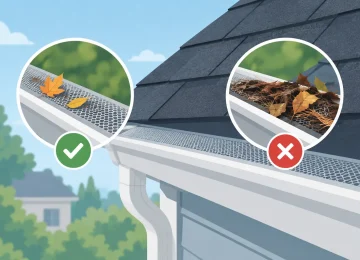
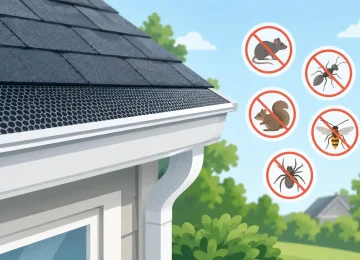
That may include cleaning the system, improving the drip edge, rehanging gutters to the proper height, correcting pitch, sealing problem joints, and replacing damaged fascia. If debris is a recurring issue, gutter guard installation can also help reduce buildup and cut down on frequent cleanings. Guards are not a cure-all, and the wrong type can create new maintenance headaches, but the right product paired with proper support can improve long-term performance.
The main thing is not to guess. Water movement can be misleading. What looks like overflow may actually be backflow from poor flashing. What seems like a clog may really be a placement issue. The better the diagnosis, the better the repair holds up.
Should you fix it yourself or call a gutter specialist?
If the problem is clearly visible and limited to basic cleaning, some property owners choose to handle that on their own. But once you are dealing with ladder work at the roof edge, hidden fascia damage, flashing corrections, or rehanging sections for proper pitch, professional service is usually the safer and more reliable route.
A gutter specialist can identify whether the issue is isolated or part of a broader drainage failure. That matters because treating the symptom without correcting the cause often leads to repeat service calls and more damage around the roofline.
At Cavallari Gutters, this is exactly the kind of issue we encourage property owners not to put off. Water behind gutters is more than an annoyance. It is an early warning sign that your drainage system may no longer be protecting the structure the way it should.
If your gutters are leaking behind the fascia, overflowing in storms, or pulling away from the home, the right next step is a careful inspection and a fix that matches the actual cause. A solid gutter system should move water away from your property quietly and consistently – and when it does, the rest of the building has a better chance to stay dry, sound, and protected.
Leave a Reply