
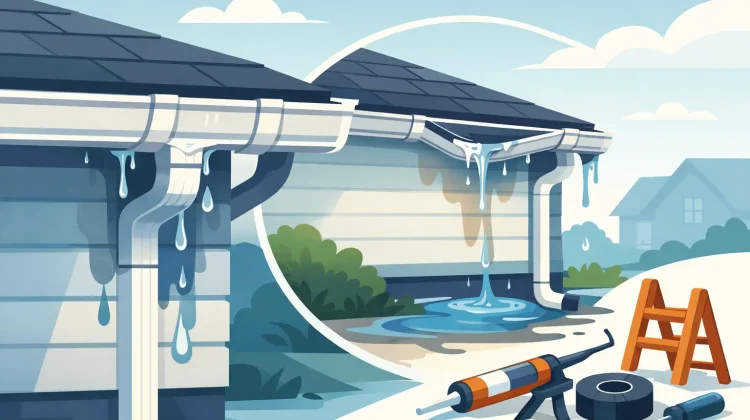
A gutter leak usually shows up in the worst possible weather – right when heavy rain is pushing water against your fascia, siding, foundation, or entryway. If you are looking up how to fix leaking gutters, the first thing to know is this: the leak itself is only part of the problem. In many cases, water is escaping because the system is loose, clogged, pitched the wrong way, or simply worn past the point of a lasting patch.
That matters because a quick repair can work well in the right situation, but it will not solve a bigger drainage issue. A seam can be resealed. A hole can be patched. But if the gutter is pulling away from the house or overflowing every storm, the real fix is different. The best results come from identifying where the water is getting out and why.
How to fix leaking gutters without guessing
Start with a careful inspection on a dry day. Look for leaks at seams, end caps, corners, downspout connections, and any visible holes in the trough. Also check the fascia behind the gutter for staining or rot. Sometimes what looks like a gutter leak is actually water running behind the gutter because the drip edge is short or the gutter is sagging away from the roofline.
If possible, run water through the system with a hose. This helps you see whether the gutter is leaking from a specific joint or simply overflowing because of a clog or poor pitch. Overflow and leakage can look similar from the ground, but the repair path is not the same.
A true leak often leaves a narrow drip line or a wet spot directly under a seam. Overflow tends to spill over the front edge in a wider sheet. Water behind the gutter usually leaves marks on the fascia and siding. That distinction saves time and prevents wasted repairs.
The most common reasons gutters leak
Seam separation is one of the biggest causes. Older sectional gutters rely on joined pieces, and those joints expand and contract with temperature changes. Over time, sealant dries out, connections loosen, and water begins to escape.
Small holes are another common issue, especially in metal systems that have rusted through or were damaged by branches, ladders, or fasteners. End caps and corners also fail often because they handle a lot of water and movement.
Then there are the indirect causes. Debris buildup can trap water and force it over weak spots. Loose hangers can create low areas where water sits instead of flowing. Improper slope can keep water from reaching the downspouts. In those cases, patching the leak without correcting the support or pitch is usually temporary.
Cleaning first is not optional
Before sealing or patching anything, the gutter needs to be cleaned out. Leaves, grit, roofing granules, and sludge can hold moisture against the repair area and keep sealant from bonding properly. They also make it harder to tell whether the leak is actually fixed.
Remove debris by hand, flush the line, and make sure the downspouts are clear. If water backs up in the downspout, pressure builds in the trough and can push water through joints that might otherwise hold. A lot of recurring leaks are really drainage blockages in disguise.
If you notice heavy debris accumulation every season, that is worth addressing too. Repeated clogs shorten the life of the whole system and increase the chance of leaks returning after repair.
Repairing leaking gutter seams and joints
If the leak is coming from a seam, the old failed sealant needs to come out before new sealant goes in. That area should be scrubbed clean and allowed to dry fully. Applying new sealant over wet residue or loose material is one of the main reasons do-it-yourself gutter repairs fail.
Use a gutter-specific sealant made for exterior exposure and water contact. Apply it inside the seam where water travels, not just along the outside edge where it looks neat. Press the joint together if it has separated slightly, then seal the interior line thoroughly.
This kind of repair works best when the seam is still structurally sound. If the joint is badly warped, pulling apart, or corroded, resealing may not last. In that situation, the section may need to be rebuilt or replaced.
When corner leaks need more than sealant
Corners deal with concentrated flow, especially on larger roof sections. If a corner keeps leaking after being resealed, the issue may be movement in the gutter run or improper support nearby. Adding sealant alone will not stop a corner from reopening if the system flexes every time it fills with water.
Patching small holes in the gutter body
Small holes can often be patched if the surrounding metal is still solid. The area should be cleaned down to sound material, dried, and sealed with a compatible patch and gutter sealant. The patch needs enough surface area around the hole to hold under weather exposure.
This is where condition matters. One isolated hole is repairable. Multiple holes, widespread rust, or thinning metal usually point to a system that is aging out. You can patch one spot and have another fail next month. For property owners trying to control long-term maintenance costs, that is not always the best use of money.
Fixing leaks caused by sagging gutters
A gutter that is sagging may leak even if there are no holes at all. When the pitch is off, water settles in one area and eventually spills over seams, back edge, or corners. Standing water also adds weight, which makes the sag worse over time.
Check the hangers and spikes. If fasteners have loosened from the fascia, they may need to be reset or replaced. If the fascia itself is soft or rotted, that has to be repaired before the gutter can be secured properly. Fastening into damaged wood is not a real fix.
The gutter should slope consistently toward the downspout. Even a well-sealed system can leak if water is being held where it should be draining. This is one reason gutter repairs often require more than caulk and a ladder.
When water is getting behind the gutter
Sometimes the gutter is not leaking through the trough at all. Water may be running behind it from the roof edge. This often happens when the gutter has pulled away from the fascia, the apron flashing is missing, or the drip edge does not guide water into the system properly.
From the ground, it can look like a gutter failure. In reality, the gutter may be catching only part of the runoff while the rest goes behind it. The fix depends on restoring the right alignment and roof edge detail, not just sealing the gutter body.
This is especially important on homes with older rooflines or previous exterior work done in stages. A new gutter installed against old fascia or mismatched flashing can create a problem that does not show up until the first hard storm.
How to know when repair is worth it
If the gutter leak is isolated, the metal is in good shape, and the system is draining properly overall, repair is usually the right call. That is especially true for newer gutters or localized damage from impact or failed sealant.
If the leaks are showing up in several places, the gutter is pulling away from the house, or the system overflows during every heavy rain, replacement may make more sense. The same goes for older sectional gutters with recurring seam failures. At a certain point, repeated repairs cost more than correcting the system properly.
For commercial properties and larger homes, the calculation is even more practical. Water intrusion near entrances, foundations, storefronts, or walkways can create bigger liability and maintenance concerns than the gutter repair itself.
Why professional diagnosis matters
The challenge with leaking gutters is that the visible drip is not always the source. Water travels. It can enter at one point and show up several feet away. A trained inspection looks at attachment, pitch, drainage volume, downspout performance, fascia condition, and roof edge details together.
That is where a gutter specialist brings real value. Instead of treating symptoms one by one, the goal is to stop water from escaping the system at all. For homeowners and property managers in New Jersey and Staten Island, that kind of focused repair approach helps protect siding, trim, foundations, landscaping, and the building envelope as a whole.
Cavallari Gutters works with property owners who need repairs that hold up, not quick patches that fail after the next storm. If your gutter leak keeps coming back, it is worth having the full system evaluated before more water damage develops.
The best gutter repair is the one that solves the reason the leak started in the first place. When the system is clean, secure, properly pitched, and sealed where it should be, rainwater moves away from the property the way it is supposed to.


Leave a Reply