

When a gutter fails, the damage rarely stays limited to the gutter itself. Water runs behind fascia, pools near the foundation, stains siding, and cuts into landscaping fast. That is why many property owners ask, are seamless gutters better, or are they just a more expensive version of the same system?
For most homes and many commercial properties, seamless gutters are the better option. They reduce the number of joints where leaks tend to develop, create a cleaner finished look, and usually require less maintenance over time. At the same time, they are not the right answer for every building, every budget, or every drainage problem. The best gutter system is the one that fits the structure, handles local rainfall, and is installed correctly.
Are seamless gutters better in real-world conditions?
In day-to-day performance, seamless gutters usually have a clear advantage over traditional sectional gutters. Sectional systems are assembled from multiple pieces joined together along the run. Every one of those joints creates another place where sealant can age, debris can catch, and water can eventually find a way through.
A seamless gutter is formed as one continuous piece for each straight section of the roofline. There are still connections at corners, downspouts, and end caps, but there are far fewer break points overall. Fewer joints usually means fewer leaks and fewer service calls tied to separation, drips, or sagging at seams.
That difference matters in places like New Jersey and Staten Island, where gutters have to deal with steady rain, wind-driven storms, falling leaves, and winter freeze-thaw cycles. A system with fewer weak points generally holds up better under seasonal stress.
What makes seamless gutters different?
The biggest difference is how they are made and installed. Sectional gutters come in pre-cut lengths that are pieced together on site. Seamless gutters are custom-formed from a coil machine to match the exact dimensions of the property.
That custom fit gives installers more control over the final result. The gutter can be sized to the roofline, pitched correctly for drainage, and finished in a color that works with the exterior. On most residential projects, that leads to a cleaner appearance and a better fit than an off-the-shelf sectional system.
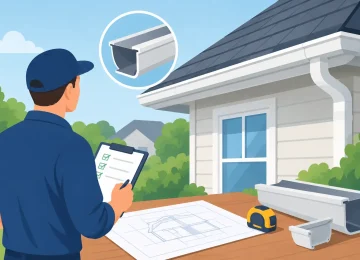
There is also a workmanship factor. Since seamless gutters are typically fabricated and installed by a professional contractor, the quality of the system depends heavily on proper measurements, hanger spacing, slope, and downspout placement. The material matters, but the installation matters just as much.
The main benefits of seamless gutters
The biggest selling point is leak reduction. Since most gutter leaks start at seams, reducing seams reduces the most common failure point. That does not make a seamless system leak-proof, but it does lower the odds of trouble developing along long straight runs.
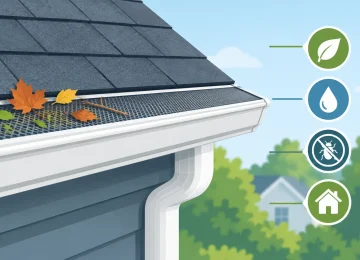
Maintenance is another advantage. Debris like leaves, seed pods, and roof grit often catches at joints and rough connection points. With a smoother interior path, water and debris can move more freely. That can help reduce clogs, especially when the gutter system is paired with the right guard and cleaning plan.
Appearance also matters more than many owners expect. Gutters run across the entire roof edge, so they are highly visible from the street. A custom-formed gutter with fewer visible connections often looks sharper and more finished than a system made from multiple sections.
Longevity can be better as well, especially when aluminum or other quality materials are used and the system is supported properly. Less movement at joints means less stress on sealants and connectors over time.
Where sectional gutters still make sense
If the question is simply are seamless gutters better, the honest answer is usually yes, but not automatically in every case.
Sectional gutters can still be a practical option for small structures, detached garages, sheds, or low-budget projects where keeping upfront cost down is the main priority. They are also easier to source quickly in standard lengths and may be suitable for temporary or lower-demand applications.
Repairs can sometimes be simpler on a sectional system because individual pieces can be swapped out. With a seamless gutter, damage to one long section may require replacing that full section rather than patching in a short piece. If a tree branch falls and bends a major run, replacement can be more involved.
That said, repair convenience should be weighed against how often repairs are likely to happen in the first place. A system that needs less attention over time often delivers better value, even if one repair is more specialized.
Are seamless gutters better for older homes?
Older homes often benefit from seamless gutters because custom fabrication helps address irregular rooflines and nonstandard dimensions. Many older properties have fascia conditions, pitch changes, or trim details that do not work neatly with pre-cut sections.
A custom system can be built around those details more precisely. That can improve both drainage performance and curb appeal, which is especially important on homes with visible architectural character.
Still, older homes also require a close inspection before installation. If fascia boards are rotted, if the roof edge is uneven, or if drainage issues are tied to deeper structural problems, changing the gutter style alone will not solve everything. The support surface has to be sound for any gutter system to perform properly.
Cost: are seamless gutters worth paying more for?
Seamless gutters usually cost more upfront than sectional gutters, largely because they are custom-made on site and installed by trained professionals. For some owners, that higher initial cost is enough to pause the conversation.
But the better question is not just what they cost today. It is what they cost over the next several years in maintenance, repairs, water damage risk, and replacement timing. If a lower-cost gutter system leaks repeatedly, pulls apart at joints, or needs frequent sealing, the savings can disappear quickly.
For many property owners, the added cost of seamless gutters is justified by lower maintenance demands, fewer leak points, and a longer service life. On a home with mature trees, heavy runoff, or a history of drainage problems, that value becomes even clearer.
Installation quality matters more than the label
A poorly installed seamless gutter can still fail. If the pitch is wrong, the hangers are spaced badly, the outlet size is undersized, or the downspouts are placed without regard to water flow, the system will not perform the way it should.
That is why choosing a gutter specialist matters. Proper sizing, correct slope, and attention to discharge points are what protect foundations, siding, walkways, and landscaping. A gutter should not just collect water. It should move it away from the building efficiently and consistently.
This is also where local experience helps. Rainfall intensity, roof designs, tree coverage, and winter conditions all affect what the right system should look like. A dependable installer will look at the full drainage picture, not just sell a product type.
When seamless gutters are the better choice
They are usually the best fit when you want long-term performance, a cleaner appearance, and fewer leak-prone joints. They make particular sense on primary residences, mixed-use buildings, offices, and properties where water control directly affects siding, foundations, entry areas, or landscaped beds.
They are also a smart choice when you are already replacing old gutters due to overflow, repeated leaks, separation at seams, or visible wear. If the current system has shown you where the trouble spots are, upgrading to a custom solution often makes more sense than repeating the same weak design.
For property owners who care about maintenance planning, warranty value, and professional finish, seamless gutters are often the stronger investment.
The bottom line on are seamless gutters better
Yes, in most cases seamless gutters are better. They leak less often, look cleaner, and generally hold up better than sectional systems when installed correctly. But better does not mean automatic. The right answer depends on the building, the drainage demands, the condition of the roof edge, and the quality of the contractor doing the work.
If you are weighing replacement options, the smartest next step is not guessing from the ground. It is having the property evaluated by a professional who can look at slope, runoff, downspout placement, fascia condition, and capacity. A well-built gutter system should do one job very well: move water away from your property before it turns into a much more expensive problem.
If your gutters are showing signs of failure, a clear assessment now can save a great deal of repair work later.

Leave a Reply