
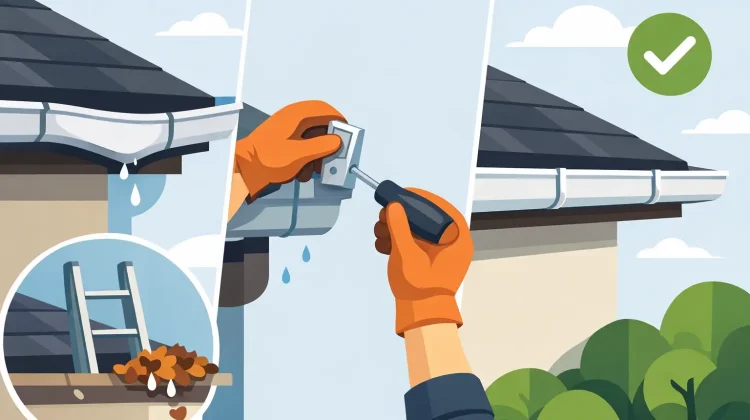
A gutter that pulls away from the fascia rarely stays a small problem for long. Once the line starts to dip, water stops moving the way it should. It spills over the edge, soaks siding, pools near the foundation, and adds even more weight to the weakest section. If you are wondering how to stop gutter sagging, the right answer depends on what caused it in the first place.
Some sagging gutters need a straightforward repair. Others are telling you the system is undersized, poorly pitched, overloaded with debris, or simply too worn out to trust through another storm season. The key is to fix the cause, not just force the gutter back into place.
Why gutters sag in the first place
Most gutter sagging comes down to one of four issues: excess weight, failed fasteners, rotted fascia, or an installation problem. In New Jersey and Staten Island, gutters also deal with heavy rain, winter freeze-thaw cycles, and leaf buildup that can make an already weak section fail faster.
Clogged gutters are one of the biggest contributors. When leaves, shingle grit, and debris collect inside the trough, water cannot move freely to the downspouts. That standing water adds weight, and the gutter begins to bow between supports. If the hangers are spaced too far apart or were not secured well to begin with, sagging usually follows.
Age matters too. Older spike-and-ferrule systems often loosen over time as the wood behind them expands, contracts, and wears down. Once those fasteners start backing out, the gutter loses support. In other cases, the gutter itself may be bent or twisted from ladders, storm damage, or repeated ice buildup.
How to tell whether it is a repair or replacement issue
A slight dip in one section does not always mean the entire system has failed. If the gutter metal is still in decent shape and the fascia board behind it is solid, a targeted repair may be enough. That usually means re-securing the system, correcting the pitch, and solving the drainage issue that caused the sag.
If you see multiple low spots, frequent overflow, separated seams, rust, cracking, or visible fascia rot, the problem is usually larger. In that case, replacing sections or installing a new gutter system often makes more sense than repeatedly patching weak points.
This is where a professional inspection helps. Sagging can look like a simple bracket issue from the ground, but once the gutter is removed, the real problem may be hidden wood damage or improper attachment at the roof edge.
How to stop gutter sagging with the right fix
The first step is removing the load that caused the stress. Gutters need to be cleaned thoroughly so you can see what condition they are actually in. Debris packed into corners and downspout outlets should be cleared completely, not just skimmed from the surface.
After cleaning, the supports need to be checked. Loose spikes, failing brackets, and missing hangers should be replaced with stronger hardware designed to hold the gutter tight against the fascia. In many cases, hidden hangers with screws provide a more secure long-term hold than older spike systems.
Pitch is the next issue. A gutter should slope slightly toward the downspout so water keeps moving instead of collecting in low areas. If a section is hanging level or sloping the wrong way, it will stay heavy after every storm. Rehanging the gutter at the correct pitch is often what stops repeated sagging.
If the fascia board is soft, split, or rotted, fastening a gutter back into it will not solve much. The damaged wood has to be repaired or replaced first. Otherwise, the new hardware will eventually pull loose just like the old hardware did.
Replace weak fasteners with stronger support
One of the most common repair upgrades is moving from outdated spikes to modern screw-in hangers. Spikes can loosen as the wood ages, especially in areas exposed to constant moisture. Screw-in hangers generally hold better and distribute weight more reliably.
Support spacing also matters. If hangers are too far apart, the gutter has room to bow under water weight. Adding more support points can make a noticeable difference, especially on long runs or areas that handle heavy roof runoff.
Correct clogs and drainage bottlenecks
Even a securely fastened gutter can sag again if water keeps sitting in it. Downspouts need to be clear, properly sized, and positioned to handle runoff volume. If water backs up at one outlet during every storm, the system may need another downspout or a larger gutter profile.
That is why the best fix is not always just hardware. Sometimes the gutter is undersized for the roof area it serves. On larger homes and commercial buildings, upgrading to a bigger system can reduce overflow and stress on the entire run.
Warning signs homeowners should not ignore
Gutter sagging usually gives warning signs before it reaches the point of detaching. You may notice water spilling over the front edge during rain, stains on siding, mildew near the roofline, or puddling along the foundation. You might also see sections that look wavy or uneven when viewed from the ground.
Fasteners sticking out of the fascia are another sign that support is failing. So are small gaps between the back of the gutter and the fascia board. In winter, trouble often shows up as heavy ice accumulation in one low section, which puts even more strain on the metal and attachments.
If a gutter is pulling away near an entryway, driveway, or walkway, it should be addressed quickly. A section that lets go under load can damage trim, landscaping, and anything below it.
When gutter guards help and when they do not
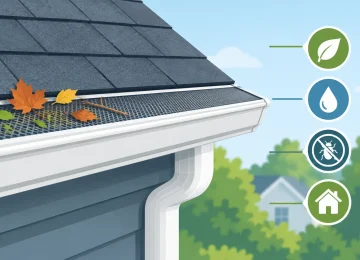
Gutter guards can help reduce the debris load that contributes to sagging, especially in areas with heavy leaf drop. They can lower the frequency of cleanings and reduce the chance of standing water caused by clogs. That said, guards are not a cure for an already failing gutter system.
If the hangers are loose, the pitch is wrong, or the fascia is compromised, guards will not fix the structural issue. They are most useful after the gutter has been properly repaired or replaced. Used that way, they can support longer-term performance and lower maintenance demands.
Why DIY repairs can go wrong
Some homeowners try to stop sagging by driving the old spikes back in or adding a strap where the dip looks worst. Sometimes that buys a little time, but it often misses the real cause. If the wood is deteriorated, if the gutter line is pitched incorrectly, or if the metal has already deformed, a surface fix will not hold.
There is also a safety issue. Working along the roof edge with a ladder, tools, and heavy gutter sections is not a small weekend project, especially on two-story homes or commercial properties. A clean-looking repair is not enough if the system still cannot carry water safely through the next hard rain.
A professional approach lasts longer
A dependable gutter repair starts with a full look at the system, not just the sagging section. That means checking the fasteners, fascia, pitch, seams, downspouts, and runoff pattern around the property. The goal is to restore proper drainage and protect the roofline, siding, foundation, and landscaping from ongoing water damage.
For many property owners, that kind of targeted assessment saves money over time. Instead of repeatedly patching the symptom, you address the source of the strain. Companies like Cavallari Gutters focus on that bigger picture because gutter performance is not just about the trough itself. It is about protecting the structure around it.
Preventing gutter sagging from coming back
Once a gutter has been repaired, regular maintenance makes a big difference. Cleaning out debris before it builds up into heavy blockages is the simplest step. Seasonal inspections matter too, especially after major storms or winter weather.
It also helps to watch for drainage changes. If one area starts overflowing, if a fastener begins to pull loose, or if you notice a new dip forming, early repair is usually much easier than waiting. Gutters do not need much attention when they are installed correctly and kept clear, but they do need some.
If your gutters are already sagging, the best next step is not guessing from the ground. Have the system looked at, find out whether the issue is support, pitch, clogging, wood damage, or age, and fix it the right way before the next storm adds more weight than that section can handle.

Leave a Reply