
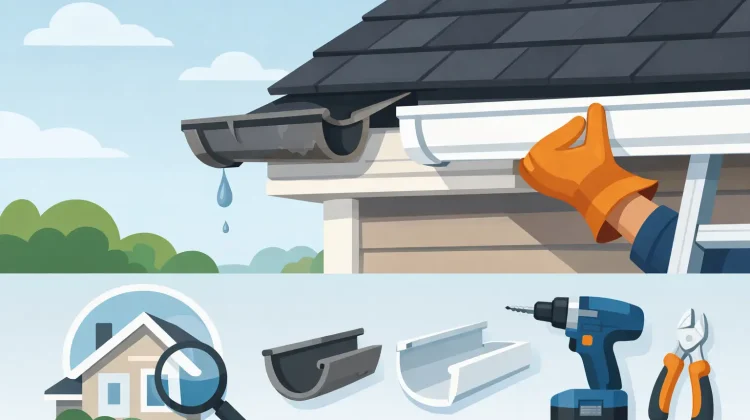
A gutter system usually does its job quietly until the day it does not. Water spills over the edge in a hard rain, mulch washes into the driveway, and a small stain on the siding turns into a bigger repair. That is why a homeowner guide to gutter replacement matters. When gutters fail, the damage rarely stays limited to the gutters themselves.
For homeowners in New Jersey and Staten Island, gutter performance is not a minor detail. Heavy rain, seasonal debris, snow, and freeze-thaw cycles can all put stress on an aging system. Replacing gutters at the right time helps protect the roofline, fascia, siding, foundation, and landscaping before water has a chance to create more expensive problems.
When gutter replacement makes more sense than another repair
Not every gutter problem calls for full replacement. A loose hanger, a minor seam leak, or a short section pulled away from the house can often be repaired. But there is a point where repeated patchwork stops being cost-effective.
If your gutters are sagging in several areas, separating at the seams, rusting through, or overflowing even after cleaning, replacement is often the smarter long-term move. The same is true if the pitch is wrong across large sections of the run. Water needs to move consistently toward the downspouts. If it sits in the channel, the system is already working against itself.
Age matters too. Older sectional gutters often develop issues in multiple places at once. You may fix one leak only to find another two weeks later. At that stage, replacing the system can save money, reduce maintenance, and improve drainage performance right away.
A homeowner guide to gutter replacement starts with warning signs
Most homeowners do not inspect their gutters closely until there is visible water trouble. By then, the system may have been underperforming for a while. A few signs are especially worth taking seriously.
Peeling paint near the roofline, water marks on siding, erosion around the foundation, and standing water near the home after rain can all point back to failing gutters. You may also notice fasteners backing out, visible cracks, split seams, or sections that pull away from the fascia.
Inside the home, the clues can be less obvious but just as important. Moisture in a basement corner or recurring issues near exterior walls can sometimes trace back to poor roof drainage. Gutters are one part of a bigger water management system, so when they fail, the effects can show up in places that do not seem connected at first.
Choosing the right gutter material
Material affects appearance, lifespan, maintenance, and cost. The right choice depends on your home, your budget, and how long you plan to stay in the property.
Aluminum is one of the most common options for residential replacement because it offers a good balance of value, durability, and color choices. It resists rust, works well in many home styles, and can be formed into seamless systems that reduce leak points.
Copper is a premium option with a distinctive look and long service life, but it comes at a higher price. It is often chosen for higher-end homes or properties where appearance matters as much as performance.
Galvanized steel is strong, but it can be more vulnerable to rust over time if protective coatings wear down. Vinyl may have a lower upfront cost, but in climates with temperature swings, it can become brittle or warp sooner than metal alternatives.
There is no single best material for every property. A contractor who focuses on gutters should look at the roofline, drainage needs, local weather conditions, and the style of the home before recommending a system.
Size, downspouts, and why design matters
Gutter replacement is not just about swapping old pieces for new ones. Proper sizing and layout are what make the system work.
Many homes use 5-inch gutters, but some properties benefit from 6-inch systems, especially if the roof has large slopes or handles a high volume of runoff. If gutters are undersized, even a brand-new installation can overflow during heavier storms.
Downspout placement matters just as much. Too few downspouts can leave water backing up in the troughs. Poor discharge locations can dump water too close to the foundation. A good replacement plan looks at the entire drainage path, not only the gutter attached to the fascia.
This is one reason specialist work matters. Gutters may seem simple from the ground, but getting the pitch, spacing, capacity, and runoff direction right takes experience.
Seamless vs. sectional gutters
For many homeowners, seamless gutters are the preferred replacement choice. They are custom-formed to fit the house and have fewer joints along the run. Fewer joints usually means fewer opportunities for leaks and less debris catching in seam areas.
Sectional gutters can still be used in certain situations, and they may cost less upfront. But they tend to require more maintenance over time because every connection is a potential weak point.
If your current system has repeated seam failures, upgrading to a seamless setup often makes practical sense. It improves both performance and appearance, especially on longer rooflines where multiple sectional connections would otherwise be needed.
What affects the cost of gutter replacement
Homeowners naturally want a clear number, but gutter replacement pricing depends on several factors. The length of the system is one part of it, but not the only one.
Material selection, gutter size, number of stories, roof complexity, downspout quantity, fascia condition, and ease of access all affect the final price. A straightforward one-story ranch home will usually cost less than a taller home with difficult access points and complex roof geometry.
Additional upgrades can also influence cost. Gutter guards, larger downspouts, splash management, and color-matched components may increase the upfront investment, but they can improve long-term performance and reduce maintenance.
The key is to look beyond the base number. The lowest estimate is not always the best value if it leaves out needed drainage corrections or uses a system that is not properly matched to the home.
What to expect during a professional replacement
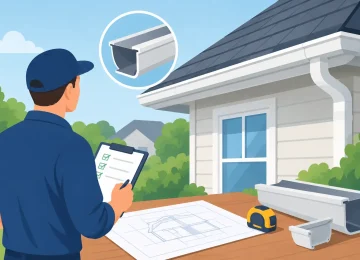
A professional gutter replacement should start with a site evaluation, not a guess. The contractor should inspect the current system, measure the roofline, identify drainage issues, and explain whether any fascia or support repairs are needed before installation.
On installation day, the old gutters are removed carefully, the attachment areas are checked, and the new system is mounted with proper slope and secure fastening. Downspouts should be positioned to move water away from the building effectively.
Clean job execution matters too. Homeowners should expect clear communication, respect for the property, and a finished system that looks clean and functions correctly from the start. That includes neat lines, solid attachment, and water flow designed for real weather, not just a quick install.
Should you add gutter guards at the same time?
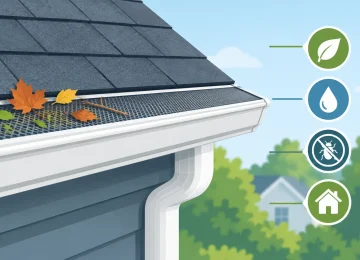
In many cases, yes. If your property deals with frequent leaf buildup, pine needles, or recurring clogs, adding gutter guards during replacement can make sense. It is usually more efficient to address both at once than to install a new gutter system and revisit protection later.
That said, gutter guards are not a cure-all. They reduce debris entry, but they do not eliminate the need for occasional maintenance. Some products perform better than others depending on the type of debris around the home. This is another area where local experience matters.
For homeowners who are tired of frequent cleanings or hard-to-reach clogs, guards can be a practical upgrade when paired with a well-designed gutter system.
Why local weather and local experience matter
In this region, gutters need to handle more than a light afternoon shower. Coastal weather, winter ice, wind-driven rain, and heavy seasonal debris all create demands that a generic approach can miss.
A contractor familiar with homes in New Jersey and Staten Island can make better recommendations on sizing, fastening, and drainage layout because those decisions are shaped by local conditions. That kind of experience helps prevent common problems like overflow at roof valleys, ice-related stress, and runoff collecting too close to the foundation.
Cavallari Gutters approaches replacement with that bigger protection picture in mind. The goal is not just to hang new gutters. It is to give the property a system that manages water reliably and holds up over time.
How to know you are hiring the right contractor
Gutter replacement should come with clear answers. Are they licensed and insured? Do they specialize in gutter work or treat it as a side service? Will they explain the material options, sizing recommendations, and warranty coverage in plain language?
A reliable contractor should be willing to walk you through the why behind the estimate. If one company recommends larger gutters or more downspouts than another, ask what problem that change is meant to solve. Good contractors do not avoid those conversations. They welcome them.
You should also look for signs of follow-through. Clear scheduling, responsive communication, and standing behind completed work matter just as much as the installation itself.
If your gutters are showing their age, the best next step is not to wait for the next hard storm to make the decision for you. A well-planned replacement protects more than the roof edge. It helps protect the parts of your home that water is always trying to reach.

Leave a Reply