
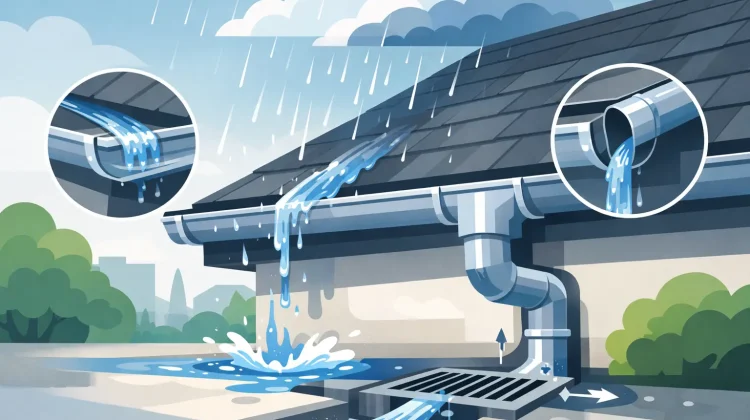
When water starts spilling over the gutter edge during a hard rain, the problem usually is not the storm. It is the drainage system. If you are wondering how to improve roof drainage, the right answer starts with identifying where water is slowing down, backing up, or getting pushed where it should never go.
Good roof drainage protects more than the roof itself. It helps prevent foundation settlement, siding stains, fascia rot, landscape washout, basement moisture, and ice-related damage in colder months. For homes and commercial buildings in New Jersey and Staten Island, where heavy rain, wind-driven storms, and seasonal debris are all part of the picture, drainage issues tend to show up fast.
Why roof drainage fails in the first place
Most drainage problems are not caused by one dramatic defect. More often, they build up over time. A gutter may be slightly undersized for the roof area. A downspout may be clogged halfway down. The pitch may be off just enough to hold water. Add leaves, seed pods, roof grit, and a few intense storms, and the system starts falling behind.
The roof design matters too. Steeper roof planes move water faster. Valleys concentrate runoff into one area. Long runs can overwhelm a single downspout if the spacing is not right. Commercial roofs have their own version of this problem, especially on low-slope surfaces where drainage depends on internal drains, scuppers, or carefully managed slope.
That is why improving drainage is usually about the full system, not just one part.
How to improve roof drainage by starting with the basics
The first step is to look at how water behaves during rain. If water overshoots the gutter, spills at corners, drips behind the gutter, or pools near the foundation, those patterns tell you a lot. You are not just looking for damage. You are looking for flow.
Cleaning is the most basic place to start, but it still matters. Gutters packed with leaves or roof granules cannot move water at full capacity. Downspouts can also clog below the visible opening, which means the top may look clear while the system still backs up. If your gutters have not been cleaned on a regular schedule, drainage performance will suffer no matter how well the system was installed.
It is also worth checking whether the gutters are pulling away from the fascia. Even a solid gutter system can fail if fasteners loosen or sections begin to sag. Water follows the low spots, so a gutter that has shifted out of position may trap water instead of directing it to the downspouts.
Gutter size and downspout capacity matter more than many owners expect
One of the most overlooked answers to how to improve roof drainage is upgrading capacity. Many homes have older gutter systems that were installed to a basic standard, not sized for the actual roof layout or the rainfall intensity the property sees now.
A larger gutter profile can make a noticeable difference, especially on roof sections that collect fast-moving runoff. The same goes for oversized downspouts. If the gutter can collect water but the downspout cannot move it away quickly enough, overflow still happens.
This is especially common at roof valleys, where two roof planes direct water into one concentrated point. In those areas, you may need a larger outlet, an additional downspout, or both. On commercial properties, insufficient drainage capacity can lead to standing water, added weight on the roof, and premature wear on roofing materials.
There is a trade-off, though. Bigger is not always better if the system is poorly placed or installed with the wrong pitch. Capacity helps, but only when the rest of the drainage path is working properly.
Correct pitch is what keeps water moving
Gutters should not look sharply sloped, but they do need enough pitch to move water toward the outlets. If they are too flat, water sits in the trough. If the pitch is uneven, water can collect in sections and leave debris behind, which creates a cycle of repeated blockage.
This is one of those issues property owners often notice only after the fact. You may see standing water a day after rain, rust spots in certain sections, or mosquito activity around stagnant water. Those signs usually point to drainage that is technically functioning, but not well.
Re-pitching a gutter system can improve performance without requiring full replacement, assuming the materials are still in good condition. If the gutters are older, bent, or repeatedly separating at the seams, replacement may be the better investment.
Extend drainage away from the structure
Moving water off the roof is only half the job. It also needs to be discharged far enough away from the building. Downspouts that empty too close to the foundation can create major problems even when the gutters themselves are working properly.
If you see pooling near the base of the home, mulch washout, settling pavers, or damp basement walls, short discharge points may be part of the issue. Downspout extensions, splash blocks, and underground drain connections can all help, depending on the grade and layout of the property.
This part depends heavily on site conditions. A small residential lot may need a different approach than a commercial property with paved areas and multiple roof sections. The goal is the same in every case: collect, direct, and discharge water without sending it back toward the structure.
How to improve roof drainage in problem areas
Some roofs need more than routine maintenance because the design naturally creates stress points. Valleys, dormers, inside corners, chimney areas, and long roof runs are all worth a closer look.
At a valley, water may hit the gutter so forcefully that it splashes over the front edge. A gutter apron, splash guard, or capacity upgrade may help control that runoff. In other cases, the problem is not impact but concentration – too much water is being asked to enter one section of gutter and one downspout. Adding another outlet can relieve that pressure.
If water gets behind the gutter, the issue may involve drip edge placement, fascia condition, or the gutter being installed too low or too far from the roof edge. These are not cosmetic problems. Water behind the gutter can rot wood trim and create hidden damage long before a leak appears indoors.
Low-slope commercial roofs require their own attention. Internal drains and scuppers need to stay clear, and ponding water should never be treated as normal. A little standing water after rain may not be unusual on some roofs, but persistent ponding is a warning sign that slope, drain placement, or drain maintenance needs review.
Gutter guards can help, but they are not a cure-all
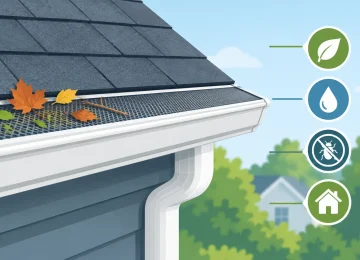
Gutter guards can improve drainage by reducing the amount of debris entering the system. For many properties surrounded by trees, they are a practical upgrade that cuts down on cleanings and helps gutters stay open longer during storm season.
Still, they are not magic. Some guard styles perform better than others depending on the type of debris around the property. Pine needles, small seeds, and roof grit behave differently than larger leaves. Guards also need occasional inspection because debris can collect on top or at entry points.
The best use of gutter guards is as part of a broader drainage plan, not a substitute for proper sizing, pitch, and downspout design.
Repair or replace?
That depends on the age of the system and the type of failure you are seeing. If the gutters are structurally sound and the problem is isolated to clogs, loose fasteners, minor pitch issues, or short discharge points, repair may be enough.
If you are seeing recurring overflow, seam separation, rust, sagging runs, fascia damage, or chronic drainage issues despite repeated cleaning, replacement often makes more sense. At that point, patching one section at a time can cost more in the long run than installing a properly sized, better-performing system.
For property owners who want a straightforward answer, this is where working with a gutter specialist matters. A contractor focused on water management can usually tell the difference between a maintenance issue and a system design issue much faster than a general exterior crew.
When professional help is the smart move
If drainage problems are causing leaks, wood rot, foundation concerns, or repeat overflow during storms, it is time to have the system evaluated. The right fix may be simple, but guessing can get expensive when water is involved.
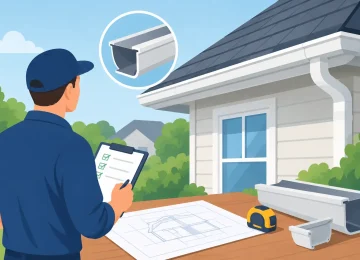
A professional inspection should look at gutter size, pitch, hanger spacing, downspout placement, roof layout, discharge points, and any signs of water intrusion around fascia, soffits, siding, and foundation areas. For homeowners and building owners in this region, local experience also matters. Systems need to hold up to seasonal debris, freeze-thaw cycles, and strong rain events.
At Cavallari Gutters, that practical approach is what guides the work – solve the drainage problem at its source, install the right system for the property, and make sure the water goes where it is supposed to go.
If your roof drainage has been giving you warning signs, do not wait for the next heavy storm to tell you the same thing again. The sooner the flow is corrected, the easier it is to protect the parts of your property that water reaches next.

Leave a Reply