
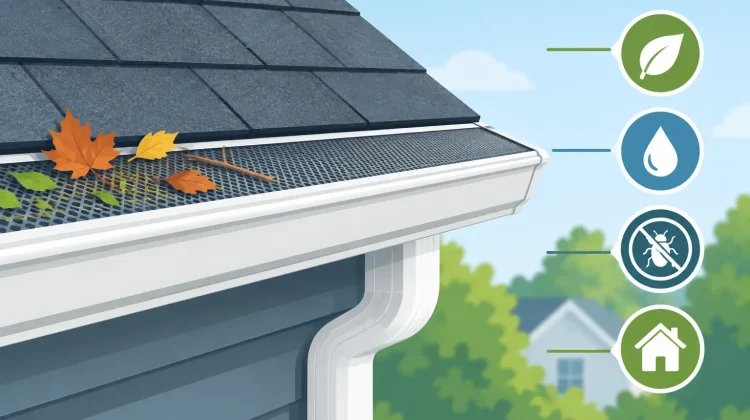
A gutter guard is not simply a cover placed over an existing gutter. Its job is to control how leaves, roof debris, and water move across the roof edge during real storms. The top gutter guard features are the ones that keep water flowing where it belongs while making routine gutter maintenance safer and less frequent.
For homeowners and property managers in New Jersey and Staten Island, that performance matters. Heavy rain, windblown leaves, pine needles, seed pods, and winter weather can expose weaknesses in a poorly chosen guard or an improperly installed system. The right solution depends on your roof, gutter size, nearby trees, drainage needs, and the condition of the gutters already in place.
Top Gutter Guard Features to Look For
The best guard is not necessarily the one with the biggest sales claim or the finest-looking surface. It should work with your roofline and gutter system, hold up through changing seasons, and allow water to enter the gutter without creating new maintenance problems.
Effective debris filtration
A quality gutter guard needs openings that keep common debris out while allowing rainwater through. Larger openings may handle a fast downpour well, but they can allow small leaves, shingle grit, and seed pods into the gutter. Very fine mesh blocks smaller debris, although it can need occasional brushing when pollen, roof grit, or fine organic material collects on top.
There is no single opening size that is right for every property. Homes surrounded by mature deciduous trees often need protection from leaves and helicopters. Properties near pine trees need a guard that can manage needles without creating a surface where debris mats together. A professional assessment should account for the material that actually lands on your roof, not just a general idea of “leaves.”
High water-handling capacity
Guards must do more than block debris. They must collect water quickly during hard rain. This is especially important on steep roof pitches, long roof runs, and buildings with valleys that send a concentrated amount of water into one section of gutter.
Well-designed guards use their shape and surface tension to guide water into the gutter while encouraging leaves to slide away. But even a good guard can overflow if the gutter is too small, incorrectly pitched, loose from the fascia, or connected to undersized downspouts. Gutter guards perform best as part of a complete drainage system, not as a shortcut around needed repairs or replacement.
Durable, weather-resistant material
Material affects how a guard handles heat, cold, wind, sunlight, and physical impact. Aluminum guards are lightweight and resist rust. Stainless steel micro-mesh offers strong, fine filtration and can be a practical choice for properties with heavy tree coverage. Some systems use reinforced polymer components, which can perform well when they are designed for the local climate and properly secured.
The key is long-term stability. Thin materials may bend, warp, or pull away after repeated weather exposure. Metal components should resist corrosion, and all fasteners should be suitable for exterior use. A guard that shifts out of position leaves openings for debris and can interfere with the flow of water at the roof edge.
Secure installation that respects the roof
Installation quality is one of the most overlooked gutter guard features. A guard should fit securely without creating gaps, sagging into the gutter, or affecting the roof system. The installer needs to consider the fascia condition, gutter hangers, roof edge, and the manufacturer’s requirements before attaching anything.
Some guards tuck beneath the shingles, while others attach to the gutter’s front lip or use a combination of connection points. The right method depends on the product and roof construction. Work should never compromise shingles, flashing, or drainage at the eaves. If gutters are pulling away from the home or show signs of leaking seams, those issues should be addressed before guards are installed.
Compatibility with properly sized gutters and downspouts
A guard cannot compensate for a gutter system that is undersized for the roof area. Water may still spill over the front edge if the gutter cannot hold the volume coming off the roof. This is a common concern on larger homes, commercial properties, and rooflines that collect runoff from multiple slopes.
Before recommending guards, a gutter specialist should look at the size and condition of the existing gutters, the number and placement of downspouts, and where water discharges at ground level. In some cases, replacing a worn or undersized system with properly sized seamless gutters is the smarter first step. The goal is dependable water management from the roof to a safe discharge point away from the foundation.
A low-profile appearance
Gutter protection should not distract from the appearance of a home or commercial building. Low-profile guards that sit neatly along the roofline can provide protection without making the gutter system look bulky or unfinished. Color and finish may also matter when guards are installed with new gutters selected to complement the siding, trim, and roof.
Appearance should not come ahead of performance, but property owners should not have to choose between the two. A clean installation with straight lines, proper alignment, and matched components protects curb appeal as well as the building exterior.
Features That Reduce Maintenance, Not Eliminate It
One of the most honest things to understand about gutter guards is that they reduce maintenance but do not make a property maintenance-free. A well-performing system keeps most debris out of the gutter channel, which can greatly reduce clogs and the need for frequent cleanings. Still, material can collect on top of any guard, especially after storms or during peak leaf season.
Periodic visual checks remain worthwhile. Look for water spilling over the gutter during rainfall, debris collecting at valleys, guards that appear lifted or bent, and downspouts that drain slowly. If you notice overflow, do not assume the guard itself is the only issue. The cause may be a blocked downspout, incorrect gutter pitch, a loose section, or excess roof runoff.
For multi-story homes and commercial properties, those checks are safer when handled by a qualified professional. Climbing ladders to clear gutters creates real risk, and working near roof edges can cause damage when the wrong tools or techniques are used.
When a Gutter Guard May Not Be the First Repair
Gutter guards are a strong investment when the underlying system is functioning correctly or is being upgraded at the same time. They may not be the first answer if gutters have extensive rust, damaged seams, poor slope, failing hangers, or water draining too close to the building.
A property with recurring basement moisture, foundation staining, washed-out landscaping, or siding damage may need a broader drainage evaluation. Guards can limit debris-related blockages, but they cannot repair a downspout that ends beside the foundation or a gutter that is installed at the wrong pitch.
This is why an on-site review is valuable. A dependable contractor should explain what the system needs, what it does not need, and why. Clear recommendations help property owners avoid spending money on an attractive add-on while the main drainage problem remains unresolved.
Choosing the Right Guard for Your Property
Start by considering the type of debris around the building, not just the amount. Pine needles, broad leaves, roof granules, and small seed pods behave differently. Next, consider roof pitch, roof valleys, gutter capacity, and how difficult the gutters are to access. A single-story ranch home with limited tree cover has different needs than a tall home beneath mature trees or a commercial property with long roof runs.
Warranty coverage also deserves attention. Ask what the product warranty covers and what workmanship protection applies to the installation. It is helpful to know who will respond if a guard loosens, a gutter section needs adjustment, or an existing drainage concern becomes apparent after the work is complete.
Cavallari Gutters helps property owners evaluate gutter guard options as part of the complete drainage picture, including gutter condition, sizing, repairs, and cleaning needs. The best recommendation is one that protects the roofline and foundation without overselling a one-size-fits-all solution.
A well-chosen gutter guard should make the next heavy rain less concerning, not create another item to watch. When it is paired with sound gutters, secure installation, and a practical maintenance plan, it can help protect the parts of your property that are most expensive to repair.


Leave a Reply