
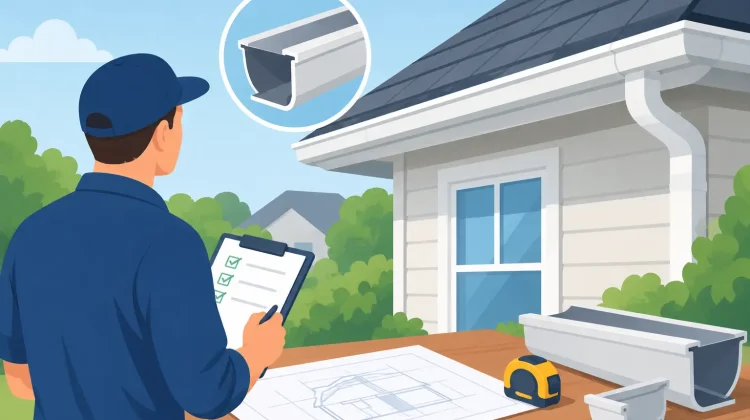
A gutter system can look fine from the ground and still be failing where it matters most. Water spilling behind a gutter, pooling near a foundation, or running down siding during a hard New Jersey storm can create costly problems long before the gutters finally pull away from the roofline. This gutter replacement planning guide helps property owners make a sound decision before scheduling work.
Replacement is not always the answer. A localized leak, loose hanger, or clogged downspout may be repairable. But when problems are widespread, planning a properly sized replacement system is often the more dependable way to protect the roof, exterior walls, landscaping, and foundation.
Start With the Reason for Replacement
The first step is identifying whether the existing system has reached the end of its useful service life. Frequent seams leaking, rust or corrosion, sagging runs, recurring overflow, separating joints, and downspouts that discharge too close to the building are all warning signs. Peeling paint, stained siding, washed-out mulch, or moisture along the foundation can also point to poor drainage management.
Age alone does not decide the issue. A newer gutter can perform poorly if it was undersized, pitched incorrectly, or installed with too few downspouts. Likewise, an older system may still have life left if the issue is limited to one damaged section. A professional inspection should look beyond the visible gutter channel and consider the fascia, roof edge, drainage path, and condition of the downspouts.
For commercial properties and multifamily buildings, examine areas near entrances, loading zones, walkways, and parking areas especially closely. Overflow in these locations can affect more than the building itself. It can create slippery conditions, damage pavement, and become an ongoing maintenance concern for tenants and visitors.
Map How Water Moves Around the Building
Gutters are part of a complete water-management system, not a decorative trim detail. Before choosing materials or colors, walk the property after rainfall if it is safe to do so. Watch where water overflows, where it lands after leaving the downspout, and whether it moves away from the structure.
Pay attention to roof valleys. Valleys concentrate a large amount of water into a small area, and a standard gutter setup may not handle that volume without modifications. Long roof runs, steep pitches, upper roofs draining onto lower roofs, and large commercial roof sections can also require greater capacity.
The ground matters, too. A downspout that empties next to a low spot may simply send water back toward the foundation. Extensions, underground drainage connections, splash blocks, and grading improvements can each be appropriate depending on the site. The goal is simple: collect roof runoff effectively, carry it safely, and discharge it away from the building.
Choose the Right Gutter Size and Design
Five-inch gutters are common on many homes, but they are not the right choice for every roof. Six-inch gutters offer additional capacity and are often a practical option for larger roof areas, steep roofs, or homes that regularly experience heavy runoff. The right size depends on roof geometry, drainage points, local weather exposure, and the amount of water converging at valleys.
Downspout sizing and placement deserve equal attention. Installing a larger gutter without enough downspout capacity can still lead to overflow. In some cases, moving or adding a downspout will improve performance more than replacing one section of gutter alone.
Seamless aluminum gutters are a popular choice because they are durable, available in many colors, and have fewer joints than sectional systems. Fewer seams generally mean fewer potential leak points. Copper offers a distinctive appearance and long service life, but it comes at a higher upfront cost and is not necessary for every property. Other material options may be appropriate based on the building style, budget, and maintenance expectations.
Profile also matters. K-style gutters are widely used because they pair well with many residential rooflines and provide good capacity. Half-round gutters can complement certain architectural styles, particularly historic or custom homes, but their performance and installation requirements should be evaluated for the specific property.
Plan for Fascia and Roofline Repairs
A replacement project may uncover hidden damage behind the old gutters. Years of overflow or leaks can soften fascia boards, deteriorate trim, and affect the wood near the roof edge. Installing a new gutter on compromised backing can shorten the life of the work and leave the original water problem unresolved.
Ask the contractor how damaged fascia, soffit, or trim will be handled if it is discovered during the project. This should not be an afterthought. Clear communication about potential repairs helps avoid surprises and ensures the new system is secured to a sound surface.
Roof condition should be part of the conversation as well. If roofing work is planned soon, timing the two projects carefully can prevent unnecessary removal or adjustment later. There is no single rule for every property, but coordinating trades can save inconvenience and protect the finished roofline.
Budget for Performance, Not Just the Lowest Bid
A replacement estimate should reflect more than linear feet of gutter. Material type, gutter size, roof height, access, number of corners, downspout configuration, removal of old materials, fascia repairs, and drainage extensions can all affect the final cost. A straightforward single-story home will be priced differently from a tall, complex roofline or a commercial building with difficult access.
When comparing estimates, make sure the proposed scope is comparable. One proposal may include properly sized downspouts, removal and disposal, secure hanger spacing, and color-matched components, while another may only cover the basic gutter runs. A lower number is not necessarily a lower long-term cost if the system is not designed to solve the drainage issue.
It is also reasonable to ask about workmanship coverage, product warranties, licensing, insurance, scheduling, and cleanup. Property owners should know who will be performing the work, what is included, and how questions will be handled after installation. Dependable follow-through matters when the next heavy storm tests the system.
Decide Whether Gutter Guards Fit Your Property
Gutter guards can reduce the amount of debris that enters a system, but they are not a maintenance-free promise. Their value depends on the trees around the property, the type of debris involved, roof pitch, and the condition of the gutters underneath. Fine debris, seed pods, and roof grit can still require periodic attention.
For a property with mature trees or hard-to-reach rooflines, guards may reduce cleaning frequency and help keep downspouts open. For a building with very little overhead debris, regular cleaning may be the more practical choice. The key is pairing the right guard type with a properly installed gutter system, not using guards to cover up an undersized or poorly pitched installation.
Prepare the Property for Installation Day
A professional crew can work more efficiently when access is clear. Move vehicles away from the work area, secure pets, and remove patio furniture, planters, or decorations near the exterior walls where possible. Let the contractor know about irrigation lines, underground drains, delicate landscaping, gates, or access restrictions before work begins.
After installation, inspect the property with the contractor or request a clear explanation of the completed scope. Confirm where downspouts discharge, ask how to care for the new system, and keep the warranty information with your property records. If a storm reveals an unexpected issue, report it promptly rather than waiting for repeated overflow to cause damage.
Work With a Gutter Specialist Who Looks at the Whole System
A replacement project should solve a drainage problem, not simply put new metal along the roof edge. Cavallari Gutters approaches each property with attention to capacity, placement, secure installation, and the path water takes after it leaves the roof. For homeowners, property managers, and commercial owners in New Jersey and Staten Island, that focused approach helps protect the areas that are expensive to repair.
If you are seeing overflow, leaks, sagging, or water collecting near the building, request an estimate before the next season of heavy rain turns a manageable gutter issue into exterior or foundation damage.



Leave a Reply