
A gutter can look clear from the ground and still hold enough wet leaves, roof grit, and compacted debris to overflow in the next hard rain. Knowing how to clean high gutters starts with an honest assessment of the height, roof layout, and condition of the system. The goal is not simply to remove debris. It is to restore a clear path for water while protecting yourself, the roof, and the property below.
For many New Jersey and Staten Island homes, the safest choice is professional cleaning, especially where second-story rooflines, steep grades, or hard-to-reach areas are involved. Still, property owners should understand what safe cleaning involves and what warning signs point to a larger gutter problem.
Start With Safety, Not the Ladder
High gutters turn a basic maintenance task into fall-risk work. A ladder placed on uneven ground, soft soil, pavers, or a sloped driveway can shift without warning. Leaning too far to reach the next section is another common cause of injury.
Before doing any cleaning, look at the site from the ground. Check for overhead utility lines, low branches, loose siding, wet surfaces, and areas where the ladder cannot sit flat. Do not work during rain, high winds, icy conditions, or when the roof is wet. Debris is easier to remove when dry, but safety matters more than convenience.
If you decide the job is within reach, use an extension ladder rated for the work and set it on firm, level ground. The ladder should extend at least three feet above the roof edge if you need to step onto the roof. Keep the base roughly one foot away from the building for every four feet of working height. A ladder stabilizer can help prevent damage to the gutter and provide more secure contact with the building.
Never rest a ladder directly against a weak, loose, or visibly sagging gutter. Do not clean high gutters alone. A second person can steady the ladder, keep people away from the work area, and respond if something goes wrong.
Gather Tools That Will Not Damage the Gutter
The right tools make cleaning more controlled and reduce the chance of denting aluminum, scratching painted finishes, or pulling a gutter loose from its fasteners. Wear work gloves, eye protection, and shoes with slip-resistant soles. Use a small plastic scoop, gutter trowel, or gloved hands to remove debris. Avoid sharp metal tools that can puncture a gutter or scrape its protective finish.
You will also need a bucket with a hook or handled bag for debris, a garden hose with a spray nozzle, and a plumber’s snake if a downspout proves blocked. Put a tarp below the work area if you want to make yard cleanup easier, but do not leave piles of wet debris against the foundation or landscaping.
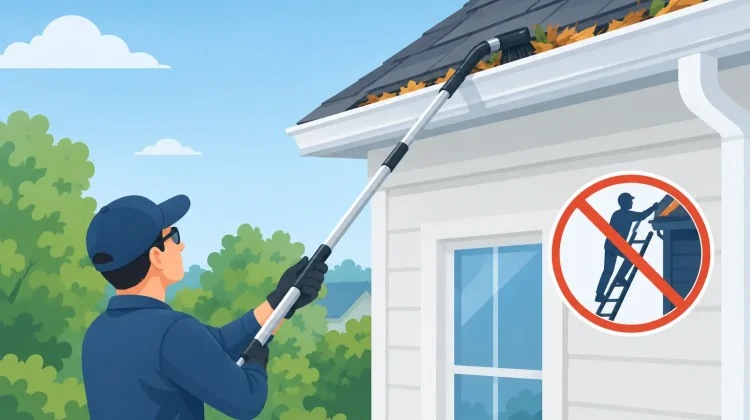
For gutters that are too high to reach safely from a ladder, telescoping gutter-cleaning attachments may seem like a simple solution. They can help with light, dry debris on a one-story section, but they are not a complete answer. These tools can scatter sludge onto siding and windows, miss packed downspouts, and make it difficult to see whether the gutter is actually draining. They should never encourage a homeowner to work from an unsafe position.
How to Clean High Gutters Step by Step
Start at the downspout end of each gutter run. Removing debris near the outlet first helps prevent a large clump from being pushed into and blocking the downspout. Work in short sections, moving the ladder rather than stretching sideways.
Scoop out leaves, twigs, roofing granules, seed pods, and the dark compost-like material that collects at the bottom of the channel. Place it in your bucket rather than dropping it to the ground. Pay close attention to corners, seams, and the area directly above each downspout, where debris often compacts.
Once the larger material is removed, flush the gutter with a hose. Begin at the end farthest from the downspout so water travels in the same direction it would during a storm. The water should move steadily toward the outlet without pooling. A little standing water may signal that the gutter is not pitched correctly, while water spilling over the front edge may mean there is still a blockage or the system is undersized for the roof area.
If water backs up at the downspout, disconnect the lower elbow if it is safely accessible and clear it from the bottom first. Then run a hose up through the downspout. For a stubborn clog, use a plumber’s snake gently. Avoid forcing a hard tool through the pipe, which can damage seams or dislodge a connection.
After flushing, inspect where the downspout discharges. Water should be directed away from the building, ideally onto a properly graded area or through an extension that carries it away from the foundation. A clear gutter cannot protect the property if water is released beside the wall.
Look for Problems While You Clean
Gutter cleaning is one of the best opportunities to catch small issues before they become repair projects. As you work, check whether the gutter line appears straight and secure. Sagging sections may hold water and debris, adding weight that can pull fasteners from the fascia board.
Watch for loose hangers, separated seams, rust, cracks, and peeling finish. Look behind the gutter for stained fascia, soft wood, mildew, or signs that water has been running down the exterior wall. These conditions can point to leaks, improper slope, or roof runoff that is missing the gutter altogether.
Also inspect the roof edge from a safe position. Damaged shingles, deteriorated flashing, or an improperly installed drip edge can send water behind the gutter instead of into it. Cleaning alone will not correct those issues. The same is true if the gutters overflow during ordinary rain even when they are clear. The system may need repairs, additional downspouts, or a larger gutter size.
When High Gutter Cleaning Should Be Left to a Professional
There is no prize for handling a dangerous job yourself. Professional service is the practical choice when gutters are two stories or more above grade, when the ground is sloped or obstructed, or when the roof has a steep pitch. It is also the better option if you see loose gutters, rotted fascia, damaged downspouts, or signs of water intrusion.
Commercial properties and multifamily buildings deserve particular care. A blocked gutter on a larger roof can move a significant volume of water toward entrances, walls, parking areas, and foundations. Access may require specialized equipment, and property managers need documentation that the work was completed safely and thoroughly.
A gutter specialist can clean the system while evaluating drainage performance, mounting hardware, seams, downspout placement, and the condition of the surrounding roofline. Cavallari Gutters provides cleaning support along with gutter repair, replacement, and gutter guard solutions for property owners who need more than a quick debris removal.
Consider Gutter Guards After Solving the Underlying Issue
Gutter guards can reduce the amount of leaves and larger debris that enter a gutter, but they are not maintenance-free. Fine roof grit, pollen, and small particles can still collect on or beneath guards. Some guard styles are better suited to certain roof types, tree cover, and gutter configurations than others.
The system should be cleaned and inspected before guards are installed. Installing a guard over a sagging gutter, blocked downspout, or failed seam only hides the problem. A proper evaluation can determine whether guards make sense for the property and whether the existing gutters are in good condition to support them.
Set a Schedule Based on Your Property
Most homes benefit from gutter cleaning at least twice a year, commonly after spring pollen and seed drop and again after fall leaves have come down. Properties surrounded by mature trees may need attention more often. Pine needles, oak tassels, helicopter seeds, and heavy roof granule buildup can create clogs outside the usual schedule.
Do not wait for visible overflow to act. By then, water may already be soaking fascia boards, washing out landscaping, staining siding, or collecting near the foundation. A seasonal inspection is usually less costly and far less disruptive than repairing water damage.
A clean gutter is only valuable when it drains correctly and stays securely attached to the building. If the height, access, or condition of your system makes the work uncertain, schedule a professional inspection instead of taking a chance from a ladder. Protecting the roofline and foundation should never come at the expense of personal safety.



Leave a Reply