
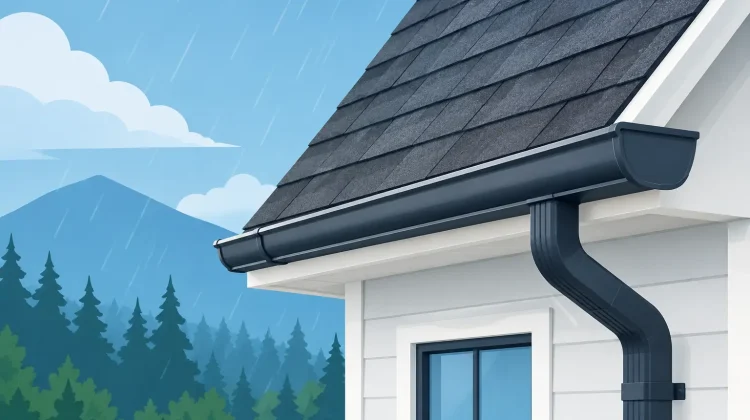
A steep roof can shed an impressive amount of water in seconds. During a hard New Jersey or Staten Island storm, that runoff hits the gutter with more speed and volume than a low-slope roof. That is why the best rain gutters for steep roofs are not simply the ones that look good along the roofline. They need enough capacity, the right outlet design, and secure installation to move water away before it spills over siding, foundations, walkways, and landscaping.
For homeowners and property managers, the goal is straightforward: build a drainage system that performs when the weather is at its worst, not only on a calm day.
Best Rain Gutters for Steep Roofs Start With Capacity
Roof pitch matters because it changes how quickly rainwater reaches the eaves. A steep roof does not always have a larger drainage area than a flatter roof, but it can concentrate and accelerate runoff. Long roof planes, wide valleys, dormers, and upper roof sections that drain onto lower sections can intensify the problem further.
A gutter that is too small may appear fine during ordinary rainfall, then overflow during the first heavy storm. Water can run behind the gutter, stain fascia boards, wash out mulch, and pool near the foundation. On commercial properties, it can also create slippery entrances and premature wear on exterior finishes.
For many homes, 5-inch K-style gutters are a common starting point. On steep roofs, however, 6-inch seamless gutters are often the more dependable choice. The additional capacity can make a meaningful difference, especially on larger homes or rooflines with valleys. Half-round gutters can also work well and offer a classic appearance, but their size and outlet planning must be matched carefully to the roof’s runoff demands.
The right answer depends on the roof area feeding each gutter run, the pitch, local rainfall intensity, and where water naturally collects. A large gutter on one section cannot compensate for an undersized system at a valley or a bottlenecked downspout.
Choose a Gutter Shape and Material That Fits the Property
For most residential properties, seamless aluminum gutters are a practical option for steep roofs. They are lightweight, rust-resistant, available in many colors, and can be fabricated to fit the building with fewer joints than sectional systems. Fewer seams generally means fewer potential leak points over time.
Six-inch K-style aluminum gutters are especially popular because their profile provides strong carrying capacity while fitting the look of many traditional and modern homes. They can be paired with oversized downspouts to help keep fast-moving roof water from backing up at the outlets.
Copper gutters are another strong option for properties where architectural appearance is a priority. Copper is durable and develops a distinctive patina, but it comes at a higher upfront cost. It also requires experienced installation because the material, connections, and expansion considerations differ from aluminum.
Steel gutters may be appropriate in certain applications, but they require attention to coatings and long-term corrosion protection. Vinyl is usually less suitable for demanding steep-roof drainage conditions, particularly in climates with temperature swings. It can become brittle over time and may not provide the durability or support needed for high-volume runoff.
Material matters, but sizing and installation quality matter more. A premium gutter system will still underperform if it is not pitched correctly, supported properly, or given enough outlets.
Seamless Gutters Reduce Trouble Spots
A steep roof puts added stress on every part of the drainage system. Water moves quickly, and overflowing water can expose weak seams and joints. Seamless gutters are formed in long continuous runs for each section of the roofline, limiting the number of seams to corners and end points.
This does not make a system maintenance-free, but it can reduce common leak locations. For homeowners who want a clean appearance and dependable performance, seamless aluminum gutters are often a sensible balance of value, durability, and customization.
Downspouts Matter as Much as the Gutters
Gutters collect water. Downspouts are what get it off the property safely. A steep-roof system can fail even with oversized gutters if the downspouts are too small, too few, clogged, or poorly placed.
Standard downspouts may be sufficient for small, uncomplicated roof sections. Larger roof areas and valleys often benefit from oversized downspouts, such as 3-by-4-inch rectangular downspouts, because they can move more water without restricting flow. More capacity at the outlet helps prevent water from piling up in the gutter during intense rain.
Placement is equally important. Long gutter runs may need multiple downspouts, and valleys may require nearby outlets to manage concentrated runoff. Water should discharge well away from the foundation through properly positioned extensions or drainage solutions. Dumping a large volume of water next to the house simply transfers the problem from the roofline to the basement, crawl space, or landscaping.
On properties with underground drainage, the existing system should be evaluated before connecting new downspouts. A buried line that is blocked, undersized, or damaged can cause backups that are difficult to spot until water begins overflowing near the building.
Installation Details That Protect a Steep Roofline
The best gutter system is installed as a complete water-management system, not as a row of metal attached to the fascia. Proper gutter pitch is essential. Gutters need a controlled slope toward their downspouts so water drains instead of standing in the trough, but too much pitch can look uneven from the ground.
Fastening is another key detail. Steep-roof runoff can be forceful, and heavy snow, ice, or debris can add weight. Strong hangers spaced appropriately along the gutter run help keep the system secure and maintain its intended slope. The fascia board itself should also be inspected. Installing new gutters onto rotted wood only hides a problem that may continue to worsen.
At roof valleys, installers may need to account for the concentrated stream of water that comes down during storms. In some cases, a wider gutter, added downspout capacity, or a carefully fitted splash guard helps keep valley runoff inside the system. Splash guards can be useful, but they are not a replacement for correctly sized gutters and outlets.
For homes with ice dam history, gutters are only one part of the conversation. Insulation, attic ventilation, roof condition, and snow management all affect ice formation. A gutter system should be installed to drain effectively, but no gutter can solve an underlying ice-dam problem on its own.
Are Gutter Guards a Good Fit for Steep Roofs?
Gutter guards can be a valuable addition when trees create frequent debris buildup. On steep roofs, leaves, pine needles, and roof granules can quickly collect at outlets and valleys, reducing the capacity the system needs during a storm. A well-selected guard can limit debris entry and reduce the frequency of cleaning.
Still, gutter guards are not one-size-fits-all. Some products handle leaves well but may need attention around fine debris or heavy pollen. Others can affect how water enters the gutter when runoff is extremely fast. The roof pitch, shingle type, nearby trees, and gutter design should all be considered before choosing a guard.
Even guarded gutters deserve periodic inspection. A professional can check for debris on top of guards, confirm downspouts are flowing freely, and identify loose hangers, damaged seams, or drainage concerns before they turn into exterior water damage.
When a Repair Is Enough and When Replacement Makes Sense
A repair may be the right choice when the issue is isolated: a loose hanger, a leaking corner, a separated downspout, or a small section with improper slope. Prompt repairs can protect the fascia and prevent a manageable issue from becoming a larger replacement project.
Replacement is often the better long-term decision when gutters are repeatedly overflowing, undersized for the roof, pulling away from the fascia, heavily corroded, or patched in multiple locations. If a property has experienced foundation moisture, washed-out landscaping, or recurring water staining, it is worth looking beyond the visible leak and evaluating the full drainage design.
Cavallari Gutters helps property owners in New Jersey and Staten Island assess gutter size, downspout placement, materials, and drainage needs based on the building itself. A professional estimate should explain what is being installed and why, so the system protects the property rather than just improving its appearance.
A steep roof asks more of its gutters every time it rains. Giving that water a properly sized path from roofline to discharge point is one of the most practical ways to protect the investment underneath it.


Leave a Reply