
A gutter system can be perfectly installed and still create a water problem if runoff lands in the wrong place. The question of downspout extensions versus splashblocks comes down to one practical issue: how far water needs to travel after it leaves the gutter. For homes and commercial properties in New Jersey and Staten Island, getting that answer right helps protect foundations, basements, landscaping, walkways, and exterior finishes.
A splashblock may be all a property needs in one location. In another, it can leave too much water too close to the building. The right choice depends on the roof area feeding the downspout, the grade around the structure, soil conditions, nearby hardscape, and where water can safely drain.
What Each Drainage Option Does
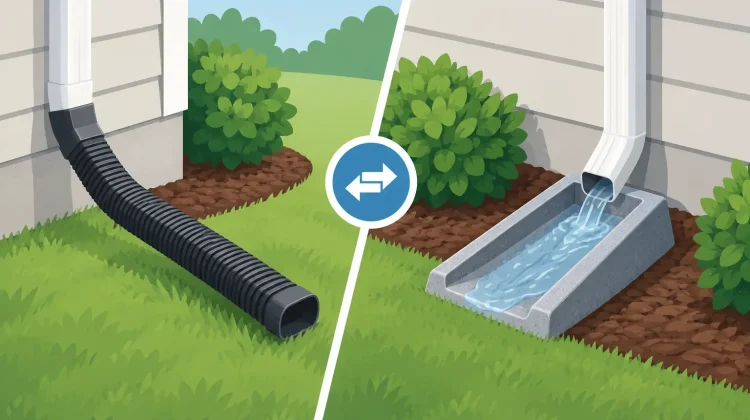
A splashblock is a short, angled channel placed directly beneath a downspout. Usually made of concrete, plastic, or resin, it spreads the flow of water away from the outlet so it does not hit the soil in one concentrated stream. That simple job matters. Without a splashblock or extension, roof runoff can create a trench in mulch, wash away soil, and splash dirt back onto siding.
A downspout extension carries water farther from the foundation. Extensions may be rigid aluminum, vinyl, or plastic, while others are flexible or expandable. Some connect to an underground drain line, which can move water to a more suitable discharge point when surface drainage is limited.
Neither product replaces a properly sized, properly pitched gutter system. If gutters overflow during ordinary rain, the first issue may be debris, poor slope, undersized downspouts, or a drainage layout that cannot handle the roof’s water volume. Once water reaches the downspout, though, extensions and splashblocks determine where it goes next.
Downspout Extensions Versus Splashblocks: The Main Difference
The primary difference is distance. A splashblock generally moves water a short distance, often just a few feet. A downspout extension can direct runoff much farther away, making it the better choice when the ground near the foundation slopes toward the structure or stays wet after storms.
Splashblocks are often a good fit where the property already has positive grading. If the soil slopes away from the home and water naturally continues away from the foundation, a durable splashblock can reduce erosion without adding a visible piece of drainage equipment across the yard.
Extensions are more useful when water needs help getting beyond a problem area. This might include a basement wall that has shown moisture, a flower bed repeatedly washed out by runoff, or a low spot beside a driveway. They are also worth considering beneath large roof sections, where one downspout can release a significant amount of water during a heavy storm.
The goal is not simply to send water farther. It is to send it to a place where it will not create a new problem. Discharging water toward a neighbor’s property, a sidewalk, a driveway that freezes, or the base of a retaining wall can trade one drainage concern for another.
When a Splashblock Is the Better Choice
A splashblock is straightforward, low-profile, and easy to inspect. It has no moving parts and no connection point that can loosen over time. For properties with adequate slope and open drainage space, that simplicity is a real advantage.
Concrete splashblocks tend to stay in place well and hold up to weather, though they can be heavy and may crack if they shift or are struck by equipment. Plastic options are lighter and easier to reposition, but they may move during intense runoff or become brittle over time. Whichever material is used, the splashblock should sit level enough to catch the water and angle away from the structure.
Splashblocks also work well in areas where an extension would become an obstacle. A long above-ground extension across a narrow walkway, side yard, or service entrance can be inconvenient and easy to damage. In those locations, a splashblock may be appropriate if the surrounding grade does the rest of the work.
Still, a splashblock should not be used to cover up poor drainage. If water pools near the foundation after rain, a short channel alone is unlikely to solve it.
When You Need a Downspout Extension
A downspout extension is generally the stronger option when water remains close to the building. The farther runoff can travel over a properly graded area, the less likely it is to saturate soil along the foundation. This is especially relevant for homes with finished basements, older foundation walls, or landscaping that holds moisture.
Rigid extensions provide a defined path and typically look cleaner than flexible accordion-style products. They can be secured in place and matched to the existing downspout color in many cases. Flexible extensions can be useful around planting beds or irregular layouts, but they can collect debris, shift, and become less attractive over time.
For busy areas, a hinged extension may be a practical compromise. It can be flipped up for mowing, walking, or snow removal and lowered when rain is expected. The key is making sure it is returned to the drainage position. An extension that stays folded against the wall during every storm is not protecting the property.
Underground drainage can be a more finished solution where surface extensions are impractical. However, it needs proper design, adequate slope, a suitable outlet, and access for maintenance. A buried line that becomes blocked or has nowhere appropriate to discharge can create hidden drainage issues rather than solving them.
Pay Attention to Grading, Soil, and Winter Conditions
The best drainage choice is tied to the conditions around the building. In much of New Jersey and Staten Island, compacted soil and clay-heavy areas can drain slowly. Even a modest amount of roof runoff can sit near a foundation when the ground is flat or slopes the wrong way.
Look at the property during or shortly after a steady rain. Water should move away from the structure without puddling beside the foundation, pouring across a walkway, or eroding mulch. Staining on lower siding, bare soil under downspouts, recurring moss, and wet basement walls are all signs that drainage deserves closer attention.
Winter adds another consideration. Water directed across a sidewalk, driveway, or front entry can freeze and create a slip hazard. Extensions should discharge toward a safe, well-drained area and should not block access routes. Snow piles can also cover splashblocks and extension outlets, causing water to back up or redirect unexpectedly during a thaw.
Installation Details That Affect Performance
Even the right product can fail if it is installed carelessly. A downspout should be securely fastened to the gutter system, and its outlet should direct water into the splashblock or extension rather than over its edge. Extensions need a continuous path away from the building with no sharp bends, crushed sections, or uphill runs.
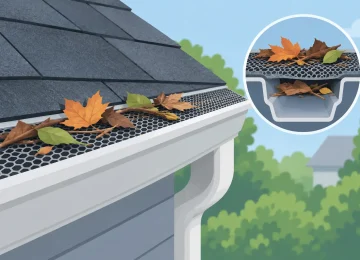
Keep discharge areas clear of leaves, mulch buildup, and landscape edging that can trap water. If a downspout repeatedly clogs, inspect the gutter above it as well. Gutter guards can reduce the amount of debris entering the system, but they should be selected and installed to suit the roof and gutter configuration, then supported with appropriate maintenance.
For larger homes, commercial buildings, and properties with complicated rooflines, drainage should be reviewed as a complete system. The location, size, and number of downspouts all affect how much water reaches each outlet. Cavallari Gutters evaluates these details so property owners can make drainage decisions based on actual site conditions, not a one-size-fits-all accessory.
A Practical Way to Make the Choice
Choose a splashblock when the grade already carries water away, runoff volume is moderate, and a short, unobstructed discharge path is enough. Choose a downspout extension when the foundation area stays damp, soil erodes, landscaping washes out, or the property needs water moved beyond the immediate perimeter.
If neither option leads water to a safe discharge area, the issue may be grading or a broader drainage design rather than the downspout accessory itself. A careful inspection before the next major storm can prevent a small runoff issue from becoming foundation moisture, damaged landscaping, or an icy walkway.
Leave a Reply