
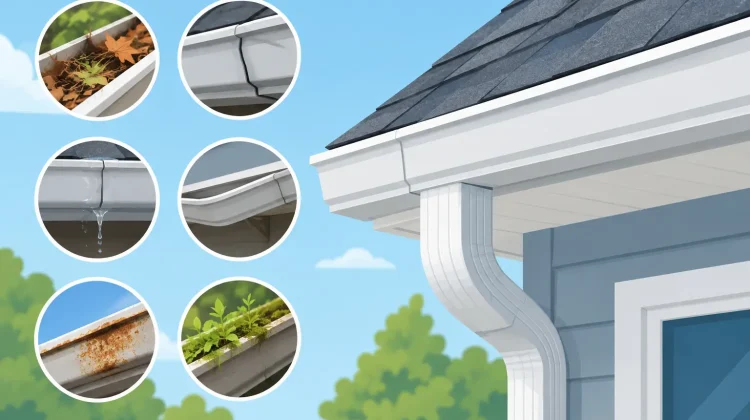
A gutter system rarely fails all at once. More often, small warning signs show up during a storm, along the roofline, or near the foundation long before a major leak appears. Knowing the right gutter replacement signs helps New Jersey and Staten Island property owners address drainage problems before water damages siding, landscaping, walkways, or the structure itself.
A repair can be the right answer for a single loose bracket or isolated leak. But when problems are widespread, recurring, or connected to an aging system, replacement is often the more dependable long-term investment.
1. Your Gutters Overflow in Ordinary Rain
Gutters can overflow when they are full of leaves, but a clean gutter that spills over during a normal rainstorm points to a larger issue. The system may be undersized for the roof area, pitched incorrectly, or carrying water toward a blocked or inadequate downspout.
Overflow matters because the water does not simply disappear after it runs over the edge. It can soak fascia boards, streak siding, wash out mulch, and collect near the foundation. On commercial properties, it may also create slippery entryways or damage exterior finishes.
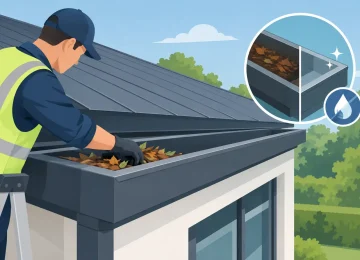
Cleaning may solve the issue when debris is the only cause. If overflow returns after cleaning, a gutter professional should assess the size, slope, downspout placement, and overall condition of the system.
2. You See Cracks, Holes, or Split Seams
Small cracks may seem harmless when the weather is dry. Once rainwater starts moving through the channel, even a narrow opening can leak steadily onto the exterior of the building. Holes often develop from corrosion, impact damage, or years of standing water in one area.
Seams deserve special attention. Sectional gutters have joints where individual pieces connect, and those joints can separate as sealant ages or as the system shifts. One seam can often be resealed. Multiple leaking seams across an older system are among the clearest gutter replacement signs because repairs may become an ongoing cycle.
Seamless gutters reduce the number of joints along each run, although end caps, outlets, and corners still require professional installation and maintenance.
3. Gutters Are Sagging or Pulling Away From the House
A gutter should sit securely against the fascia and maintain a consistent line from one end to the other. If it sags, bows, or visibly pulls away from the house, water may be collecting where it should be draining. The added weight can strain hangers, fasteners, fascia boards, and roof-edge components.
Sometimes new hangers and a corrected pitch are enough. Replacement becomes more likely when the gutter has permanently bent, multiple sections are distorted, or the fascia behind it has deteriorated. A proper inspection should identify whether the gutter is the problem, the supporting wood is compromised, or both need attention.
Do not ignore a section that looks ready to detach. A falling gutter can damage siding, trim, landscaping, vehicles, and anyone standing below it.
4. Rust, Peeling Paint, or Orange Staining Is Spreading
Painted steel gutters can eventually rust when their protective finish breaks down. Orange staining, bubbling paint, and flaking metal are signs that moisture has begun working beneath the surface. Aluminum does not rust in the same way, but it can corrode, pit, and weaken over time.
A small cosmetic mark is not always an emergency. Widespread corrosion is different. It can signal that the metal is losing its ability to hold water and stay securely fastened. Repainting may improve appearance, but it will not restore thin or compromised gutter material.
This is especially relevant on properties near the shore, where salt air can speed up wear on exterior metal components.
5. Water Is Pooling Near the Foundation
Your gutter system is only doing half its job if the downspouts release water too close to the building. Puddles near the foundation, damp basement walls, soil erosion, and mulch washed away after storms can all point to poor drainage.
The solution may be as straightforward as adding or redirecting downspout extensions. In other cases, the existing gutter runs do not collect enough water efficiently, the downspouts are too small, or the drainage layout was never designed for the property. The right approach depends on roof shape, grading, paved areas, landscaping, and where water can safely discharge.
For homes and buildings with recurring moisture concerns, gutter replacement should be considered part of a larger water-management plan, not an isolated cosmetic project.
6. You Notice Rot on Fascia, Soffits, or Roof Edges
Fascia boards support the gutter system. When they are repeatedly exposed to overflowing water or concealed leaks, they can soften and rot. Soffit staining, peeling trim paint, mold-like discoloration, or visible wood damage around the roofline should be investigated promptly.
Roof problems can also mimic gutter problems, so a careful inspection matters. Water running behind the gutter may come from loose flashing, ice-related damage, an incorrect gutter pitch, or a poorly attached system. The goal is not just to replace material that looks worn. It is to correct the path water takes off the roof and away from the building.
7. Repairs Keep Adding Up
There is no fixed age when every gutter system must be replaced. Material quality, weather exposure, maintenance history, tree cover, and installation quality all affect service life. Still, repeated service calls are a practical sign that replacement deserves consideration.
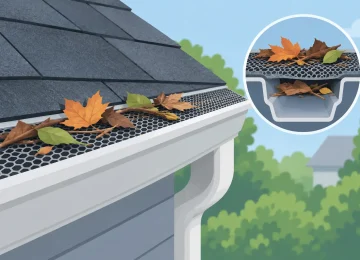
If you are regularly paying to reseal joints, reattach loose sections, patch holes, clear persistent clogs, and correct drainage issues, compare those costs with a new, properly sized system. Replacement can provide a cleaner appearance and fewer maintenance concerns, particularly when paired with a gutter guard solution suited to the property.
Gutter guards help limit debris buildup, but they are not a substitute for proper installation or occasional cleaning support. The gutter still needs the correct size, slope, secure fastening, and downspout capacity.
8. The Gutters Look Undersized for the Roof
A gutter that worked adequately on a small roof may not be sufficient for a large or complex roofline. Steep roof pitches, long runs, valleys, and large paved areas can send a surprising volume of water toward one section of gutter.
Undersized systems often show their weakness during heavy rain. Water may shoot past the gutter, spill at corners, or back up near valleys even when the channels are clean. Larger gutter profiles or additional downspouts may be needed to handle the flow.
This is one reason a replacement estimate should not be based only on the length of the existing gutters. A qualified contractor should evaluate the roof’s drainage demands and recommend a system that fits both the building and the water load.
9. Downspouts Are Loose, Damaged, or Poorly Placed
Downspouts carry collected roof water away from the structure. When they are crushed, disconnected, leaking at elbows, or positioned poorly, the entire gutter system loses effectiveness.
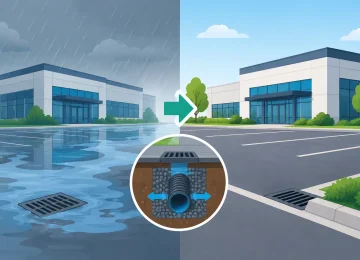
A single damaged elbow can usually be replaced. However, multiple patched connections, frequent clogs, or downspouts that dump water onto steps or against the foundation may call for a redesigned system. Commercial properties may need special attention to pedestrian areas, loading zones, and drainage near entrances.
Look for staining on the wall behind a downspout, eroded soil at the discharge point, and water that crosses sidewalks or driveways. Those visible issues are often easier to address before cold weather turns runoff into ice.
10. The System Is Old and No Longer Matches the Property’s Needs
Older gutters may have been installed before an addition, roof replacement, new landscaping, or changes to the surrounding property. Even if they are still attached, they may no longer provide the drainage performance or appearance you need.
Replacement offers the opportunity to select gutter material, size, color, and downspout placement that complement the building. For property managers and homeowners planning exterior updates, this can be a practical time to address long-standing drainage issues rather than covering them up with paint or trim work.
When Repair Makes Sense and When Replacement Is Better
Repair is often appropriate when the system is generally sound and the problem is isolated: a loose hanger, one leaking end cap, a small section damaged by a branch, or a downspout that needs adjustment. A straightforward repair can restore performance without replacing gutters that still have useful life.
Replacement is usually the better choice when the material is corroded, the gutters have multiple leaks or sagging sections, drainage problems persist after maintenance, or the existing system is too small for the roof. It also makes sense when the cost of repeated repairs begins to outweigh the value of a new installation.
A professional assessment should explain what is causing the problem, not simply point to the most visible stain or leak. Cavallari Gutters can evaluate the full system, including gutter runs, hangers, seams, downspouts, and drainage around the property, then provide a clear recommendation based on what the building actually needs.
If water is already spilling over, collecting near your foundation, or staining the exterior, it is worth scheduling an estimate before the next major storm turns a manageable gutter issue into a larger repair.
Leave a Reply