

A new gutter system should move water away from your building quietly and consistently, even during a hard New Jersey rainstorm. Knowing how to maintain gutters after installation helps keep that performance from fading as leaves, windblown debris, snow, and seasonal temperature changes take their toll. A little regular attention protects much more than the gutters themselves – it helps protect your roofline, siding, foundation, landscaping, and walkways.
Proper maintenance does not mean climbing a ladder after every storm. It means watching for early warning signs, keeping water paths clear, and addressing small issues before they become expensive repairs. The right schedule depends on nearby trees, roof design, building height, and whether gutter guards are installed.
Start With a Simple Maintenance Schedule
For most homes, gutters should be checked at least twice a year: once in late spring and once after the main fall leaf drop. Properties with mature trees overhead, pine needles, or a roof that collects debris may need more frequent checks. Commercial buildings and multi-unit properties often benefit from a scheduled inspection plan because a blocked drainage point can affect a larger roof area quickly.
The best time to inspect is after conditions have changed. Heavy rain, high winds, and winter freeze-thaw cycles can shift hangers, expose a loose downspout connection, or reveal a drainage issue that was not visible during dry weather. You do not need to wait until water is spilling over the front edge of the gutter to take action.
A practical year-round routine includes four checkpoints:
- Spring: Remove winter debris, check for loose fasteners, and make sure downspouts discharge freely after snow and ice season.
- Summer: Watch gutters during a heavy rain and look for overflow, dripping seams, or water washing out landscaping near downspout exits.
- Fall: Clear leaves and twigs before they form a wet, compacted blockage, especially around outlets and corners.
- Winter: Check from the ground for ice buildup, sagging sections, or downspouts that may be blocked by frozen debris.
Keep Gutters and Downspouts Clear
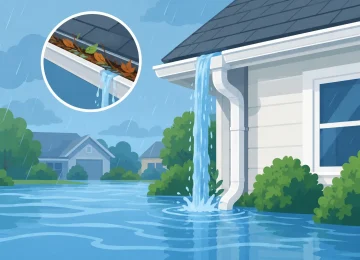
Debris is the most common reason a properly installed gutter system stops doing its job. Leaves, seed pods, roof grit, and small branches gather in low points and around downspout openings. Once material gets wet, it can create a dense blockage that holds standing water against the gutter and adds unnecessary weight to the system.
When cleaning is needed, remove debris by hand with gloves or use a small scoop, working carefully toward the downspout outlet. Flush the gutter with a garden hose after the larger material is removed. This does two useful things: it clears loose sediment and shows whether water is reaching the downspout without backing up.
Do not overlook the downspouts. A gutter may look clean from above while a clog sits several feet down the vertical run or at the bottom elbow. If water does not flow out freely, disconnecting the lower section may help locate the blockage. For difficult clogs, tall buildings, steep rooflines, or areas near power lines, professional cleaning is the safer choice.
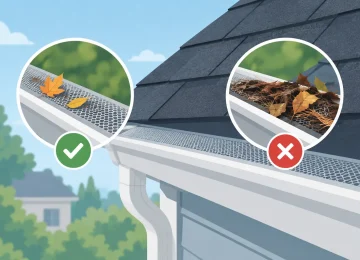
Gutter guards can significantly reduce the amount of material that enters the system, but they are not a reason to stop inspecting it. Fine debris, roof granules, and seeds can still collect on top of guards or at drainage points. Guards reduce cleaning needs; they do not eliminate maintenance altogether.
Check That Water Is Moving Away From the Building
Clean gutters are only effective when water is discharged in the right place. During a rainfall, look at where water exits each downspout. It should flow away from the foundation rather than pool near the building, run across a walkway, or erode mulch beds.
Extensions, underground drainage connections, splash blocks, and grading all affect where the water goes next. The right solution depends on the property. A short extension may work well on a small, level lot, while a larger building or sloped property may need a more deliberate drainage plan. If water repeatedly gathers near the foundation, the issue may be the downspout discharge, the grade of the ground, or both.
Pay attention to signs that water has been landing in the wrong place for some time. These can include soil trenches, peeling paint near the lower exterior walls, damp basement areas, shifting pavers, or landscaping that is constantly washed out. Correcting drainage early is usually far less disruptive than repairing water damage later.
Inspect for Small Problems Before They Grow
A visual inspection from the ground can reveal a great deal. Look along the gutter line for sagging, separated sections, stains on siding, or water marks beneath seams and corners. Gutters should sit securely against the fascia and maintain the proper slope toward each downspout. Water that remains standing in a section after rain may indicate a pitch issue, a blockage, or a sagging area.
Also check the areas where gutters connect to the roof edge. Damaged fascia boards, loose flashing, or roof runoff that shoots over the gutter can make even a well-built system appear to fail. In some cases, the problem is not the gutter capacity but how water leaves the roof during heavy rainfall.
Minor leaks at seams, end caps, or outlets should be addressed promptly. A small drip can stain siding and gradually weaken surrounding materials. Loose hangers should not be ignored either. As a gutter pulls away from the fascia, its slope changes, water begins to sit, and the extra weight can cause more extensive damage.
Use Safe Cleaning Practices
Gutter work involves ladders, uneven ground, roof edges, and wet surfaces. Safety should determine whether a task is appropriate to handle yourself. Never lean a ladder against the gutter itself, and do not overreach to clean a section that is out of reach. Move the ladder as needed and use a stable, level base.
For two-story homes, steep roofs, commercial properties, or systems with difficult access, professional service is often the sensible option. The goal is not simply to remove leaves. A proper service visit can identify loose components, drainage concerns, hidden clogs, and sections that need repair before the next major storm.
Avoid using sharp tools that can scratch or puncture the gutter. Be cautious with high-pressure washing as well. Excessive pressure can force water behind siding, disturb joints, or damage nearby materials. A controlled hose flush is generally enough to test drainage after debris has been removed.
Know When Maintenance Is No Longer Enough
Cleaning and minor adjustments can extend the life of a gutter system, but they cannot correct every issue. Recurring overflow in the same location, repeated leaks, widespread corrosion, cracks, detached sections, or persistent standing water may point to a larger problem with sizing, pitch, installation condition, or drainage design.
This is especially relevant after renovations. A new roof, added roofline, changed landscaping, or pavement work can alter how water reaches and leaves the building. If the system performed well before a project but now overflows or drains poorly, an evaluation can determine whether a targeted repair or system adjustment is needed.
For property managers, routine records are useful. Note the date of cleanings, repairs, and any areas that repeatedly collect debris or overflow. That history makes it easier to spot patterns and plan service before weather-related problems disrupt tenants or damage the property.
Cavallari Gutters can help homeowners and property owners in New Jersey and Staten Island assess a system that is leaking, overflowing, loose, or no longer directing water where it belongs. The most helpful next step is often a straightforward inspection before a small concern becomes a repair to the roofline, siding, or foundation.
Leave a Reply