
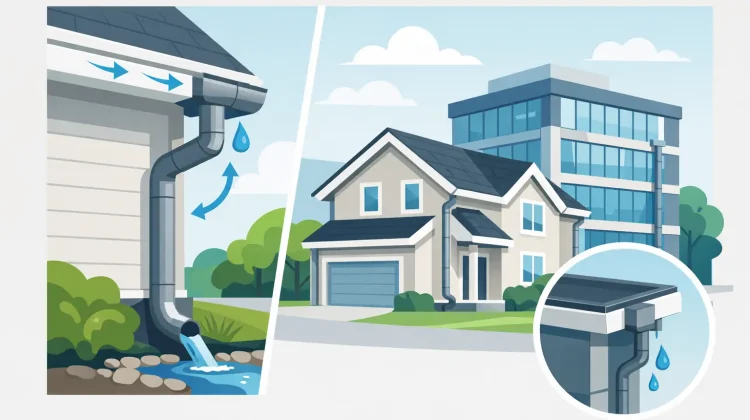
A gutter system can be the right size, securely fastened, and completely clean, yet still create serious water problems if the downspouts discharge in the wrong place. This downspout placement guide explains how to move roof runoff safely away from your home or commercial building, with practical considerations for New Jersey and Staten Island properties that see heavy rain, snow, ice, and closely spaced neighboring structures.
Downspouts are not an afterthought. They are the point where collected roof water leaves the gutter system and meets the ground. A poor discharge location can leave water against a foundation, saturate planting beds, wash out walkways, stain siding, or create slippery areas near an entrance. Proper placement protects the property as a whole, not just the gutter line.
Start With Where the Water Needs to Go
The best downspout location is not simply the nearest corner of the building. It is the location that gives runoff a controlled path away from the structure without creating a new problem elsewhere on the property.
As a general rule, discharge water should travel at least several feet away from the foundation. Many properties benefit from extensions that carry water 4 to 6 feet away, though the right distance depends on grading, soil, landscaping, the size of the roof, and nearby hardscaping. On a tight lot, an extension may need to turn or connect to an approved drainage solution rather than point straight toward a property line.
Look at the ground after a steady rain. Water should continue moving away from the building once it leaves the downspout. If the yard slopes back toward the foundation, a long extension alone may not solve the issue. Regrading, a buried drain line, or another drainage plan may be needed to keep runoff from returning to the house.
Match Downspout Locations to Roof Drainage
A downspout must be placed where it can handle the amount of water feeding into that section of gutter. Long gutter runs, large roof planes, steep roof pitches, and valleys can move a surprising amount of water during a storm.
Give Long Gutter Runs Enough Outlets
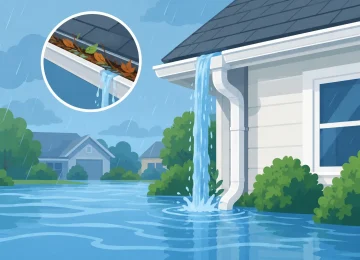
One downspout at the end of a long gutter may be inadequate, even if it appears to work during light rain. During a hard downpour, water can race past the outlet, rise in the gutter, and spill over the front edge. Adding another downspout or increasing downspout size can reduce the load on each outlet.
The correct number of downspouts depends on the roof area draining to each gutter section and the capacity of the gutter system. This is why a site-specific evaluation is more reliable than relying on a standard spacing rule. A small ranch home and a large commercial roofline should not be designed the same way.
Account for Valleys and Concentrated Runoff
Roof valleys concentrate water into a narrow section of gutter. If a downspout is located too far from that point, the gutter may overflow before water can reach the outlet. In some cases, the answer is a larger gutter, an additional downspout, or a revised placement that gives valley runoff a shorter route out.
This detail matters during the storms that test a drainage system. A gutter that looks fine from the driveway may still be undersized or poorly drained at a valley.
Use Corners Wisely, Not Automatically
Outside corners are common downspout locations because they can be less noticeable and allow a clean vertical run. They are often a good choice, but they are not always the best one. A corner may discharge directly onto a walkway, driveway, patio, basement stairwell, or neighboring property.
When a corner creates a poor discharge point, moving the outlet along the gutter run can be the better solution. The installation should still look clean, but drainage performance has to come first.
Keep Water Away From Vulnerable Areas
The ground-level end of the downspout deserves as much attention as the upper connection. Water should not be directed toward areas that are especially sensitive to moisture or erosion.
Avoid placing discharge points where runoff will flow toward foundation walls, below-grade entrances, window wells, garage doors, retaining walls, or outdoor electrical equipment. Be careful around paved surfaces as well. Repeated runoff can undermine pavers, create icy patches in winter, and carry water toward the building instead of away from it.
Landscaping needs consideration too. A downspout that empties into a mulched bed may seem harmless, but concentrated roof runoff can cut channels through soil, expose roots, and damage shrubs. A splash block can help spread a modest flow, while larger roof areas may need a more durable extension or drainage connection.
For commercial properties, placement should also account for pedestrian traffic and maintenance operations. A downspout extension across a sidewalk can become a trip hazard. A discharge point near loading areas, entrances, dumpsters, or parking spaces may be damaged repeatedly. The practical answer may involve routing water underground or selecting a protected discharge location.
Understand the Role of Extensions and Underground Drains
A downspout extension is often the simplest way to improve drainage. It carries runoff beyond the drip line and helps prevent a constant wet area along the foundation. Extensions can be rigid, flexible, hinged, or designed to blend into the landscape, but they must remain securely positioned and free of blockage.
Flexible extensions are useful where the direction of flow needs to change, but they can collect debris, shift out of place, and become difficult to mow around. Rigid extensions are generally more durable and easier to inspect. Hinged extensions can be lifted for lawn care, provided they are returned to the proper position afterward.
Underground downspout drains can keep drainage routes out of sight and away from walkways. They can be a good fit for properties with limited space or a clear outlet point farther from the building. However, buried lines need correct slope, solid connections, accessible cleanouts when appropriate, and a legal place for water to discharge. Sending roof water into a line that has nowhere to drain only moves the problem underground.
Do not connect roof runoff to a sanitary sewer. Local requirements vary, and drainage work should follow applicable municipal rules. A qualified gutter professional can identify when a downspout solution calls for coordination with a drainage or excavation contractor.
Consider Seasonal Conditions in New Jersey and Staten Island
Local weather changes the way downspout placement should be planned. Heavy rain can overwhelm undersized systems, while freezing temperatures can turn a poorly placed discharge into an ice hazard.
Keep downspouts clear of areas where runoff can freeze across a front walk, side entrance, or driveway. If an extension discharges onto pavement, reconsider the route before winter. Water that is manageable in July can become dangerous in January.
Snow and ice can also damage lower downspout sections. Areas near driveways need protection from snow shovels, plows, and vehicle traffic. In high-traffic locations, a more durable route or a protected underground connection may be worth the additional work.
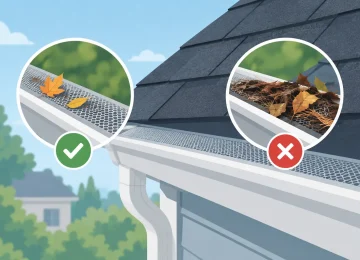
Trees create another local consideration. Leaves, seed pods, and small debris can clog outlets and underground piping, especially where downspouts turn sharply. Gutter guards can reduce the amount of debris entering the system, but they do not replace inspection and cleaning. The outlets and discharge ends still need to be checked as part of regular maintenance.
Signs Your Downspout Placement Needs Attention
You do not have to wait for visible foundation damage to address a drainage issue. Watch for these recurring warning signs:
- Soil, mulch, or gravel washing away beneath a discharge point
- Puddles that remain near the foundation after rain has stopped
- Water stains, algae growth, or peeling paint on lower siding
- Gutter overflow near valleys or in the middle of a long run
- Ice forming on paths, steps, or driveways in cold weather
- Damp basement walls, musty odors, or water near window wells
Some of these conditions can also point to clogged gutters, poor grading, damaged seams, or a failing underground drain. That is why an on-site review matters. The visible water pattern often tells the real story.
A Professional Placement Plan Protects the Whole Property
Good downspout placement balances roof drainage capacity, ground slope, appearance, safety, and the way the property is used. There is no single layout that works for every home, multi-family building, storefront, or office property. The goal is simple: collect water efficiently and release it where it can move away without damaging the building or creating a hazard.
Cavallari Gutters evaluates gutter runs, roof drainage patterns, existing downspouts, and the conditions around the building before recommending repairs, replacements, or a new system. A properly planned installation can improve curb appeal, but its real value is protecting the foundation, siding, landscaping, and exterior surfaces through the next hard storm.
If water is pooling near your property, overflowing from the gutters, or freezing where people walk, it is worth addressing before another season makes the damage more expensive. The right downspout location is a small detail with a long-term effect on how well your property handles water.
Leave a Reply