
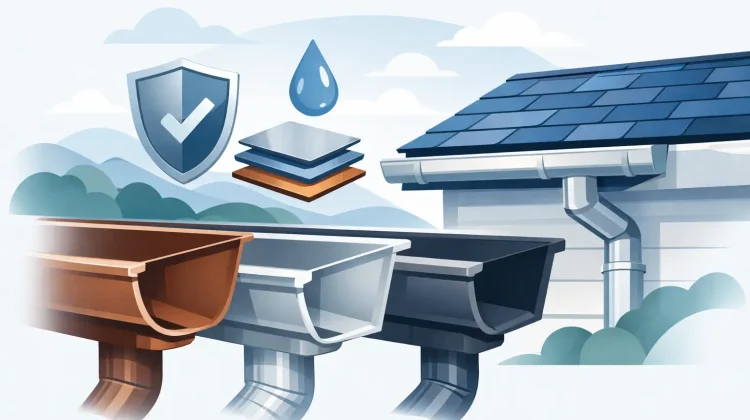
A gutter system usually gets attention only after it starts pulling away from the fascia, leaking at the seams, or dumping water too close to the foundation. By that point, material choice matters a lot. If you are comparing the best gutter materials for durability, the right answer depends on your property, your budget, and how much weather exposure your gutters handle year after year.
For homes and commercial buildings in New Jersey and Staten Island, gutters need to do more than look clean on installation day. They need to hold up through heavy rain, snow, freeze-thaw cycles, debris, and seasonal temperature swings. That is why durability is not just about how strong a gutter sounds on paper. It is about how it performs over time with real water volume, real maintenance demands, and real roof conditions.
What durability really means in a gutter system
When property owners ask about the longest-lasting option, they are usually asking a few different questions at once. Will the gutter resist rust? Will it dent easily? Will the seams separate? Will it sag under snow load or clogging debris? And if something does go wrong, how difficult and expensive is it to repair?
A durable gutter material should resist corrosion, maintain its shape, and continue directing water properly without constant repairs. But the material is only part of the equation. Profile size, hanger spacing, pitch, seam quality, and installation workmanship all affect lifespan. Even the best material can underperform if the system is undersized or installed incorrectly.
Best gutter materials for durability compared
The most common gutter materials each have a place, but they are not equal when long-term performance is the priority.
Aluminum gutters
Aluminum is the most common residential choice for good reason. It offers a strong balance of affordability, rust resistance, and long-term value. It is light enough for efficient installation, available in many colors, and well suited for seamless gutter fabrication, which reduces leak points.
For many homes, aluminum is one of the best gutter materials for durability because it handles moisture well and does not rust like steel. Thicker aluminum gauges generally perform better than thinner options, especially in areas where ladders, branches, or ice can create impact stress. The trade-off is that aluminum can dent more easily than steel, so it is not always the best fit where physical abuse is common.
That said, when properly installed and maintained, aluminum gives many property owners the practical lifespan they want without the higher cost of premium metals.
Copper gutters
Copper sits at the high end of the market, both in price and lifespan. It is exceptionally durable, highly resistant to corrosion, and known for its distinctive appearance. Over time, it develops a patina that many owners find attractive, especially on historic homes, custom builds, and higher-end properties.
From a pure longevity standpoint, copper is one of the strongest options available. It can last for decades when installed correctly. It also holds up very well in wet conditions, which makes it attractive for properties where long-term performance matters more than upfront cost.
The trade-off is obvious. Copper is expensive, and repairs or additions must be handled carefully to maintain appearance and system compatibility. It also may not make financial sense for every property. On a modest home or a building where budget control is critical, copper can be more material than the project truly requires.
Galvanized steel gutters
Steel gutters are often chosen for strength. If your concern is impact resistance, load-bearing ability, or a more rigid feel, steel has real advantages. It is less likely than aluminum to dent from ladder contact or falling branches, and it can be a strong choice for certain residential and commercial applications.
The issue is corrosion. Galvanized steel is coated to resist rust, but over time that protection can wear down, especially if gutters are scratched, poorly maintained, or exposed to standing water. In a region with moisture, snow, and seasonal freeze-thaw cycles, that matters.
Steel can absolutely be durable, but it tends to demand more attention over the long run. If neglected, rust becomes the weakness that shortens service life. For owners who want maximum strength and are willing to stay ahead of maintenance, it can be a good option. For those who want low-maintenance durability, aluminum or copper may be the better fit.
Stainless steel gutters
Stainless steel is less common, but it offers excellent durability. It is strong, corrosion-resistant, and well suited for demanding environments. In many ways, it combines the toughness people like about steel with better resistance to rust.
Its drawback is cost. Stainless steel is a premium option, and that can limit its appeal for standard residential projects. It is more often considered when the building needs a very durable system and the budget allows for it. On certain commercial properties or custom residential work, it can be an excellent long-term investment.
Vinyl gutters
Vinyl is usually the most budget-friendly material upfront, but it is not typically the top choice for durability. It does not rust, which sounds like a major advantage, but it is more vulnerable to cracking, brittleness, and movement as temperatures change.
In milder climates, vinyl can be serviceable. In areas that see cold winters and seasonal expansion and contraction, it generally does not hold up as well as metal. Joints can weaken, sections can warp, and impact resistance is limited. For a short-term or low-budget solution, vinyl may work. For owners focused on long-term performance, it is rarely the best answer.
The role of seamless gutters in long-term performance
When discussing durable materials, it is worth separating material from system design. A seamless aluminum gutter often outperforms a sectional system made from a heavier material simply because it has fewer joints. Fewer seams usually means fewer opportunities for leaks, separation, and water damage.
That is one reason seamless gutters are so popular. They create a cleaner appearance, reduce maintenance trouble spots, and support longer service life when sized and installed correctly. If your goal is durability, the conversation should include both the metal itself and whether the gutter will be formed as a seamless system.
How climate and property type affect the right choice
There is no single best answer for every building. A single-family home with mature trees, steep roof sections, and frequent leaf buildup may need a different solution than a commercial property with long roof runs and high water volume.
In New Jersey and Staten Island, weather puts gutters through real stress. Heavy rain can overwhelm undersized systems. Snow and ice add weight. Debris causes clogs that hold moisture in place. On coastal or exposed properties, environmental conditions can be even tougher. That is why selecting the best gutter materials for durability should always account for roof size, drainage demand, and maintenance habits.
A property owner who wants solid long-term performance at a reasonable price often lands on heavier-gauge seamless aluminum. A customer prioritizing appearance and lifespan above all may prefer copper. A building owner concerned about physical toughness may look at steel or stainless steel. The right answer depends on what kind of durability matters most for that building.
Installation quality matters as much as material
Even premium gutters fail early when they are pitched incorrectly, fastened poorly, or paired with undersized downspouts. Water management is a system, not just a product. If water backs up, spills over, or pulls on the hangers, the material alone will not save the installation.
This is where working with a gutter specialist makes a difference. A properly designed system takes into account drainage patterns, roof surface area, fascia condition, and where water should discharge away from the structure. Cavallari Gutters approaches material selection with that full picture in mind, because durability only counts if the system actually protects the property.
So which gutter material lasts the longest?
If budget is not the deciding factor, copper is widely considered one of the longest-lasting gutter materials. Stainless steel is also a top-tier performer. For most residential and many commercial properties, though, seamless aluminum offers the best balance of durability, cost, rust resistance, appearance, and repair practicality.
That balance matters. The strongest material on paper is not automatically the smartest investment for your building. A well-installed aluminum system may provide better real-world value than a premium metal that stretches the budget without solving a specific need.
If you are replacing failing gutters or planning a new installation, the best material is the one that fits your structure, your exposure, and your expectations for maintenance and lifespan. A good contractor should be able to walk you through those trade-offs clearly, without pushing a one-size-fits-all answer.
Choosing gutters is really choosing how you want your property protected when the weather is doing its worst. Pick the material that gives you confidence not just this season, but years from now.

Leave a Reply