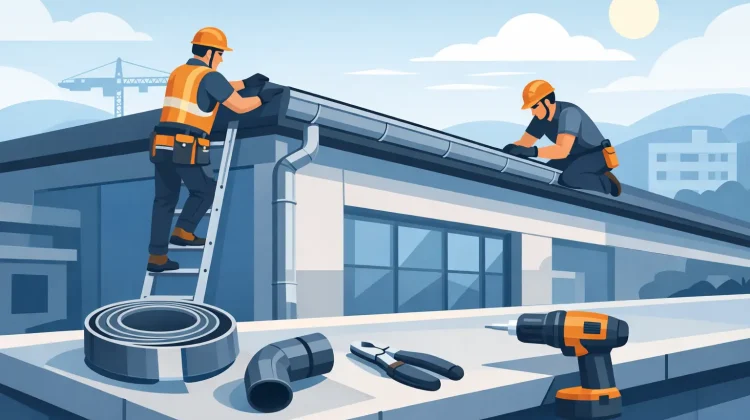
A commercial building can have a perfectly sound roof and still take on water damage if the drainage system is undersized, poorly pitched, or failing at the seams. That is why commercial gutter installation is not a cosmetic upgrade. It is a core part of protecting the roofline, exterior walls, entryways, landscaping, and foundation from avoidable damage.
For property owners and managers, the issue usually shows up in practical ways first. You may notice water spilling over the edge during storms, staining on masonry, erosion near the building, or recurring leaks around fascia and soffits. In some cases, the gutters are simply old. In others, the original system was never designed for the roof area, rainfall volume, or building layout it needs to handle. Getting the installation right from the start makes a real difference in long-term maintenance and repair costs.
Why commercial gutter installation matters more than many owners expect
On a commercial property, water has more places to create expensive problems. Larger roof spans collect more runoff. Flat and low-slope roof designs can channel water heavily into a few sections. Entry points, storefronts, loading areas, and pedestrian walkways all need better drainage control than a typical residential layout.
When gutters are too small, loosely secured, or installed without proper slope, the system can overflow even if the materials themselves are in decent shape. That overflow does not just disappear. It can back up around the roof edge, soak trim, stain siding, wash out mulch beds, pool near foundations, and create slippery surfaces near doors and sidewalks.
For mixed-use properties, office buildings, retail spaces, and multi-unit facilities, the stakes are even higher because drainage issues can affect tenants, customers, and day-to-day operations. A dependable gutter system helps reduce nuisance complaints and protects the appearance of the property at the same time.
What a properly planned commercial gutter installation includes
A good installation starts with the building, not with a one-size-fits-all product. Roof size, roof pitch, drainage points, fascia condition, downspout placement, and surrounding grade all need to be considered together. The goal is not just to hang gutters. It is to move water away from the structure in a controlled way.
Material selection matters, but design matters just as much. Aluminum is a common choice because it offers a strong balance of durability, appearance, and cost. For some properties, heavier-duty options or larger profiles make more sense. Color matching can also be important on commercial buildings where curb appeal and a professional exterior finish matter to tenants and visitors.
Downspout sizing and placement are another part of the equation that often gets overlooked. If the roof collects a large volume of water, the gutter may not be the weak point. The system may fail because there are too few downspouts, poorly placed outlets, or discharge points that send water right back toward the building.
Signs your building may need new gutters instead of another repair
Repairs have their place, especially when the issue is isolated. A loose hanger, a separated joint, or a damaged downspout section can often be corrected without replacing the full system. But there is a point where repeated repairs stop being the practical option.
If the gutters are pulling away from the fascia in multiple areas, rusting through, leaking at several seams, or showing ongoing overflow despite cleaning, replacement is often the better investment. The same goes for buildings where drainage problems have been present for years and have already started affecting siding, trim, masonry, or foundation areas.
Age is part of the picture, but performance matters more. An older system that still handles water correctly may not need immediate replacement. A newer system that was installed incorrectly may need a full redesign. This is where an experienced gutter specialist provides more value than a general exterior contractor taking a quick look.
Commercial gutter installation and building appearance
Function comes first, but appearance still matters. On many commercial properties, the gutter system is visible from the street and contributes to how the building is perceived. Bent sections, mismatched colors, sagging runs, and patched repairs can make an otherwise well-kept property look neglected.
A customized installation allows the system to match the building rather than look like an afterthought. That includes selecting the right profile, size, and color, but it also means clean lines, secure fastening, and thoughtful downspout placement. For property managers and owners preparing a space for lease, sale, or tenant turnover, those details support the overall presentation of the property.
What to expect during a commercial gutter installation project
The process should begin with a site evaluation and a clear explanation of what the building needs. That includes measuring roof edges, reviewing drainage patterns, checking existing fascia and attachment points, and identifying any trouble areas where overflow or pooling has occurred.
From there, the scope should be straightforward. You should know what materials are being used, what size system is recommended, where the downspouts will go, and whether any repair work to the mounting surface is needed before installation. Good communication matters here. Commercial property owners and managers need realistic scheduling, clean job execution, and a contractor who follows through.
Installation itself should focus on proper pitch, secure fastening, watertight connections where applicable, and controlled discharge away from the building. If the contractor is rushing, skipping layout details, or treating the project like a simple swap-out, that is when problems tend to show up later.
For many buildings, it also makes sense to discuss gutter guards and future cleaning access during the installation phase. Guards are not right for every property, and they do not eliminate maintenance entirely, but in the right setting they can help reduce buildup and support more consistent water flow.
Choosing the right contractor for commercial gutter installation
Not every contractor who works on exteriors is a true gutter specialist. That matters more on commercial projects, where roof drainage demands are higher and mistakes cost more. A contractor focused on gutters is more likely to understand sizing, pitch, runoff volume, attachment methods, and the way local weather patterns affect performance over time.
You should also look for the basics that protect you as the customer: licensing, insurance, a clear written estimate, and warranty support. Just as important is responsiveness. If a company is hard to reach before the job starts, communication usually does not improve once the work is underway.
For owners in New Jersey and Staten Island, local experience has real value. Weather, storm patterns, seasonal debris, and building styles vary by region. A contractor who regularly works in the area will have a better sense of what systems hold up well and what issues come up most often. That practical knowledge helps avoid shortcuts and recommendations that look fine on paper but underperform in the field.
Cavallari Gutters approaches commercial work with that mindset – practical solutions, dependable workmanship, and service that does not stop once the installation is complete.
When maintenance should be part of the plan
Even the best installation benefits from maintenance. Commercial gutters collect leaves, sediment, roofing debris, and windblown buildup over time. If the building is surrounded by trees or has roof sections that wash debris into concentrated areas, cleaning intervals may need to be more frequent.
That does not mean every property needs the same maintenance schedule. A small office building in an open area may need very little attention compared to a mixed-use property under heavy tree cover. The right approach depends on the site, the roof design, and whether guards are installed.
The key is not waiting until overflow appears. Periodic inspection and cleaning help catch minor issues before they become repairs, especially around outlets, elbows, seams, and fascia attachment points.
The value of getting it right the first time
Commercial gutter installation is one of those projects that is easy to underestimate because the system itself seems simple. But when it is undersized, poorly placed, or installed without enough attention to runoff patterns, the damage spreads beyond the gutters fast.
A well-designed system helps preserve the building, reduce maintenance headaches, and keep water moving where it should. For property owners and managers, that is not just about preventing visible damage after a storm. It is about protecting the long-term condition of an asset that needs to perform every season.
If your building is showing signs of drainage trouble, the best next step is not to wait for the next heavy rain to confirm it. Have the system evaluated, ask the right questions, and make sure the solution is built around the property you actually own, not a generic install. The right gutter system should do its job quietly for years, and that kind of reliability is always worth planning for.


Leave a Reply