
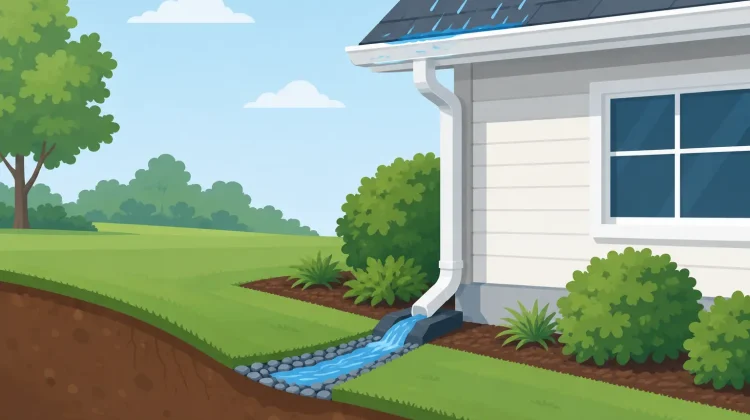
A heavy New Jersey rainstorm can send hundreds of gallons of water off a roof in a short time. Without a controlled path away from the building, that water lands at the foundation line, pounds bare soil, and starts carrying mulch, topsoil, and gravel with it. So, do gutters help prevent erosion? Yes – when they are correctly sized, properly pitched, clear of debris, and connected to downspouts that discharge water far enough from the structure.
Gutters are not only there to keep rain from pouring over entryways. A well-designed gutter system is one of the first lines of defense against the gradual water damage that can affect foundations, landscaping, sidewalks, siding, and exterior drainage areas.
How gutters reduce erosion
Erosion happens when moving water loosens and transports soil. Rain falling directly onto the ground from a roof edge hits with more force than ordinary rainfall because the roof collects water across a large area and concentrates it along a narrow drip line.
A gutter catches that roof runoff and carries it to planned discharge points. Instead of water dumping across the entire perimeter of a home or commercial building, it is directed through downspouts where it can be managed safely. This reduces the repeated impact that cuts channels into soil and washes away mulch near the building.
The difference is especially noticeable during intense storms. A small roof section can shed a surprising volume of water in minutes. If even one downspout is missing, clogged, or discharging at the wrong location, the ground below it may become saturated and begin to erode.
Gutters protect the soil beside the foundation
The area immediately around a foundation needs stable, properly graded soil. When roof runoff repeatedly lands there, it can create depressions, expose foundation walls, and move soil away from the intended slope. That weakens the grade designed to carry surface water away from the building.
Over time, this can create a cycle: runoff erodes the soil, the grade becomes flatter or slopes back toward the house, and more water remains near the foundation. Gutters help interrupt that cycle by moving roof water to a controlled outlet instead of allowing it to fall at the base of the structure.
They help preserve landscaping and hardscaping
Erosion is often first seen in the landscaping. You may notice mulch washed from planting beds, exposed roots, muddy splash marks on siding, or a trench beneath a roof valley. Decorative stone can shift, edging can become uneven, and low spots may develop near patios or walkways.
Water that spills over gutter edges can also stain exterior surfaces and make paths slippery. Directing runoff through functional gutters and extensions helps preserve the appearance of the property while reducing the cleanup that follows every major storm.
Gutters alone are not always enough
A gutter system can make a major difference, but it cannot solve every drainage problem on its own. The goal is not simply to collect water. The goal is to move it away from the building without creating a new erosion problem at the end of the downspout.
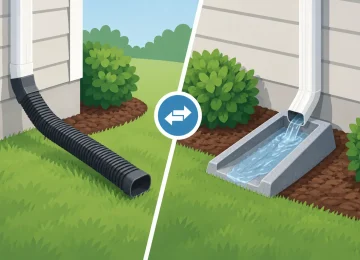
For that reason, downspout placement matters just as much as the gutters overhead. A downspout that empties directly beside the foundation, onto a steep slope, or onto a narrow mulch bed can still wash soil away. Extensions, underground drainage connections, splash blocks, or other drainage solutions may be appropriate depending on the site.
The right approach depends on the property. A flat lot in Staten Island may need a different drainage plan than a sloped property in northern New Jersey. Soil type also matters. Dense clay soils drain slowly and can hold water near the surface, while sandy soils may wash out more easily under concentrated flow.
Signs runoff is causing erosion around your property
Homeowners and property managers do not need to wait for a serious washout to take action. Several warning signs can point to a gutter or drainage issue:
- Bare trenches or deep grooves below roof edges and downspouts
- Mulch, soil, or gravel washing onto sidewalks, driveways, or lawns
- Standing water near the foundation after rain
- Gutter overflow during storms or water spilling behind the gutter
- Downspouts that drain too close to the building
- Soil settling around foundation walls, steps, patios, or walkways
These conditions can also signal a clogged gutter, a loose section, improper pitch, undersized downspouts, or a damaged outlet. The visible erosion is often only part of the problem. Water may also be getting behind siding, saturating the foundation area, or undermining nearby hardscape.
The gutter details that make erosion control work
A gutter system needs to match the roof and the property, not just follow a one-size-fits-all approach. The system must be large enough to handle expected rain volume, especially on large roof planes, steep roofs, and roof valleys where runoff concentrates quickly.
Proper sizing and downspout capacity
If gutters are too small or there are too few downspouts, water can overflow during heavy rain. This often creates the same erosion problem that no gutters would create, with the added issue of water spilling unpredictably over the front edge or behind the system.
Larger gutter profiles and appropriately sized downspouts may be needed for homes with complex rooflines or commercial properties with broad roof areas. A professional assessment considers roof square footage, slope, valley locations, and where water can safely be discharged.
Correct pitch and secure installation
Gutters must be pitched toward downspouts so water drains rather than sits in the channel. Poor pitch can leave standing water, promote debris buildup, and increase the chance of overflow. Loose or sagging gutters can pull away from the fascia and send water behind the system, where it can affect wood trim and the soil below.
Secure fastening, properly placed hangers, and clean outlet connections are practical workmanship details that affect long-term performance. They are not cosmetic extras. They determine whether rainwater follows the intended path when the storm is at its worst.
Maintenance is part of erosion prevention
Even a quality installation needs routine attention. Leaves, shingle grit, seed pods, and debris can block gutters or clog downspouts. When water has nowhere to go, it spills over the side and returns runoff to the areas the system was meant to protect.
Cleaning is especially important after fall leaf drop and before periods of frequent heavy rain. Gutter guards can reduce the amount of debris entering the system, but they do not eliminate the need for occasional inspection. Guards should be selected and installed to suit the roof, surrounding trees, and existing gutter configuration.
When erosion points to a larger drainage concern
If the soil around a property is washing away despite working gutters, look beyond the gutter line. The grade may slope toward the building, a downspout extension may be too short, or underground drainage may be blocked or improperly connected. In some cases, neighboring runoff or a failing sump discharge may add water to the same area.
This is why a complete evaluation matters. Replacing gutters without addressing discharge location may improve appearance but leave the underlying drainage issue unresolved. Likewise, adding landscaping or fresh mulch without controlling roof runoff can lead to the same damage after the next hard storm.
For commercial properties, neglected runoff can become a maintenance and safety concern. Water can undermine walkways, create pooling near entrances, damage planting areas, and contribute to icy conditions in colder weather. Property managers benefit from addressing gutter and downspout performance before those small drainage issues become costly repairs.
A practical way to protect your property
Start by watching where water travels during a steady rain. Look for overflow, dripping seams, water shooting out of downspouts, and pooling near the foundation. After the storm, inspect the soil beneath roof edges and around downspout outlets for fresh channels, displaced mulch, or muddy areas.
If you see those signs, professional gutter repair, replacement, or drainage-focused installation can help restore control over roof runoff. Cavallari Gutters provides tailored gutter systems for homes and commercial properties throughout New Jersey and Staten Island, with attention to proper sizing, reliable installation, and clean water flow.
Rainwater will always move downhill. The practical question is whether your property is directing it safely or allowing it to reshape the ground around your building one storm at a time.

Leave a Reply