
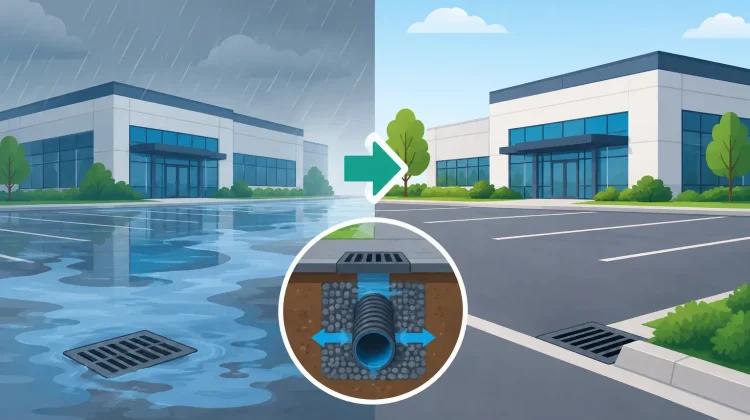
A heavy rainstorm can reveal a drainage problem in minutes. Water spilling over a commercial gutter line can soak entryways, stain siding, erode planting beds, and create slippery conditions for tenants and visitors. This commercial drainage improvement example shows how a targeted gutter and downspout upgrade can solve recurring runoff issues without treating the symptom while leaving the real cause in place.
For property owners and managers, drainage is not a cosmetic detail. It is part of protecting the building envelope, foundation area, paved surfaces, and the people using the property. The right solution begins with understanding where the water starts, where it is collecting, and whether the existing gutter system can handle the roof area feeding it.
The Property Problem: Overflow at the Entrance
Consider a two-story mixed-use building with retail space on the first floor and offices above. The building had a long front roofline that drained toward the main customer entrance. During ordinary rainfall, the gutters appeared to work. During hard storms, however, water ran over the gutter edge in several locations.
The overflow created three ongoing concerns. First, water was landing directly beside the front walkway, where it splashed customers and left slick pavement. Second, the landscaping below the roofline was washing out, exposing soil and damaging mulch. Third, repeated water exposure was staining the fascia and exterior walls, creating a neglected appearance at the building’s most visible entrance.
The owner initially assumed the gutters only needed cleaning. Debris was part of the issue, but it was not the entire story. The existing gutters were undersized for the amount of roof runoff, and the downspouts were too limited to move water away quickly during a downpour.
Commercial Drainage Improvement Example: Finding the Cause
A professional drainage assessment should look beyond the visible overflow. In this example, the inspection focused on the roof’s drainage area, gutter size and pitch, downspout placement, outlet capacity, and the ground conditions around the building.
The gutter system had several weaknesses working together. The original gutters had a smaller profile than the roofline required. Sections had begun to pull away from the fascia, reducing proper pitch and allowing water to sit rather than travel to the outlets. Only two downspouts served a lengthy front gutter run, and both discharged too close to the walkway.
There was also a maintenance concern. Leaves and windblown debris collected at the gutter outlets, slowing the flow when the system was needed most. Cleaning would restore some capacity, but it would not change the fact that the system lacked enough volume and properly placed drainage points.
This distinction matters. A clogged gutter needs cleaning. A gutter that overflows even when clean may need redesign, repair, replacement, or a combination of all three.
The Improvement Plan
The solution was built around the building’s actual water load rather than a one-size-fits-all installation. The contractor recommended larger seamless aluminum gutters along the front roofline, with a color selected to complement the exterior. A larger gutter profile provided more room to collect fast-moving runoff before it could pass over the edge.
The plan also added downspout capacity. Instead of relying on two outlets, the revised layout used additional downspouts positioned to shorten the distance water needed to travel inside the gutter. This reduced the chance of water backing up during intense rainfall.
Each downspout was directed away from the entrance and foundation area. Depending on the site layout, this can involve extensions, underground drainage connections, splash blocks, or carefully planned discharge areas. The right choice depends on available space, surface grading, local drainage conditions, and where water can safely go without creating a new problem for the property or its neighbors.
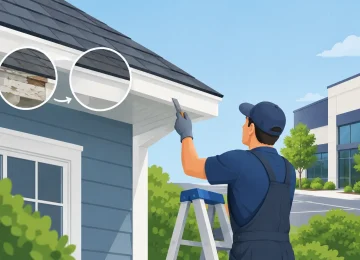
The fascia areas were repaired as needed, and the new gutters were securely fastened with the correct pitch toward each outlet. This step is easy to overlook. Even high-quality gutter material will not perform well if it is installed without proper support, alignment, and drainage slope.
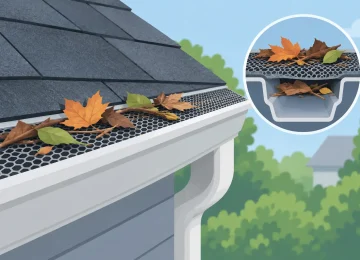
Finally, gutter guards were considered for the sections most exposed to debris. Guards can reduce routine buildup and help keep water moving, particularly near trees. They are not a substitute for occasional inspection or cleaning support, but they can make maintenance more manageable for a busy commercial property.
Why Bigger Gutters Alone Are Not Always the Answer
Larger gutters were appropriate in this case, but sizing is only one part of commercial drainage improvement. A system can still fail if the roof drainage pattern is not considered or if downspouts are too small, too few, or placed in the wrong locations.
For example, adding one oversized gutter to a long roofline may not help much if every gallon of water must travel too far to reach a single outlet. Likewise, a downspout that empties at the base of a foundation can shift the problem from the roofline to the building perimeter.
The best approach balances collection and discharge. Gutters must capture the water, downspouts must carry it efficiently, and the final discharge point must keep water away from vulnerable areas. On some properties, correcting grades or coordinating with a drainage contractor may be necessary as well. Gutters are a critical first line of defense, but they work as part of the full water-management picture.
Results After the Upgrade
After the improved gutter and downspout system was installed, the property had a clear test: the next periods of heavy rain. Water that previously poured over the entrance side of the building remained contained in the gutters and moved through the added downspouts.
The entrance walkway stayed noticeably drier, reducing the risk of slippery conditions and customer complaints. The landscaping stopped taking the direct impact of roof runoff, and the fascia and wall areas no longer received repeated overflow. Just as valuable, the owner had a system designed for the property’s actual needs rather than a temporary patch.
There was a maintenance benefit as well. With better flow and debris protection in the most exposed areas, staff no longer had to react after every major storm. Regular inspections were still recommended, especially after severe weather and during leaf season, but drainage became more predictable.
Warning Signs Your Commercial Property May Need Help
Commercial drainage problems often develop gradually, which makes them easy to postpone until a major storm causes visible damage. Pay attention when you see water falling over gutter edges, streaking on siding or masonry, sagging gutter sections, standing water near the foundation, or soil and mulch washing away beneath rooflines.
Other warning signs include leaking joints, downspouts that discharge onto walkways, peeling paint on fascia boards, and recurring ice near entrances in winter. These conditions may point to clogs, damage, poor pitch, inadequate capacity, or improper drainage routing.
Property managers should also consider the building’s use. A small overflow near a rear service area may be inconvenient. The same issue at a public entrance, loading zone, or storefront can affect safety, curb appeal, and day-to-day operations. Prioritizing the highest-risk locations is often the most practical place to begin.
What a Professional Gutter Assessment Should Cover
Before approving a repair or replacement, ask for an assessment that explains the cause of the problem in plain terms. A dependable contractor should evaluate the condition of the existing gutters, the roof area they serve, the number and placement of downspouts, fascia condition, drainage direction, and likely debris exposure.
The proposed work should also be specific. You should understand whether the recommendation is for repair, replacement, larger gutters, additional downspouts, gutter guards, or another drainage measure. Clear communication helps property owners compare options and make decisions that fit both the immediate issue and the building’s long-term maintenance plan.
For commercial properties in New Jersey and Staten Island, Cavallari Gutters provides focused gutter installation, repair, replacement, and gutter guard support designed around real drainage conditions. A site-specific estimate can identify whether your building needs a simple repair or a more complete improvement.
Water always follows the path available to it. Giving it a properly sized, securely installed path away from your building is one of the most practical ways to protect the property you have worked hard to maintain.

Leave a Reply