
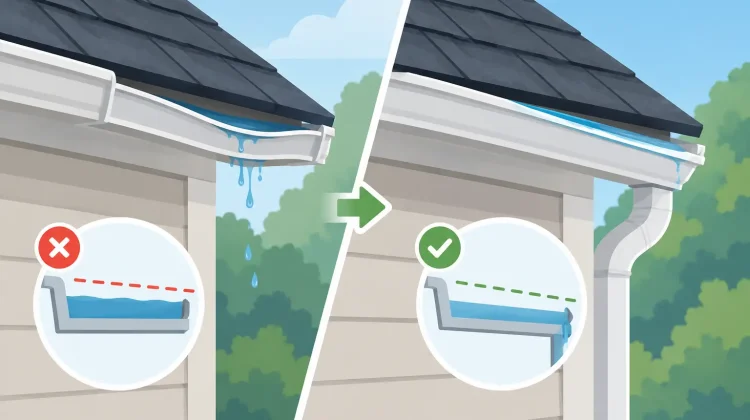
A gutter can look straight from the ground and still fail during a hard New Jersey rain. Gutter slope problems are often behind the frustrating symptoms property owners notice first: water spilling over the front edge, puddles sitting in the channel after a storm, stained siding, or water collecting too close to the foundation. The issue is not always a clogged gutter. In many cases, the system is pitched incorrectly, has shifted over time, or was never installed with the drainage layout the building needs.
A properly sloped gutter moves water steadily toward the downspout without looking visibly tilted. That small, intentional pitch is one of the details that separates a gutter system that simply hangs on a building from one that protects it.
What Proper Gutter Slope Should Do
Most gutters should be installed with a gradual downward slope toward the downspout. As a general rule, installers use about one-quarter inch of fall for every 10 feet of gutter run. The exact approach can vary with the length of the run, the roof area feeding it, gutter size, and the location and number of downspouts.
The goal is controlled drainage. Water should enter the gutter, travel to the outlet, move through the downspout, and discharge away from the building. If the pitch is too flat, water lingers. If the pitch runs in the wrong direction, water collects at the opposite end. If it is too steep, the gutter may be noticeably out of level and can look poor against the roofline.
Long gutter runs require more planning. One downspout at one end may be adequate for a short section of roof, while a longer or higher-volume roof area may need additional outlets or a center-high configuration that drains in both directions. This is why a one-size-fits-all installation can create problems even when the gutters themselves are new.
Common Signs of Gutter Slope Problems
Standing water is one of the clearest warning signs. After a rain has stopped and the system has had time to drain, the gutter channel should not hold pools of water. A small amount of moisture may remain, but visible standing water points to a pitch, blockage, or sagging issue worth investigating.
Overflow is another common symptom, especially when one area of the gutter spills while other sections appear normal. Homeowners often assume leaves are the only cause. Debris can certainly contribute, but a clean gutter that overflows near the middle or far end of a run may be draining too slowly because the slope is insufficient.
Look for streaking on fascia boards, siding, or brick. Repeated overflow leaves marks and can expose exterior materials to more moisture than they are designed to handle. You may also see soil erosion, mulch displacement, or water pooling below a specific section of the roofline.
Inside the gutter, watch for dark staining, rust in steel components, algae growth, or debris accumulating in the same low spot. Water that remains in a gutter adds weight, and that extra weight can make the original drainage issue worse by pulling hangers loose or causing the channel to sag.
Why Gutters Lose Their Pitch
Gutters can develop pitch problems over time, even if they were installed correctly. Seasonal weather, heavy rain, snow, ice, wind, and the normal movement of a building can all affect the system. In New Jersey and Staten Island, freeze-thaw cycles can be especially hard on gutters that already hold water or have weakened fasteners.
Loose or failing hangers are a frequent cause. Modern seamless gutter systems rely on properly spaced, securely fastened hangers to keep the channel aligned. When one or more hangers pull away from the fascia, the gutter can dip and create a low spot. Water then collects in that area rather than continuing toward the downspout.
Fascia damage can also be part of the problem. If the wood behind the gutter has been affected by rot or long-term moisture exposure, new fasteners may not hold securely until the damaged material is addressed. Simply tightening a screw into compromised wood is rarely a lasting repair.
Poor original design is another possibility. An undersized gutter, too few downspouts, incorrectly placed outlets, or an overly long run can make a system appear to have a slope issue because it cannot handle the volume of water coming off the roof. During a heavy storm, even a correctly pitched gutter can overflow if the system lacks enough drainage capacity.
The Damage a Poorly Sloped Gutter Can Cause
A slope problem is easy to overlook because it happens above eye level. But water takes the path available to it, and repeated misdirection can affect several parts of a property.
At the roofline, overflowing water can wet fascia boards, soffits, and trim. Over time, this can lead to peeling paint, wood deterioration, and repair work that reaches beyond the gutter itself. Water running down exterior walls can stain siding and masonry, while consistent splashing can damage landscaping below.
Near the ground, poor drainage can saturate soil around a foundation. Not every wet area means a foundation problem is developing, but repeated water accumulation near the building is not something to ignore. Basements, crawl spaces, walkways, and lower-level entry points are all more vulnerable when roof runoff is not carried away effectively.
For commercial properties and multi-unit buildings, the stakes can be higher. Overflow near entrances creates slip hazards, and water discharge in the wrong location can affect tenant areas, storefronts, parking surfaces, or landscaped common areas. A drainage issue that begins at the roofline can quickly become a maintenance and liability concern.
How Professionals Diagnose the Problem
A proper inspection starts with more than looking for leaves. A gutter specialist checks the gutter line from end to end, evaluates the condition and spacing of hangers, and identifies where water is sitting or spilling. The downspouts, outlets, elbows, and discharge points should also be examined because a restriction lower in the system can mimic a slope problem.
The roof area matters as well. A large roof plane, a steep roof, or a valley that sends concentrated water into one section can require a different gutter size or additional downspout capacity. Five-inch gutters may work well on many homes, while six-inch gutters are often a better choice for larger roof areas or locations that receive heavy runoff. The right solution depends on the building, not just the visible symptom.
Professionals also assess the fascia condition before resetting a gutter. If the gutter is being pulled down by weak or damaged backing material, adjusting the pitch without correcting the support issue may only provide a temporary result.
Repair, Re-Pitch, or Replace?
Some gutter slope problems can be corrected with a targeted repair. If the gutters are in good condition and the issue comes from a few loose hangers, a contractor may be able to reset the run, secure it properly, and restore the flow toward the downspout. Clearing obstructions and correcting the outlet connection may be enough in other cases.
Replacement may make more sense when the gutters are rusted, cracked, heavily bent, repeatedly pulling away, or poorly designed for the roof. Replacing an aging system offers the opportunity to correct the pitch, improve gutter size, add properly placed downspouts, and choose a color that fits the exterior.
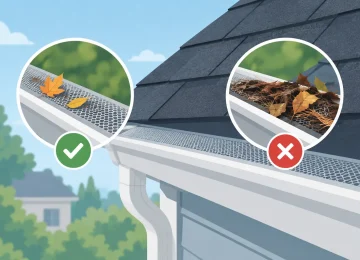
Gutter guards can help reduce leaf buildup, but they are not a substitute for correct installation. A guarded gutter still needs the right slope, secure attachment, and adequate downspout capacity. Guard systems work best when paired with a well-designed drainage system and periodic professional attention when needed.
Avoiding Future Drainage Issues
The simplest prevention is regular observation. After a moderate rain, walk around the property and note any area where water is overflowing, backing up, or landing too close to the structure. Check for gutters that appear to pull away from the fascia and downspouts that discharge at the foundation instead of directing water farther out.
Avoid leaning ladders directly against gutters, which can bend the channel or loosen fasteners. Keep trees trimmed back where possible, and schedule cleaning or inspection before debris has a chance to create heavy, wet buildup. If you notice standing water, address it before winter temperatures turn that water into expanding ice.
For property owners who want a clear answer rather than another temporary patch, Cavallari Gutters can evaluate the full drainage path and recommend a repair or replacement based on the condition of the system and the needs of the building. A gutter should do its job quietly: move water away, protect the exterior, and give you one less problem to think about when the next storm arrives.


Leave a Reply