

A gutter that handles a typical New Jersey home can be overwhelmed on a large office building, retail center, or mixed-use property. That is the central issue in commercial gutters versus residential systems: both move rainwater away from a building, but they must manage very different roof sizes, water volumes, layouts, and maintenance demands.
Choosing the right system is not just a matter of installing a larger gutter. Proper drainage protects foundations, siding, masonry, landscaping, rooflines, walkways, and the areas where customers, tenants, and family members enter the property. The right design starts with the building itself.
Commercial Gutters Versus Residential: The Main Difference
Residential gutters are generally designed for single-family homes, townhomes, garages, and smaller multifamily buildings. Most have sloped roofs that direct water toward defined eaves. A properly sized gutter and downspout system can collect that runoff and carry it safely away from the foundation.
Commercial properties often have broader roof areas, longer roof edges, flatter roofs, internal drains, parapet walls, or more complex elevations. A sudden heavy storm can send a large amount of water toward one section of the drainage system. If the gutters, scuppers, downspouts, or discharge points are undersized, water may overflow quickly.
The goal is the same in either setting: control water before it causes damage. The design work, materials, capacity, and access needs are where the differences become more significant.
Size and Water Capacity Matter More Than Appearance
Many homes use 5-inch or 6-inch K-style gutters, depending on roof pitch, roof area, local rainfall, and the number of valleys directing water into a single run. Downspouts must be sized and placed to match the gutter capacity. A larger gutter alone will not solve an overflow problem if there are too few downspouts or poor drainage at ground level.
Commercial systems may require wider gutters, larger downspouts, box-style gutters, custom-fabricated components, or carefully planned drainage points. Long gutter runs and large roof sections can create concentrated flow that a standard residential setup cannot manage.
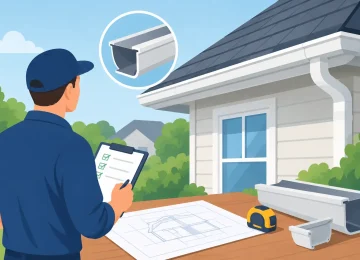
This is why an estimate should account for more than linear footage. A qualified gutter contractor considers roof area, slope, valleys, drainage direction, existing problem areas, and where the water will go after it leaves the downspout. On commercial properties, access, building use, and pedestrian traffic also affect the final plan.
Materials and Construction Are Chosen for Different Demands
Aluminum is a common choice for residential gutters because it is lightweight, durable, rust-resistant, and available in colors that complement the home. Seamless aluminum gutters are especially popular because fewer joints can mean fewer potential leak points over time.
Commercial gutter materials vary more widely. Aluminum may still be a strong choice, but some buildings need galvanized steel, copper, stainless steel, or custom metal components based on exposure, appearance, budget, and drainage requirements. A historic property, a retail façade, and a utility-focused warehouse may all call for different solutions.
Material selection should be practical. Copper can provide a distinctive appearance and long service life, but it comes at a higher cost. Steel can offer strength in the right application, though coatings and maintenance matter. Aluminum is often an efficient, dependable option for both residential and many commercial projects when it is properly sized and installed.
Roof Design Changes the Installation Approach
A typical residential installation follows the eaves of a pitched roof. The installer sets the correct slope, secures the gutters, seals connections, positions downspouts, and directs runoff away from the home. Details such as fascia condition, drip edge placement, roof valleys, and landscaping are all part of doing the job correctly.
Commercial buildings can introduce complications that are less common on homes. Flat or low-slope roofs may rely on scuppers that send water through parapet walls into exterior leaders. Large buildings can have multiple drainage zones. Rooftop equipment, loading areas, awnings, signage, and public entrances may limit where downspouts can be placed.
There is also a difference in the consequences of a poor discharge location. Water that pours across a storefront entrance can create a slip hazard. Water that repeatedly hits a masonry wall can leave staining and contribute to deterioration. Water discharged too close to a foundation can create leaks, settlement concerns, or persistent moisture problems below grade.
Maintenance Needs Are Often Higher for Commercial Properties
Every gutter system needs attention, especially in areas with mature trees, changing seasons, and heavy rain. Leaves, twigs, roofing granules, nests, and windblown debris can block a gutter or downspout. Once water cannot move freely, it finds another path.
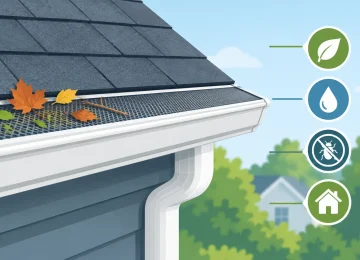
Residential maintenance may be seasonal, with additional service after a major storm or when visible overflow appears. Gutter guards can reduce the amount of debris entering the system, but they are not a replacement for occasional cleaning and inspection. The best guard choice depends on the roof, surrounding trees, gutter condition, and how water flows off the roof.
Commercial maintenance is often more structured. Property managers may schedule inspections before and after leaf season, before severe weather periods, or as part of regular building upkeep. This is particularly helpful for properties with flat roofs, difficult access, heavy tree coverage, or drains that serve critical entrances and walkways.
A maintenance plan should include more than removing visible debris. Gutters should be checked for standing water, loose hangers, separated seams, deteriorated sealant, damaged outlets, improperly pitched runs, and downspouts that are clogged or discharging in the wrong location.
Repairs and Replacements Should Match the Cause of the Problem
Overflow does not always mean the gutters need to be replaced. The cause may be a blockage, an undersized downspout, a loose section, poor slope, damaged fascia, or a roof valley that dumps too much water into one location. A thorough inspection helps separate a manageable repair from a system that has reached the end of its useful life.
For residential properties, replacement is often appropriate when gutters are repeatedly leaking, sagging, pulling away from the fascia, or showing widespread corrosion and damage. Updating the size or downspout layout during replacement can solve recurring water issues rather than simply duplicating an inadequate system.
For commercial properties, the decision may involve a larger drainage assessment. Replacing one failed section may help, but it may not address a building-wide capacity issue. A contractor should identify whether the problem is isolated or whether the property needs revised gutter sizing, additional leaders, improved discharge routing, or repairs to connected roof drainage components.
Cost Depends on Scope, Access, and Drainage Design
Commercial work usually costs more because the project can involve larger materials, taller elevations, longer runs, specialized equipment, more complex access, and greater labor requirements. The job may also need to be coordinated around tenants, business hours, deliveries, or public access.
Residential pricing is generally more straightforward, but homes with steep roofs, multiple stories, difficult access, extensive wood repair, or custom materials can still require a more involved installation. The lowest estimate is not always the best value if it leaves out proper downspout placement, secure fastening, cleanup, or warranty support.
For either type of property, a clear estimate should explain the recommended materials, gutter size, downspout plan, repair needs, and expected scope of work. Licensed and insured workmanship matters because gutters are tied directly to how a building handles water year after year.
When to Call a Gutter Specialist
If you see water spilling over the gutter edge, staining on siding or masonry, erosion near the foundation, sagging sections, leaking seams, or water pooling near entrances, it is worth having the system evaluated. These signs can be easy to overlook until a heavy storm turns a minor issue into interior water damage or a larger repair.
Cavallari Gutters works with homeowners, property owners, and managers across New Jersey and Staten Island to evaluate drainage problems and recommend solutions that fit the property. Whether the need is a residential replacement, a commercial repair, gutter guards, or ongoing cleaning support, the focus should remain on dependable water control and work that holds up.
A gutter system does its best work quietly. When the next hard rain arrives, the right design lets the water leave the building the way it should, without becoming the property owner’s next problem.

Leave a Reply