
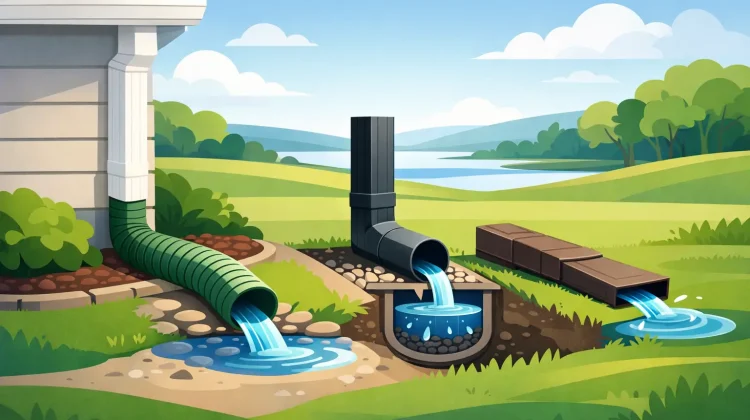
A downspout that empties beside the foundation can send hundreds of gallons of water into the same small area during a hard New Jersey storm. Choosing the best downspout extensions for drainage helps direct that water where it can safely disperse instead of allowing it to soak the foundation, flood planting beds, stain siding, or freeze along a walkway.
The right choice is not always the longest or most expensive extension. It depends on the property’s grading, available space, soil, landscaping, roof runoff, and where water can legally and safely discharge. For many homes, a simple above-ground solution is enough. For properties with recurring pooling, tight side yards, or heavy roof runoff, a more permanent underground drainage system may be the better investment.
What a Good Downspout Extension Needs to Do
A downspout extension should carry water far enough from the building that it does not return toward the foundation. As a general rule, discharge should be directed at least 6 to 10 feet away, but distance alone is not the full answer. The ground must slope away from the structure, and the outlet cannot send water toward a neighboring property, driveway, basement entrance, public sidewalk, or low spot in the yard.
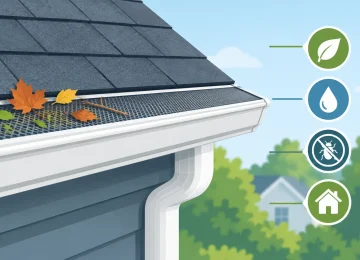
It also needs to handle the amount of water coming off the roof. A large roof section feeding one undersized downspout can overwhelm a lightweight extension during heavy rain. Before adding an extension, make sure the gutters are clean, properly pitched, securely fastened, and sized appropriately for the roofline. An extension cannot fix water that is already overflowing from a clogged or undersized gutter system.
Best Downspout Extensions for Drainage Problems
Hinged Downspout Extensions
A hinged extension is a rigid section attached to the bottom of the downspout that flips up when it is time to mow, rake, or shovel. It is one of the most practical options for homes with open lawn areas and straightforward drainage needs.
These extensions are durable, neat-looking, and easier to maintain than flexible tubing. They work well when the yard naturally slopes away from the home and there is a clear route for runoff. Aluminum versions can also be color-matched closely to existing gutters and downspouts for a cleaner appearance.
The trade-off is that a hinged extension follows a straight path. It is less helpful when water needs to travel around a landscape bed, patio, HVAC equipment, or narrow side yard.
Flexible Corrugated Extensions
Flexible corrugated extensions can bend around obstacles and stretch farther when needed. They are often used as a quick solution for downspouts that discharge next to mulch beds, shrubs, fences, or paved areas.
Their low cost and easy installation make them appealing, especially for a temporary drainage correction. However, they are not always the best long-term choice. The ridges inside the tubing can collect debris, slow water flow, and become difficult to clean. They can also shift, crack, or get damaged by lawn equipment if they are left exposed.
A flexible extension can work well for a simple runoff path, but it should be secured and checked regularly. If the same area floods year after year, a buried system is usually a more dependable answer.
Rigid Surface Extensions
Rigid surface extensions are typically made from aluminum, vinyl, or other durable materials. They provide a more controlled path than corrugated tubing and are a good fit where homeowners want a visible, serviceable extension without excavating the yard.
This option is especially useful along side yards where the downspout needs to move water past the corner of the home before releasing it onto a graded lawn area. Because the path is smooth and solid, water moves more efficiently and debris is less likely to get trapped.
The main consideration is appearance and placement. A rigid extension needs to be positioned so it does not create a trip hazard or interfere with access around the property. It may not be appropriate beside a frequently used walkway or driveway unless it can be routed carefully.
Buried Solid-Pipe Extensions
For recurring drainage issues, buried solid-pipe extensions are often among the best downspout extensions for drainage. A solid pipe carries water underground from the downspout to a designated discharge point farther from the foundation.
Unlike perforated drain pipe, which is intended to collect groundwater, solid pipe is designed to move roof runoff without allowing it to leak into the soil along the way. This distinction matters. If roof water is released too close to the home through a perforated pipe, it can continue feeding the very moisture problem the system was meant to solve.
Buried extensions keep the yard clear, protect the pipe from damage, and can route water beneath landscaping or across a difficult area of the property. Installation requires proper slope, secure connections, and an outlet that will not clog or create erosion. This is not a project to approach casually, particularly near foundations, utility lines, retaining walls, or paved surfaces.
Pop-Up Emitter Systems
A pop-up emitter is commonly paired with a buried solid pipe. It sits nearly flush with the lawn and opens under water pressure during rainfall, allowing runoff to discharge onto the surface away from the house. When dry, it closes to reduce the amount of debris entering the pipe.
This is a clean option for properties where homeowners do not want a visible extension across the lawn. It can be effective when the outlet is located on a lower section of the yard with adequate drainage. The surrounding grade still matters. A pop-up emitter installed in a flat or already soggy area may simply create another puddle.
In winter, discharge locations also deserve attention. Water should not be directed toward driveways, steps, or walkways where it can freeze. For New Jersey and Staten Island properties, that detail can make the difference between a helpful drainage improvement and a seasonal safety concern.
Splash Blocks and Drainage Channels
Splash blocks are not extensions in the traditional sense, but they are useful at the end of a short downspout discharge. A concrete or plastic splash block spreads water over a wider area, reducing soil erosion and helping prevent mulch from washing away.
They work best where the grade already carries water away from the home. On their own, splash blocks are rarely enough for a foundation that receives concentrated runoff or for a flat yard with poor drainage. In those situations, they can be paired with a longer extension or used as part of a larger drainage plan.
A surface drainage channel may be a better alternative near patios, garage entrances, or paved areas where runoff needs to be collected and redirected. The key is to control the water before it reaches a vulnerable edge of the building.
How to Choose the Right Option for Your Property
Start by watching where water goes during a steady rain. Look for puddling near the foundation, water spilling over the gutters, mulch displacement, erosion under the downspout, damp basement walls, and runoff moving back toward the house. These signs help identify whether the problem is limited to the extension or involves the entire gutter and drainage system.
For a home with good grading and an unobstructed lawn, a hinged or rigid surface extension may be all that is needed. For a narrow lot, a landscaped yard, or an area where water cannot safely cross the surface, buried solid pipe with a properly located outlet is usually a better fit. Commercial properties and multi-unit buildings may need a more coordinated plan because larger roof areas can produce significant runoff quickly.
It is also worth considering maintenance before making a choice. Above-ground extensions are easy to inspect but can be damaged or moved. Underground systems look cleaner and protect the lawn area, but they should include accessible connections and be installed with enough pitch to keep water moving. No drainage product performs well if leaves, roofing debris, or sediment are allowed to clog the gutters above it.
Avoid These Common Drainage Mistakes
Do not direct roof runoff into a dry well, underground line, or low area without confirming that the system can handle the volume of water. Do not bury a downspout outlet without a plan for cleanouts and discharge. And do not assume that extending water farther away will help if the yard slopes back toward the home.
Avoid sending water toward a neighbor’s lot or creating runoff that crosses a sidewalk. Local conditions, property lines, and municipal requirements can affect what is appropriate. When drainage concerns involve foundation moisture, repeated flooding, or major grading issues, a professional assessment can prevent a small gutter correction from becoming a larger exterior repair.
Cavallari Gutters helps property owners evaluate the full path of roof runoff, from gutter performance to the final discharge point. A properly installed extension should protect the building without creating a new problem elsewhere on the property.
Before the next heavy storm, take a few minutes to walk the perimeter of your home or building. The wet spots, washed-out mulch, and overflowing corners you see now are often the clearest guide to the drainage improvements your property needs.

Leave a Reply