

A gutter guard that looks clean from the ground can still fail when the first wind-driven rain pushes wet leaves across the roof. That is the real test behind any micro mesh gutter guards review: not whether the material keeps out one dry leaf, but whether water enters the gutter freely while the system handles the debris common around New Jersey and Staten Island properties.
Micro mesh guards are among the most effective gutter protection options available, particularly for homes surrounded by trees or exposed to shingle grit, pine needles, and small roof debris. They are not maintenance-free, and they are not the right answer for every roof and gutter condition. Their performance depends heavily on material quality, correct fit, roof pitch, water volume, and professional installation.
What Are Micro Mesh Gutter Guards?
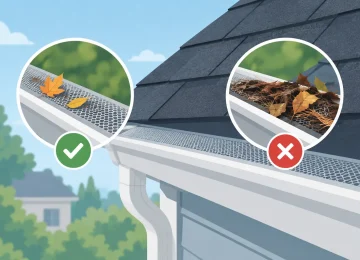
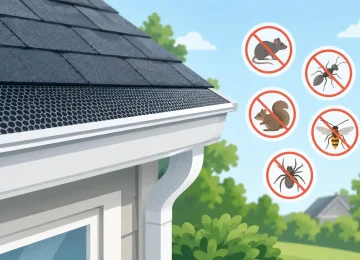
Micro mesh gutter guards use a finely woven stainless steel or aluminum screen installed over the gutter opening. The openings are small enough to block most leaves, pine needles, seed pods, roof grit, and insects while allowing rainwater to pass through.
This is different from basic perforated covers or larger-hole screens. Those products may stop full-size leaves but can let smaller debris enter the gutter, where it settles in the bottom and eventually creates a clog. A properly designed micro mesh system provides much finer filtration without closing off the gutter completely.
The guard is only one part of the drainage system. The gutters must be correctly sized, securely pitched, and connected to functioning downspouts. Installing a premium guard over undersized, loose, or poorly draining gutters will not correct the underlying problem.
Micro Mesh Gutter Guards Review: Where They Perform Best
For many local properties, micro mesh is a strong choice because it addresses the type of debris that causes repeated cleaning issues. Mature trees can drop leaves in the fall, but spring seed pods, summer debris, and winter shingle grit can create trouble throughout the year.
Micro mesh performs especially well when a property has frequent small debris. Pine needles are a common concern because they slip through wide screens and collect inside the gutter. Fine mesh catches them on top, where wind and rain can often move the debris away. The same principle applies to granules that wash off aging asphalt shingles.
It can also reduce standing water in gutters by keeping the channel clearer between service visits. That matters because trapped water contributes to overflow, staining, fascia damage, mosquito activity, and added weight on the gutter system. On homes with basements or low-lying areas, dependable water flow is part of protecting the foundation and surrounding landscaping.
There is a practical limitation: debris does not disappear. Large wet leaves, helicopter seeds, and heavy pollen can rest on top of any guard. Most will dry and blow away, but properties with dense tree cover may still need occasional surface clearing. A guard should reduce maintenance, not create the expectation that gutters will never need attention again.
Water Handling During Heavy Rain
The biggest question homeowners ask is whether fine mesh can keep up during a downpour. High-quality micro mesh guards can handle substantial rainfall when they are fitted to the roofline and gutter correctly. Water follows the roof surface onto the guard, passes through the mesh, and enters the gutter below.
Problems can occur when the guard is installed at the wrong angle, sits too low beneath the shingles, or has a lip that allows water to skip past the gutter during fast runoff. Roof valleys deserve particular attention. A valley concentrates water from two roof planes into one area, and that volume can overwhelm a guard or gutter that is not designed for it.
This is why a one-size-fits-all installation is risky. A contractor should inspect roof pitch, valley locations, gutter size, downspout capacity, and existing drainage patterns before recommending a product. In some cases, a larger gutter, additional downspout, splash control, or a modified guard installation is needed to manage water properly.
Material Quality Matters More Than the Label
Not every product sold as micro mesh is built the same. The mesh itself should resist rust, sagging, and separation from the frame. Stainless steel mesh is commonly preferred for long-term exposure because it holds up well against moisture and small debris. The supporting frame should also be durable enough to resist bending under snow, ice, and accumulated debris.
Be cautious with guards that rely on thin plastic components or light frames that can warp in changing temperatures. New Jersey winters can bring snow and ice, while summer heat can stress lower-grade materials. A guard that shifts, buckles, or pulls away from the gutter can become a drainage issue rather than a solution.
The fastening method also matters. Guards should be secured without compromising the roof or creating loose edges that catch debris. A professional installer will choose a method compatible with the gutter style, fascia condition, and roofing materials rather than forcing the same product onto every home.
The Condition of Your Existing Gutters Comes First
Gutter guards should not be installed over a system that is already failing. Before adding protection, the gutters need to be cleaned, inspected, and repaired as necessary. Hangers should be secure, seams should not leak, and the gutter should have proper pitch toward the downspouts.
Look for warning signs such as water spilling over the front edge, sagging sections, peeling paint on the fascia, stains beneath gutter joints, or pools near the foundation. These may point to clogged downspouts, poor slope, damaged gutters, or insufficient drainage capacity. A guard can help prevent new debris from entering, but it cannot fix water that has nowhere to go.
For older homes, it may make better sense to replace worn gutters and install guards as part of the same project. This gives the installer an opportunity to size the system for the roof’s runoff, set the correct pitch, and create a cleaner long-term solution.
Who Should Consider Micro Mesh Guards?
Micro mesh is often worth considering for homeowners and property managers who deal with recurring gutter cleaning, nearby trees, pine needles, roof grit, or difficult access to upper gutter runs. It can be particularly useful for multi-story homes where routine cleaning involves more ladder risk and expense.
Commercial and mixed-use properties can also benefit when debris buildup causes overflow near entrances, walkways, exterior walls, or parking areas. However, the recommendation should be based on the property’s drainage requirements, not simply on the size of the building.
They may be less necessary on a property with very little tree cover and easy, safe access for routine cleaning. In that case, a well-maintained open gutter system may be a more cost-effective option. The right choice depends on the debris load, the age and condition of the gutters, and the consequences of an overflow at that property.
What Professional Installation Should Include
A quality installation begins with more than measuring the gutter length. The contractor should evaluate the roof edge, inspect for existing damage, remove debris, confirm that downspouts are clear, and identify high-flow areas such as valleys and long roof runs.
The crew should leave the gutter system clean and secure, not cover existing debris and move on. After installation, the guards should sit evenly, with no loose sections, exposed sharp edges, or gaps where leaves can enter. The finished system should preserve access for future service if repairs or inspections are needed.
Ask about both the product warranty and the workmanship warranty. They cover different concerns. A material warranty may address defects in the guard itself, while a workmanship warranty speaks to the quality of installation. Clear answers on both are a sign of a contractor prepared to stand behind the job.
A Practical Decision for Long-Term Protection
Micro mesh guards are a worthwhile investment when they are matched to a sound gutter system and installed for the conditions of the property. They can significantly cut down on debris entering the gutters, reduce cleaning frequency, and help water move away from the roofline, siding, and foundation as intended.
For property owners in New Jersey and Staten Island, an on-site assessment is the best place to start. Cavallari Gutters can evaluate the existing drainage system, explain whether micro mesh protection fits the property, and address repairs or upgrades before small gutter issues lead to larger water damage.

Leave a Reply