
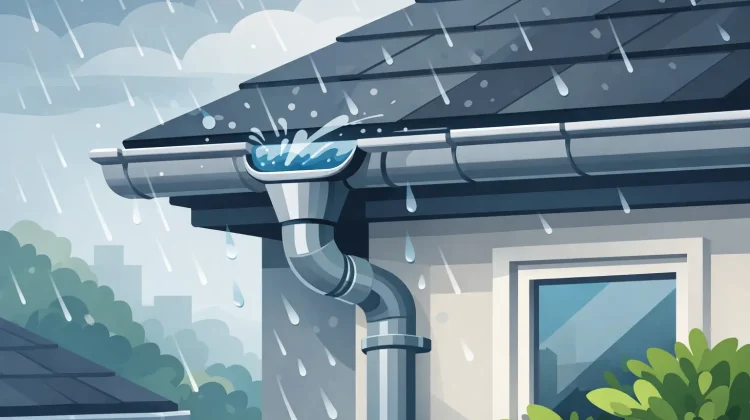
A gutter problem usually gets your attention only after water ends up somewhere it should not be – spilling over entryways, washing out landscaping, staining siding, or pooling near the foundation. That is why rain gutters matter more than many property owners realize. When they are sized correctly, installed properly, and kept clear, they do a quiet but essential job: moving water away from the structure before it turns into a repair issue.
For homes and commercial buildings in New Jersey and Staten Island, that job is not minor. Heavy rain, wind-driven storms, leaf buildup, winter freeze-thaw cycles, and older rooflines all put pressure on a gutter system. A basic, aging setup may still be hanging on the fascia, but that does not mean it is protecting the property the way it should.
Why rain gutters matter so much
Rainwater is predictable in one sense – it always looks for the fastest path down. Without a working gutter system, roof runoff pours straight off the edge of the building. Over time, that can damage fascia boards, rot trim, stain masonry, loosen soil, and create erosion around walkways and planting beds. On some properties, it also contributes to basement moisture and foundation stress.
The risks are not limited to major storms. Repeated small overflows can be just as damaging because they often go unnoticed. A section of gutter that pitches the wrong way, a loose downspout elbow, or a clog at one corner may slowly direct water against the building every time it rains. Months later, the problem shows up as peeling paint, soft wood, mildew, or settlement near the perimeter.
This is why gutters should be treated as part of the building’s water management system, not as an accessory. They protect more than the roof edge. They help protect the structure below it.
Not all rain gutters perform the same
From street level, many gutter systems look similar. In practice, performance depends on several factors working together: material, size, shape, slope, outlet placement, fastening method, and how the downspouts discharge water away from the structure.
Material matters because it affects durability, appearance, and long-term value. Aluminum is a common choice for many properties because it is lightweight, rust-resistant, and available in a wide range of colors. Other materials may make sense in specific situations, but there is always a balance between cost, lifespan, maintenance needs, and architectural fit.
Size matters more than many owners expect. Standard systems work well on some rooflines, but steep roofs, large drainage areas, and sections that collect concentrated runoff may require oversized gutters or larger downspouts. If a system is too small, it can overflow even when it is technically clean and intact. That is where experience matters. A proper recommendation should be based on how the roof actually sheds water, not just on what was there before.
Seam style also affects performance. Sectional gutters can function well, but every seam creates another point where leaks can eventually develop. Seamless systems reduce those joints and often provide a cleaner finished look. They are not a cure-all, but they do help minimize common leak points.
The role of downspouts
Gutters collect the water. Downspouts finish the job. If they are undersized, too few in number, or poorly placed, the whole system struggles. A gutter may be in good condition and still overflow because the water has nowhere to go fast enough.
Discharge location matters too. Water should be directed away from the foundation and away from high-traffic areas when possible. On commercial properties and multi-unit buildings, that planning becomes even more important because runoff can affect sidewalks, entrances, lower roofs, and adjacent tenants.
Signs your gutter system is not doing its job
Some warning signs are obvious, like visible leaks or sections pulling away from the building. Others are easier to miss. If you see water marks beneath the gutter line, mud splashing onto siding, loose spikes, standing water in the trough, or plants growing from accumulated debris, the system needs attention.
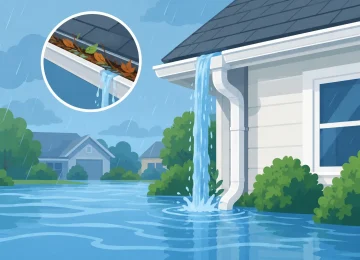
During a storm, watch how the gutters behave. Overflow at the corners, drips from seams, and water shooting past the gutter edge usually point to a problem with clogs, pitch, capacity, or installation quality. If water pools near the foundation after rainfall, the issue may involve the downspouts as much as the gutters themselves.
For commercial property owners and managers, regular observation is especially important. A small drainage issue on a larger building can turn into repeated facade staining, slippery walkways, tenant complaints, and maintenance costs that keep coming back.
Repair or replacement – it depends on the condition
Not every gutter problem means the whole system has to be replaced. If the issue is isolated to one leaking joint, a loose bracket, a damaged elbow, or a section knocked out of alignment, repair may be the practical solution. A targeted fix can restore performance if the rest of the system is still structurally sound.
Replacement tends to make more sense when the problems are widespread. If gutters are rusting through, separating at multiple seams, sagging in several runs, or repeatedly clogging because of poor design, repairs may only delay a larger issue. The same is true when the original system was undersized from the start. You can keep patching leaks, but if the capacity is wrong, overflow will continue.
A good recommendation should be honest about that trade-off. Repair is less invasive and often less expensive upfront. Replacement may cost more now, but it can save money and frustration when the existing system is at the end of its useful life.
Gutter guards can help, but they are not magic
Many property owners ask whether gutter guards eliminate maintenance. The short answer is no. The better answer is that they can reduce debris buildup and make cleaning easier, but results depend on the type of debris around the property, the roof design, and the guard system itself.
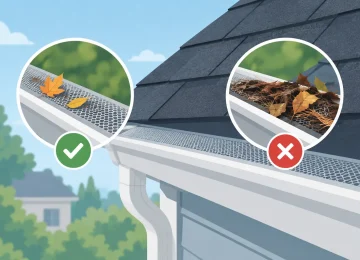
In heavily wooded areas, guards can be a smart upgrade because they help limit the amount of leaves and larger debris entering the gutter channel. That can reduce clogging and improve flow during storms. But fine particles, roof grit, and surface buildup can still collect over time. Guards should be seen as a way to improve performance and reduce maintenance frequency, not as a promise of zero service.
That honest expectation matters. A system works best when it is designed for the property, installed correctly, and checked as needed.
Installation quality matters more than most people think
Even high-quality materials will underperform if the installation is rushed. Gutters need proper pitch so water flows to the outlets without leaving standing water behind. Hangers need to be secure enough to handle weather, debris load, and winter conditions. Downspouts need to be placed where they can actually move water away from vulnerable areas.
Appearance matters too. A professionally installed system should complement the roofline and exterior color scheme, not distract from it. On residential properties, that helps maintain curb appeal. On commercial properties, it supports a well-kept appearance that tenants, customers, and visitors notice.
This is one reason specialized gutter contractors bring value. Gutters may look straightforward, but effective water control depends on details that general exterior work can sometimes overlook.
Choosing the right system for your property
The right setup depends on the age of the building, roof configuration, drainage demand, and maintenance goals. A newer home may benefit from a seamless aluminum system with guard protection. An older property may need a more customized solution because roof drainage patterns have changed over time or previous repairs left weak points. A commercial building may require larger-capacity gutters and downspouts to handle broader roof sections.
What should stay consistent is the decision process. Property owners should expect clear communication, a realistic assessment of what the building needs, and workmanship backed by accountability. Licensed and insured service, product warranties where applicable, and follow-through after the job all matter because gutters are not just being installed for appearance. They are being installed to protect the property.
That is the standard Cavallari Gutters believes in. Good gutter work should solve a drainage problem, hold up in real weather, and give the owner confidence that the system will perform when it counts.
If your gutters are leaking, overflowing, sagging, or simply showing their age, it is worth addressing before the next hard rain makes the decision for you. Water rarely waits for a convenient time, and a dependable gutter system is one of the simplest ways to protect what sits underneath it.

Leave a Reply