

A gutter system usually does not get much attention until water starts spilling over the edge in the middle of a storm. By that point, the damage can already be underway. One of the best ways to prevent gutter clogs is to treat your gutters as part of your property’s water management system, not as an afterthought. When gutters stay clear, they help protect your roofline, siding, foundation, landscaping, and walkways from avoidable water problems.
For homeowners and property managers in New Jersey and Staten Island, this matters even more because the weather does not stay gentle for long. Heavy rain, falling leaves, seed pods, pine needles, and winter freeze-thaw cycles can all turn a small buildup into a serious drainage issue. The right prevention plan is usually simpler and less expensive than dealing with overflow, rot, fascia damage, or basement moisture later.
The best ways to prevent gutter clogs start with the right system
Clogs are not always caused by neglect. In many cases, the gutter system itself makes buildup more likely. If gutters are undersized, pitched incorrectly, or pulling away from the fascia, debris tends to settle instead of moving through the line naturally. Downspouts that are too small or poorly placed can create the same problem.
That is why prevention starts with fit and function. A properly sized and correctly sloped gutter system will move water and small debris more effectively than one that is fighting against the structure. On homes surrounded by mature trees, larger gutters and strategically placed downspouts can make a noticeable difference. On commercial buildings, capacity and drainage layout matter even more because roof areas are larger and water volume is higher.
If your gutters clog repeatedly even after cleanings, it may be a design issue rather than a maintenance issue.
Keep up with routine gutter cleaning
Even the best system needs cleaning. Leaves, shingle grit, twigs, and dirt accumulate over time, and once that material gets wet, it compacts. That compacted debris slows water flow and creates the base for a full blockage.
For many properties, cleaning at least twice a year is a good starting point, usually in the spring and fall. But tree coverage changes the schedule. A home under maples or oaks may need more frequent service during peak leaf drop, while a property near pine trees may deal with year-round needle buildup.
The key is consistency. Waiting until you can see overflow from the ground often means the clog is already severe. Regular cleaning removes debris before it hardens, before plants start growing in the gutter, and before downspouts become packed solid.
Install gutter guards where they make sense
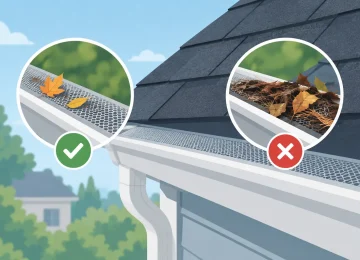
Gutter guards are one of the best ways to prevent gutter clogs, but they are not one-size-fits-all. A quality guard system can reduce the amount of debris entering the gutter and cut down on how often cleanings are needed. That can be a strong option for homes with heavy leaf fall or hard-to-reach rooflines.
That said, guards are not magic. Some low-quality products can trap debris on top, interfere with water flow in heavy rain, or make cleaning more difficult. The right guard depends on the roof type, surrounding trees, gutter size, and how much water the building handles during storms.
When selected and installed correctly, gutter guards can be a practical long-term upgrade. They are especially useful for property owners who want to reduce maintenance without sacrificing performance. They still need occasional inspection, but they can lower the chance of serious clogs developing inside the system.
Trim back overhanging branches
A lot of gutter debris never falls from the sky. It drops directly from the trees hanging over the roof. Branches that extend above the gutter line shed leaves, twigs, seed pods, blossoms, and small sticks straight into the trough.
Trimming those branches back helps in two ways. First, it reduces the volume of debris entering the gutters. Second, it limits wear on the roof and gutter system during storms, when branches can scrape shingles or pull at gutter sections.
This does not mean every nearby tree needs to come down. It means being realistic about what is feeding the problem. If one area of the building clogs faster than the rest, the landscaping above it is often part of the reason.
Make sure downspouts stay clear
A gutter can look clean from the top and still fail if the downspout is blocked. Downspouts collect the smaller debris that washes through the gutter channel, and once they clog, water backs up fast.
This is where many overflows begin. Water has nowhere to go, so it spills over the front edge or backs up toward the roofline. During colder weather, trapped water can also freeze and add weight to the system.
Routine inspection should include checking that downspouts are draining freely at the bottom and not holding packed debris in the elbows. If water is slow to exit, the blockage may be lower in the line. Extensions and underground drain connections should also be checked, because a clog farther out can affect the whole system.
Watch for early signs of poor drainage
One of the most effective ways to prevent bigger clogs is to catch smaller warning signs early. Gutters rarely fail without showing some indication first. You may notice water spilling at one corner, staining on the siding, sagging sections, loose fasteners, or plants beginning to grow from accumulated dirt.
These signs matter because they point to the area where flow is being interrupted. Addressing that area early can prevent heavier buildup and reduce the chance of structural damage. It can also reveal whether the issue is debris, improper slope, standing water, or a section that has shifted out of alignment.
For commercial properties and multi-unit buildings, regular visual checks are especially important. A drainage problem on an upper roof edge can affect entryways, storefronts, masonry, and pedestrian safety below.
Repair damage before it turns into recurring clogs
A damaged gutter is more likely to collect debris. Separated joints, crushed sections, loose hangers, and sagging runs all create spots where water slows down. Once water slows, debris settles. Once debris settles, clogs become more frequent.
This is why repairs should not be treated as cosmetic. Even a small dip in the line can create a pocket that holds wet leaves and roof grit. Over time, that material builds up and spreads the problem farther down the run.
Professional repairs can restore pitch, secure loose sections, reseal joints, and correct drainage weak points before they lead to overflow. In some cases, replacement makes more sense than patching, especially if the system is older, repeatedly leaking, or no longer sized for the property’s needs.
Match maintenance to your property, not your neighbor’s
Two houses on the same block can have very different gutter needs. One may have open exposure and minimal debris. The other may sit under large trees and collect buildup after every storm. The best prevention plan depends on roof design, tree coverage, gutter style, local weather exposure, and how accessible the system is for inspection and cleaning.
That is why a generic schedule does not always work. A property with steep rooflines, second-story gutters, or commercial frontage often benefits from a more proactive service plan. If your building has a history of overflow, ice issues, or repeated blockages, it is worth addressing the root cause instead of cleaning around the same problem every season.
For many owners, the most practical approach is a combination of seasonal cleaning, targeted repairs, and a guard system where it makes sense. Companies like Cavallari Gutters work with property owners to identify which solution fits the building instead of pushing a one-answer fix.
Best ways to prevent gutter clogs over the long term
Long-term prevention comes down to treating gutters as protective infrastructure. When they are clean, correctly installed, and inspected before small issues grow, they do their job quietly. When they are ignored, water finds other paths, and those paths are usually more expensive.
If you want fewer clogs over time, focus on the basics that actually change performance: proper sizing, correct pitch, routine cleaning, clear downspouts, selective branch trimming, and quality gutter guards when appropriate. None of those steps are complicated on their own, but together they can make the difference between a system that constantly causes problems and one that protects the property the way it should.
A little attention before the next heavy storm is often what saves you from a much bigger repair later.


Leave a Reply