
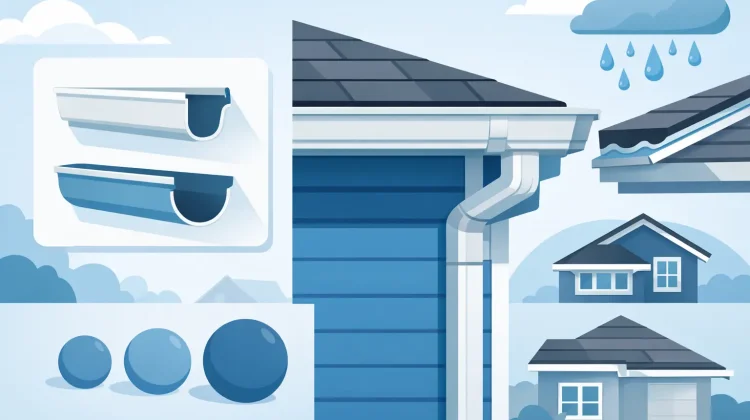
A lot of gutter problems start with a system that is simply too small for the roof it is trying to protect. If you are trying to determine the best gutter size for home performance, the right answer usually comes down to roof area, roof pitch, drainage layout, and how hard rain hits in your area.
For many homes, 5-inch gutters are standard and work well. But standard is not the same as best. On larger roofs, steeper rooflines, and homes that regularly see heavy downpours, a 6-inch system can make a noticeable difference in how well water is moved away from the structure.
What is the best gutter size for home use?
The most common residential gutter sizes are 5-inch and 6-inch. In simple terms, 5-inch gutters are often enough for average-sized homes with moderate roof drainage needs, while 6-inch gutters are better suited for larger roofs, steeper slopes, and areas where stormwater volume builds quickly.
That does not mean bigger is always necessary. A gutter system should be sized to the home, not chosen by habit. Oversizing when it is not needed can add cost without much benefit. Undersizing is the more serious problem because it leads to overflow, fascia damage, soil erosion, siding stains, and foundation risk.
The goal is not just to catch water. The goal is to control it consistently, even during the kind of storm that exposes weak points fast.
Why gutter size matters more than many homeowners think
When gutters overflow, people often assume the issue is debris or a bad pitch. Those are common causes, but capacity matters just as much. If too much water reaches the gutter too quickly, even a clean system can spill over.
That overflow usually does not stay contained to the gutter line. Water can run behind the gutter, soak fascia boards, streak siding, flood planting beds, and pool near the foundation. Over time, what looks like a gutter issue becomes a broader exterior maintenance problem.
This is why sizing should be part of the conversation anytime you are replacing an older system, building an addition, or correcting chronic drainage issues. A gutter system that looks fine from the ground may still be underperforming during peak runoff.
5-inch vs. 6-inch gutters
For most residential properties, this is the real decision.
When 5-inch gutters are enough
A 5-inch gutter is the traditional choice for many single-family homes. If the roofline is fairly simple, the roof pitch is moderate, and the drainage area feeding each gutter run is not excessive, this size often performs well.
Homes with shorter gutter runs and a good number of properly placed downspouts can also do well with 5-inch systems. If there is no history of overflow and the existing drainage pattern is working, staying with 5-inch may be perfectly reasonable.
When 6-inch gutters are the better choice
A 6-inch gutter handles more water and gives a system more room during heavy rain. That extra capacity can be especially helpful on larger homes, multi-level rooflines, steep roofs, and areas where one section of gutter collects runoff from a broad roof surface.
This size is also worth serious consideration if you have seen overflow at corners, near valleys, or at the top edge of the gutter during storms. In many cases, the issue is not installation quality alone. The system may simply need more carrying capacity.
For homes in New Jersey and Staten Island, where weather can shift quickly and strong rain events are not unusual, 6-inch gutters are often a smart upgrade when roof conditions call for them.
The roof factors that affect gutter sizing
Choosing the best gutter size for home protection is really about understanding how much water the roof is producing and how quickly that water reaches the gutter.
Roof square footage
The larger the roof section draining into a gutter run, the more water that gutter needs to manage. A small ranch home and a large two-story home do not place the same demand on the system, even if both have clean gutters and similar materials.
Roof pitch
A steeper roof sheds water faster than a lower-slope roof. That speed matters. Quick runoff can overwhelm smaller gutters, especially during intense rainfall.
Valleys and complex rooflines
Roof valleys concentrate water. If several roof planes feed into one valley and then into one gutter section, that area may require more capacity than the rest of the house. This is one reason a home may have overflow in only one trouble spot.
Downspout placement and size
Gutters do not work alone. Even if the gutter itself is large enough, poor downspout layout can slow drainage and create backups. Sometimes the fix is a larger gutter. Sometimes it is an additional downspout or a better downspout location. Often, it is a combination.
Signs your current gutters may be undersized
If a gutter system struggles only during extreme storms, that may be normal. If it struggles during ordinary heavy rain, that deserves a closer look.
Watch for water spilling over the front edge, water running behind the gutter, erosion below drip lines, repeated staining on siding, or mulch and soil being washed out near corners. You may also notice that one area overflows even after cleaning. That pattern can point to a sizing or design problem rather than a maintenance issue.
Another clue is when the home has been modified over time. Roof replacements, additions, porticos, and changes to drainage layout can alter how water moves. The original gutter size may no longer match the home as it exists now.
Does gutter style change the answer?
Yes, sometimes. K-style gutters and half-round gutters do not carry water the same way, even when their nominal sizes sound similar. K-style gutters are common on residential properties because they hold more water for their profile and pair well with most home designs.
That means a 6-inch K-style system often gives excellent capacity without changing the look of the home too dramatically. Half-round systems can be a strong aesthetic choice, especially on historic or custom homes, but sizing needs to be considered carefully because visual appearance should not come at the expense of drainage performance.
Bigger is not automatically better
There is a practical case for upsizing, but there are still trade-offs. Larger gutters can cost more, and they need to be installed correctly so the system looks clean and functions properly. On some homes, an oversized system may be more visible than the owner wants.
That said, the cost difference between 5-inch and 6-inch gutters is often small compared to the cost of repeated repairs caused by overflow. If a home has clear signs of high water volume, going bigger is usually the more cost-effective decision over time.
This is where experienced evaluation matters. A contractor who focuses on gutters should be looking at the roof plan, slope, valleys, downspouts, and trouble areas together, not just quoting the same size used on the previous system.
How professionals determine the right fit
A proper recommendation should go beyond a quick glance at the roof edge. It should consider the effective roof drainage area, the number and location of downspouts, gutter pitch, and where water is currently failing.
In some cases, the right answer is 5-inch gutters with improved downspout design. In others, it is a full move to 6-inch gutters, especially where valleys or steep sections send large volumes of water into one run. On certain properties, mixed approaches can also make sense, with upgraded capacity on the heaviest drainage sections.
That kind of tailored approach is often what separates a gutter specialist from a general exterior contractor. Companies like Cavallari Gutters work with these decisions every day because proper water control is not a small detail. It protects fascia, siding, foundations, landscaping, and the long-term condition of the property.
What homeowners should do before replacing gutters
Before approving a new system, ask why a certain size is being recommended. If you have had overflow problems, mention exactly where and during what kind of rain. Those details help identify whether the issue is debris, pitch, downspout layout, or overall capacity.
It also helps to think beyond the gutter itself. If you are considering gutter guards, replacing fascia, or correcting drainage at the base of downspouts, those pieces should be coordinated. A well-sized gutter system performs best when the full water management plan is working together.
The best gutter size for home protection is not really about choosing what is most common. It is about choosing what gives your roof enough capacity to move water away safely, consistently, and without creating new problems. If your gutters have been overflowing, staining siding, or washing out the ground below, that is usually your house telling you the current setup is not doing enough. A careful evaluation now can save a lot of repair work later.

Leave a Reply