
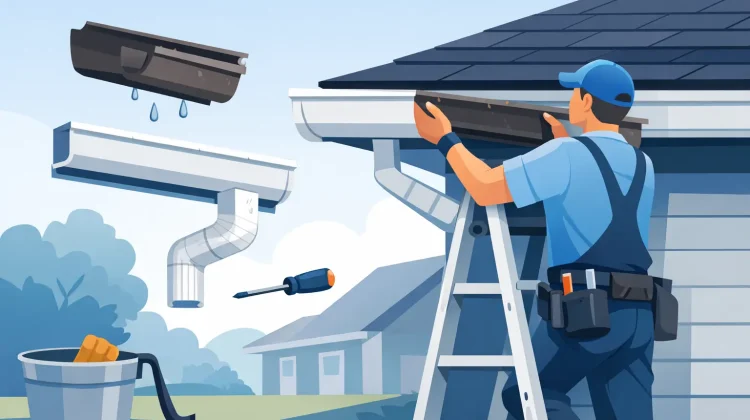
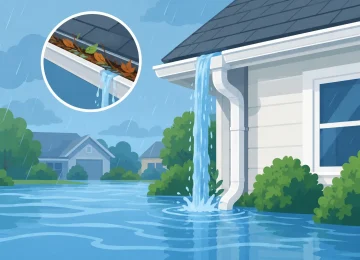
A gutter system usually gets ignored until water starts pouring over the edge, staining siding, or pooling near the foundation. If you are looking up how to remove and replace gutters, there is a good chance the problem has already moved past routine cleaning and into real property protection.
Replacing gutters is not just a cosmetic upgrade. Done correctly, it helps control roof runoff, protect fascia boards, reduce erosion, and keep water away from entryways, basements, and landscaping. Done poorly, it can create new drainage problems that are more expensive than the original issue.
When gutter replacement makes more sense than repair
Not every failing gutter system needs a full replacement. A loose hanger, a leaking end cap, or one separated joint can often be repaired. But there is a point where repairs stop being cost-effective.
If the gutters are pulling away in several sections, rusting through, sagging, cracked at multiple joints, or showing repeated overflow despite cleaning, replacement is usually the better long-term choice. The same goes for older systems that were undersized from the start. In many homes and commercial buildings, the issue is not just wear. It is that the original gutter size or pitch was never right for the roofline.
Another warning sign is damage behind the gutter. If fascia wood is soft, stained, or rotted, you are dealing with more than a drainage accessory. You are dealing with water intrusion at the roof edge, and that deserves a careful, professional look before new materials go up.
How to remove and replace gutters safely
The physical work of taking down old gutters may look straightforward, but safety and sequencing matter. Gutters are installed at roof edges, often above concrete, landscaping, decks, or uneven ground. Even on a one-story home, ladder movement, awkward lifting, and hidden wood damage can turn a simple project into a risky one.
Start by inspecting the full system from the ground and then at ladder level. Look for the type of gutter material, how the sections are connected, where the hangers are placed, and whether the downspouts discharge properly. This is also the time to identify electrical lines, steep grade changes, and soft soil around the perimeter.
Before removal begins, clear out debris so the gutters are lighter and easier to handle. Disconnect downspouts first, then remove hangers or fasteners section by section. Long runs should never be allowed to drop all at once. They need to be supported as they come down to prevent damage to the siding, trim, and surrounding area.
After the gutters are removed, inspect the fascia and soffit carefully. This is one of the most important parts of the job. If wood is deteriorated, new gutters should not be installed until those areas are repaired. Attaching a new system to compromised wood creates a short-lived fix and often leads to sagging or pull-away later.
What to check before installing new gutters
A good replacement starts with correct planning, not with whatever gutter happens to be available. Size, slope, outlet placement, and downspout capacity all need to match the roof area and the way water moves off the structure.
For many properties, the right question is not just what material to use. It is whether the existing layout is doing the job. A system with too few downspouts, poor pitch, or discharge points aimed at walkways and foundations can still fail even if the new gutters themselves are high quality.
This is especially relevant in places like New Jersey and Staten Island, where heavy rain, seasonal debris, snow load, and freeze-thaw cycles can all put extra stress on a gutter system. A proper replacement should account for local weather conditions, not just appearance.
Homeowners also need to think about finish and fit. Gutters come in different profiles, sizes, and colors, and the right choice should complement the roofline while meeting drainage needs. Seamless aluminum is a common choice because it balances durability, appearance, and lower leak potential. But material selection still depends on budget, building style, and how much maintenance you want to take on over time.
Installing the new system the right way
Once the fascia is sound and the layout is confirmed, installation begins with marking the correct pitch. Gutters need a slight slope toward the downspouts so water drains efficiently without appearing visibly crooked. That balance matters. Too little pitch can leave standing water. Too much can look uneven from the street.
Hangers should be placed securely and consistently, with spacing appropriate for the material and local weather exposure. In areas that see snow and ice, fastening strength becomes even more important. A gutter system has to handle not only flowing rainwater but also the added weight of debris and winter buildup.
Seams, outlets, end caps, and downspout connections need careful sealing and attachment. This is often where low-quality work shows up first. A gutter can look fine from the driveway and still leak at a connection point during the first heavy storm.
Downspouts should direct water away from the structure in a controlled way. That may mean splash blocks, extensions, or tying discharge into an existing drainage plan, depending on the site. If the water exits right beside the foundation, the system is only solving half the problem.
Common mistakes during gutter replacement
The biggest mistake is treating all gutter replacements like a simple swap. Old off, new on, done. In reality, the hidden conditions behind the old system often determine whether the replacement will perform well.
One common issue is reusing a bad layout. If the previous gutters overflowed because they were undersized or had too few downspouts, replacing them with the same configuration does not fix the real problem. Another is fastening into weakened fascia without proper repair.
There is also the issue of improper ladder use and rushed removal. Bent trim, damaged shingles, and cracked siding often happen during take-down, not installation. And while sealant has its place, relying on excessive caulk to make up for poor fit or poor slope is never a dependable solution.
For property owners, one more mistake is waiting too long. Gutters that are detached, leaking heavily, or sending water back toward the building can contribute to fascia rot, basement moisture, and erosion around the foundation. What starts at the roof edge can spread quickly.
DIY or hire a professional?
That depends on the building, the height, and the condition of the structure. A short run on a small shed is one thing. A multi-section home, commercial building, or any structure with second-story rooflines is another.
A professional contractor brings more than labor. They bring measurement accuracy, proper pitch planning, material recommendations, safe removal practices, and the ability to spot structural issues that a typical property owner may miss. They also have the equipment to fabricate or fit systems correctly and the experience to install them cleanly.
For many customers, the deciding factor is not whether they could physically hang a new gutter. It is whether they want to risk improper drainage, damage to the fascia, or a callback after the first major storm. That is why many property owners choose a gutter specialist instead of a general handyman.
At Cavallari Gutters, that specialist approach matters because gutters are not treated like an add-on service. They are the core trade, and that shows in the planning, workmanship, and follow-through.
Signs it is time to call for an estimate
If your gutters are separating at joints, pulling away from the house, rusting, overflowing after cleaning, or draining too close to the foundation, it is time to have the system evaluated. The same is true if you see peeling paint near the roofline, water staining on siding, soil washout below downspouts, or visible rot along the fascia.
A professional estimate should do more than quote a price. It should identify why the current system is failing, what type of replacement is appropriate, and whether any surrounding wood or drainage corrections are needed. That kind of clarity helps you avoid paying twice for the same problem.
Knowing how to remove and replace gutters is useful, but knowing when the job needs experienced hands is just as important. A well-installed gutter system quietly protects the parts of your property that cost far more to repair. If your current system is no longer doing that, taking action now can save you a much bigger headache later.
Leave a Reply