

A hard rain can send hundreds of gallons through a gutter system in a short time. If that water exits a downspout only to pool beside the foundation, the rest of the system cannot do its job. When comparing splash blocks versus extensions, the right choice comes down to where the water lands, how your property slopes, and how much runoff your home or building handles during a storm.
Both options can help protect foundations, siding, landscaping, walkways, and lower-level spaces. The wrong option, or an improperly installed one, can leave you with the same drainage problem in a different form. A practical assessment of the property is the best way to decide.
Splash Blocks Versus Extensions: The Basic Difference
A splash block is a shallow channel, usually made of concrete, plastic, rubber, or decorative composite material, placed directly below a downspout. It spreads the discharge outward and helps prevent the force of falling water from digging a trench in soil or mulch.
A downspout extension attaches to the bottom of a downspout and carries water farther from the building. Extensions may be rigid aluminum, vinyl, corrugated plastic, or flexible material. Some are permanently connected, while others can be folded up, removed, or redirected for lawn care and foot traffic.
The key difference is distance. A splash block manages water at the point where it reaches the ground. An extension actively moves it away from the structure. For many properties, especially where the ground is flat or the foundation has a history of moisture concerns, that additional distance makes a meaningful difference.
When a Splash Block Is a Good Fit
Splash blocks are often a sensible choice when the area below the downspout already slopes away from the building and drains well. They are simple, low-profile, and less likely to become an obstacle along a walkway or driveway. They can also be a good finishing detail where a long extension would interfere with landscaping or be easily damaged.
They work best when they are positioned on firm, stable ground. If a splash block settles, tilts toward the house, or becomes buried under mulch, it can direct water back toward the foundation instead of away from it. This is a common issue around planting beds, where seasonal maintenance gradually changes the grade.
A splash block also has limits during heavy rain. It may distribute the water, but it cannot carry it past a low spot, compacted soil, or a crowded landscape bed. If runoff remains near the wall after a storm, the splash block is not providing enough drainage control on its own.
When a Downspout Extension Is the Better Choice
An extension is generally the stronger option when water needs to travel several feet away from the structure. This is especially true beside basements, crawl spaces, garages, and foundations with known seepage, cracking, or settling concerns. It is also useful where the ground is relatively flat or slopes back toward the building.
The extension should discharge onto an area that continues to drain away. Simply moving water to the end of a downspout extension does not solve the problem if it releases into a low spot or against a neighbor’s property, fence, patio, or sidewalk. Water needs a clear path after it leaves the extension.
Rigid extensions tend to offer a cleaner, more durable appearance and can be color-matched to the gutter system. Flexible extensions can help navigate an irregular planting bed or a tight space, but they may collect debris, shift out of position, or crack over time. The best material depends on the location and how exposed the extension will be to foot traffic, lawn equipment, and weather.
Drainage Conditions Matter More Than the Product
New Jersey and Staten Island properties often have drainage challenges that are not obvious on a dry day. Dense clay soil, settled grades, tight lot lines, paved surfaces, and older foundations can all keep runoff close to the building. A solution that works on one side of the house may not work on another.
Look at the area around each downspout after a steady rain. Standing water, washed-out mulch, soil erosion, green staining on siding, and damp foundation walls are signs that the discharge location needs attention. Water in a basement or crawl space is a more urgent signal, but waiting for an interior leak is not necessary before correcting poor runoff.
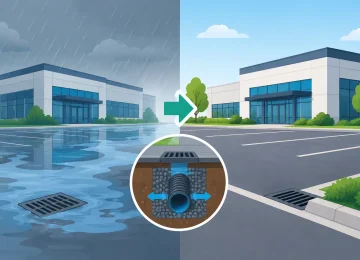
Roof size matters as well. A larger roof plane sends more water into the downspouts below it. On a commercial building, mixed-use property, or home with multiple roof additions, a single downspout may handle more flow than expected. In those situations, a short splash block may not be enough to manage the volume safely.
Watch for Walkways, Driveways, and Winter Hazards
Where downspouts empty near a front walk, side entrance, or driveway, drainage choices affect safety as well as foundation protection. Water that crosses a paved surface can freeze and create a slipping hazard. It may also contribute to heaving, cracking, or deterioration around concrete and asphalt.
An extension can redirect water away from traffic areas, but it should not create a tripping hazard. A properly planned setup may use a low-profile option, a buried drainage line, or a route through a landscape area. The correct approach depends on the layout of the property and the available grade.
How to Choose Between Splash Blocks and Extensions
Start with the direction of the slope. If the ground falls away from the building and water naturally continues downhill, a properly positioned splash block may be all that is needed. The block should extend away from the wall, remain level from side to side, and sit where it will not be displaced by rain or landscaping work.
Choose an extension when the water needs help reaching a safer discharge point. This is often the better choice when the downspout ends near a foundation planting bed, a window well, an air-conditioning unit, or a paved area. The extension should be long enough to move water away without sending it into another problem area.
In some cases, using both makes sense. A splash block can protect the ground immediately beneath a downspout, while an extension or drainage channel carries heavier runoff farther out. This approach can be useful on sloped properties where erosion is a concern.
Do not rely on appearance alone. A decorative splash block may look appropriate beside a well-kept landscape, but drainage performance is the priority. Likewise, a long plastic extension may move water farther away but still fail if it is crushed, disconnected, or aimed uphill.
Proper Installation Prevents Common Problems
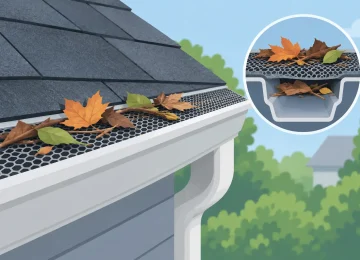
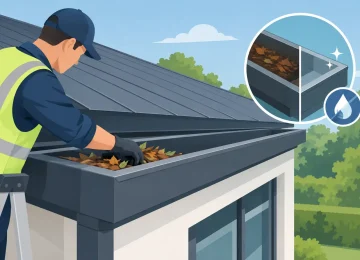
Even a simple drainage accessory needs to be installed with care. The downspout outlet should be secure, and the discharge path should be clear of leaves, mulch, stones, and other obstructions. If the gutter above is clogged or overflowing, no splash block or extension can compensate for the volume of water spilling over the gutter edge.
Keep extensions positioned so they do not separate during storms or get damaged during mowing. Check them after winter, since freezing temperatures, snow removal, and shifting soil can alter their position. For splash blocks, inspect for sinking, cracks, and soil buildup that may prevent water from moving forward.
If your gutters are undersized, poorly pitched, leaking at seams, or missing adequate downspouts, the drainage issue may begin higher up. Water management works as a system: roof runoff enters the gutters, travels through downspouts, and must finally discharge away from the structure. Each part needs to perform correctly.
When to Call a Gutter Professional
A professional evaluation is worthwhile when you see repeated pooling, basement moisture, erosion, overflowing gutters, or water collecting near the foundation despite using splash blocks or extensions. These symptoms may point to a larger issue with gutter capacity, downspout placement, grading, or drainage routing.
Cavallari Gutters helps property owners in New Jersey and Staten Island look at the full drainage picture, not just the visible accessory at the bottom of a downspout. A well-planned gutter and downspout system should protect the property through the storms that put it to the test.
Before the next heavy rain, take a few minutes to watch where each downspout sends water. That simple observation can reveal whether a splash block is enough, whether an extension is needed, or whether your property would benefit from a more complete drainage solution.
Leave a Reply