
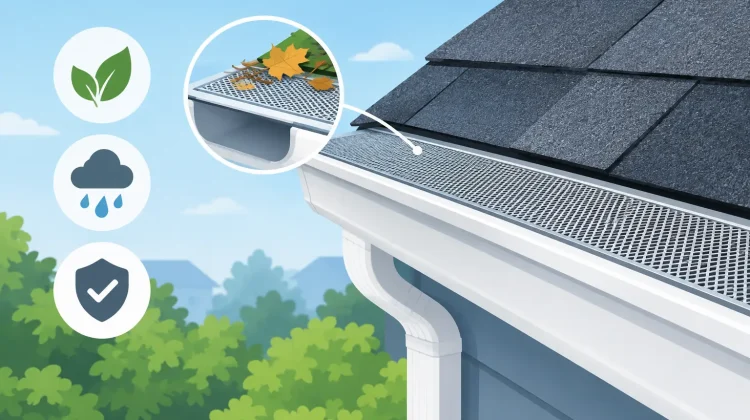
A gutter guard can look like a simple upgrade until the first hard rain exposes a poor fit, undersized gutter, or drainage problem that was already there. This seamless gutter guard systems review looks past the sales claims and focuses on what homeowners, property managers, and commercial owners in New Jersey and Staten Island should evaluate before choosing a system.
The first point is worth clarifying: a continuous, custom-formed gutter and a gutter guard are two different parts of the drainage system. The gutter collects roof runoff. The guard is designed to keep leaves, needles, and larger debris from entering it. A guard can reduce cleaning needs significantly, but it cannot compensate for gutters that pitch the wrong way, outlets that are too small, loose fasteners, or downspouts that discharge water too close to the building.
What a Good Gutter Guard System Should Do
The best guard for a property does not simply block the most debris. It allows water to enter at the rate the roof delivers it, stays secure through changing weather, and makes future service practical. That balance matters in our area, where mature trees, autumn leaf drop, heavy summer downpours, wind-driven rain, snow, and freeze-thaw conditions can all affect performance.
A properly selected guard should keep the majority of leaves, twigs, and roof debris out of the gutter channel while directing rainwater into the system. It should also be securely attached without weakening the roof edge, crushing the gutter, or creating an access problem if repairs are needed later.
No product makes a gutter permanently maintenance-free. Fine shingle grit, seed pods, pollen, and decomposing debris can still collect on top of certain guards or at the outlets. The realistic goal is fewer cleanings, less internal blockage, and better protection from overflow – not a promise that the system will never need attention again.
Seamless Gutter Guard Systems Review: The Main Types
Different guard designs can work well, but their results depend on the roof, nearby trees, gutter size, and installation quality. Here is how the major categories compare in real-world use.
Screens and perforated covers
Screen-style guards use openings to admit water while stopping larger leaves and debris. They are often a practical choice for properties with broad leaves and moderate tree coverage. Quality varies widely. Thin, loosely installed screens may warp, lift, or allow debris to settle in the gutter, while heavier aluminum or steel covers with a secure fit can provide better long-term performance.
Their trade-off is debris on top. Leaves may blow away in open locations, but wet leaves and pine needles can cling to the surface, especially in shaded areas. Screens are often a reasonable value when the gutter system is otherwise in good condition and the debris load is not extreme.
Micro-mesh guards
Micro-mesh systems use much smaller openings to filter out fine debris, including many pine needles and roof granules. For homes beneath evergreens or properties that receive persistent small debris, they can be more effective than standard screens.
The material and support structure matter. A quality micro-mesh guard needs a rigid frame and a secure installation method so it will not sag under wet debris or snow. It also needs enough drainage capacity for the roof and local rainfall. If the mesh is too fine or poorly positioned, water can sheet over the edge during intense storms rather than enter the gutter.
Surface-tension or hooded guards
Hooded systems are designed to use water adhesion to guide runoff around a curved edge and into a narrow opening, while leaves pass over the top. These systems can handle large leaf loads well when they are matched to the roof pitch and installed correctly.
Their performance is highly dependent on precise installation. Water that comes off the roof too quickly, heavy rain at an unfavorable angle, or an improperly adjusted nose can cause overshooting. They may also require more visible material along the gutter line than low-profile mesh products. For some homeowners, that is acceptable; for others, appearance is a deciding factor.
Foam inserts and brush-style products
Foam and brush products sit inside the gutter and block debris from filling the channel. They are generally easier to install, which can make them appealing for a short-term or budget-conscious solution.
However, they can hold moisture and trap fine debris within the gutter. In wooded locations, they often need closer monitoring than exterior guard systems. They are not typically the first choice for property owners looking for a durable, lower-maintenance installation.
Why Installation Matters More Than the Product Label
A well-made guard installed over a poorly performing gutter is still a poorly performing drainage system. Before guards go on, the existing system should be inspected for slope, loose sections, failing seams, improper outlet placement, undersized downspouts, and water discharge near the foundation.
This is especially important for older homes and commercial buildings where additions, roof replacements, or prior repairs may have changed how water moves. A gutter that overflows at one corner may need a larger downspout, another outlet, or a corrected pitch. Covering it with a guard without addressing the cause can hide the problem until water reaches the fascia, siding, landscaping, or foundation.
Roof compatibility also deserves attention. Guards should be attached in a way that respects the roof edge and allows proper access for future work. A contractor should explain how the system is secured, whether it changes access to the gutter, and what happens if a section must be repaired or replaced later.
Questions to Ask Before Choosing a Guard
A useful estimate should include more than a price per foot. Ask what type of debris the product is best suited for, how it performs in heavy rain, and whether your current gutters and downspouts have enough capacity. If the property has pine trees, ask specifically about needles. If it has a steep roof or long valleys that send concentrated runoff to one area, ask how that volume will be handled.
Also ask what preparation is included. Gutters should be cleaned and checked before a guard is installed. Existing problems should not be sealed beneath a new cover. For larger homes, multi-family properties, and commercial buildings, it is also smart to ask about access points and the plan for periodic inspections.
Finally, review the warranty in plain language. Product warranties and workmanship warranties are not the same. A product warranty may cover material defects, while installation workmanship covers how the system was fitted to the property. Both matter.
When Gutter Guards Are Worth the Investment
Guards are often worthwhile for homes surrounded by trees, second-story rooflines that make cleaning difficult, and buildings where recurring clogs have already caused overflow. They can reduce the frequency of cleaning and help protect against the costly chain reaction that starts with backed-up water.
They may be less urgent for an open property with minimal debris and easy, safe access to the gutters. In that situation, scheduled cleaning may be the more economical approach. The right choice depends on the building, not just the product brochure.
For properties with aging or leaking gutters, replacement may be the better first step. Installing guards alongside a properly sized custom gutter system provides a cleaner starting point than adding them to a system near the end of its service life.
The Bottom Line for New Jersey and Staten Island Properties
The strongest gutter guard systems are the ones selected for the property’s debris, roof design, rainfall exposure, and existing drainage capacity. They reduce routine buildup, but they should be part of a complete water-management plan that includes sound gutters, correctly placed downspouts, and drainage away from the structure.
Cavallari Gutters can evaluate the full system before recommending a guard option, including whether repair, replacement, cleaning, or added drainage capacity should come first. A clear assessment now can prevent the frustration of installing a guard only to find that water was escaping the system for a different reason.



Leave a Reply