
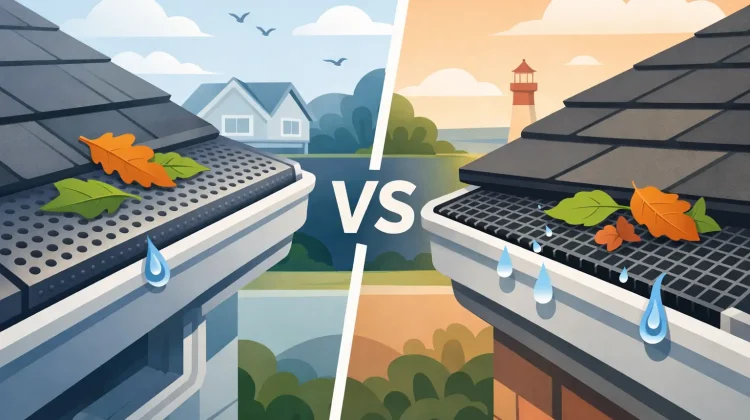
A gutter can look clear from the ground and still be one hard rain away from overflowing. Around New Jersey and Staten Island, mature trees, windblown leaves, roof grit, and fast-moving stormwater create a familiar maintenance problem. When comparing gutter guards vs screens, the right choice comes down to the debris around your property, the condition of the existing gutter system, and how much ongoing cleaning you want to avoid.
Both options are designed to keep larger debris out of the gutter trough while allowing water to drain toward the downspouts. They are not identical products, however, and neither one makes a drainage system completely maintenance-free. A good decision starts with understanding where each option performs well and where it may fall short.
Gutter Guards vs Screens: What Is the Difference?
The terms are often used interchangeably, but a gutter screen is generally a basic cover with visible openings. It sits over or inside the gutter and blocks large leaves, twigs, and other debris. Screens may be made from metal, plastic, or expanded mesh, and they are often one of the more economical ways to reduce gutter cleaning.
Gutter guards is the broader category. It can include screens, but it also includes finer micro-mesh systems, reverse-curve covers, and other professionally fitted products. Higher-quality guard systems are usually designed to manage smaller debris while keeping the gutter more fully covered. The exact performance depends on the material, design, installation method, roof pitch, and water volume the system must handle.
For property owners, the practical distinction is simple: a basic screen can keep out large debris at a lower upfront cost, while a well-matched guard system usually provides more complete protection and a more finished installation.
When Gutter Screens Make Sense
Screens can be a sensible choice for properties with occasional broadleaf debris, such as large maple or oak leaves. Because the openings are larger, rainwater generally enters easily, and the product is relatively straightforward to install or replace when needed.
They can also work well when the primary concern is stopping handfuls of leaves from filling an otherwise sound gutter. If a home has limited tree coverage and the owner is comfortable checking the system seasonally, a screen may provide enough improvement without investing in a more advanced guard system.
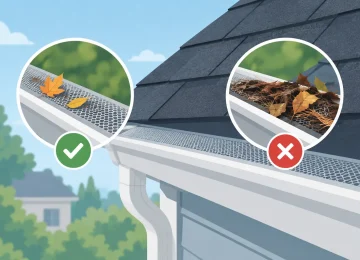
The trade-off is that larger openings can admit smaller debris. Pine needles, seed pods, roof granules, and fine organic material may pass through or collect on top of the screen. Over time, that material can still require cleaning. A screen can reduce maintenance, but it rarely eliminates it.
Installation quality matters here. Poorly secured screens can lift, sag, or shift during wind, snow, and seasonal temperature changes. Screens that do not fit the gutter properly may also create gaps where debris enters or where water overshoots during a heavy storm.
Where Full Gutter Guard Systems Perform Better
A professionally selected guard system is often the better choice for homes surrounded by trees, properties with pine needles or small seeds, and buildings where safe access for routine gutter cleaning is difficult. Fine micro-mesh options can filter out much smaller debris than standard screens while allowing water through the system.
That added filtration can be especially valuable on multi-story homes, commercial buildings, and rental properties. Property managers and owners do not want blocked gutters becoming an emergency after every major storm. Better debris protection can help reduce the frequency of cleanings and lower the risk of water spilling over the gutter edge.
A quality guard should be installed as part of a complete drainage plan, not simply attached to whatever gutter is already in place. If gutters are undersized, pitched incorrectly, pulling away from the fascia, or connected to clogged downspouts, a guard alone will not solve the underlying problem. Water must still enter the gutter, travel freely to the downspouts, and discharge safely away from the building.
For many properties in our service area, the best result comes from evaluating the roofline, tree coverage, gutter size, downspout layout, and visible signs of overflow before recommending a product.
Rainfall and Roof Design Matter More Than Many Homeowners Expect
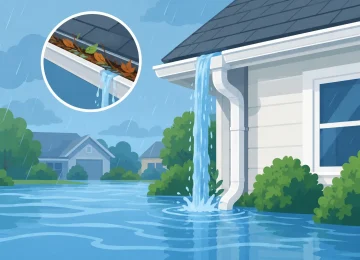
During a light rain, many guard and screen products can appear to work well. The real test is a sudden, heavy downpour. Water moves off a steep or large roof quickly, and the gutter protection system must accept that volume without allowing water to run over the front edge.
This is why one product cannot be called the best fit for every home. A guard that performs well on a low-slope roof with moderate tree cover may not be the right option for a taller home with long roof runs and high-volume valleys. The gutter itself may need a larger profile or additional downspouts before any cover is installed.
Snow and ice also deserve consideration in New Jersey and Staten Island. Gutter guards and screens are not substitutes for proper snow-management planning, secure hangers, and correctly installed gutters. A contractor should inspect the roof edge and fascia condition so the new system supports drainage without creating avoidable stress points.
Maintenance Expectations: Reduced, Not Removed
The promise of never cleaning gutters again is appealing, but it is not realistic for every property. Even the best gutter guard system needs periodic inspection. Debris can settle on top of the guard, downspouts can collect sediment, and nearby branches can deposit material in areas that need attention.
With screens, maintenance is usually more frequent because smaller debris can enter through the openings or become trapped across the surface. With fine-mesh guards, the maintenance interval may be longer, but the exterior surface should still be checked for buildup, especially after fall leaf drop and severe weather.
Property owners should also watch for signs that the gutter system needs service: water marks on siding, overflowing corners, mulch washed out of landscaping beds, sagging gutter sections, or standing water near the foundation. These conditions can point to a blockage, but they can also indicate a pitch, capacity, or downspout problem.
Cost Is More Than the Price of the Product
Screens generally cost less upfront. That makes them attractive when a gutter system is newer, debris is limited, and the goal is basic leaf protection. A higher-performance guard installation typically costs more because the materials, fitting, and installation process are more involved.
The better value depends on the property. A lower-cost screen may be appropriate for a lightly wooded single-family home where seasonal checks are simple. A more durable guard can make better financial sense for a heavily treed property, a difficult-to-access roofline, or a commercial building where repeated cleaning visits disrupt operations.
It is also worth considering the condition of the gutters before comparing products. Installing protection over leaking seams, loose hangers, undersized gutters, or damaged fascia can postpone a repair that should be handled first. A reliable estimate should address the entire drainage system, not just the cover on top.
How to Choose Between Guards and Screens
Start with the type of debris your property collects. Large leaves are different from pine needles, helicopter seeds, moss, and shingle granules. Next, consider how water moves off the roof during a hard storm and whether your gutters have ever overflowed even when they were clean.
Then think about access and maintenance. If you are comfortable arranging regular gutter cleaning and have limited tree cover, screens may provide practical protection. If climbing a ladder is unsafe, debris is constant, or the building has a complex roofline, a fitted gutter guard system is often the more dependable choice.
The right product should also preserve the gutter’s ability to drain. It should be securely installed, compatible with the roof edge, and supported by clean, correctly sized downspouts. Product selection without proper installation can create more frustration than protection.
Cavallari Gutters helps property owners evaluate the full picture, from existing gutter condition to the debris and rain exposure specific to the building. Whether a screen or a more complete guard system is the better fit, the goal is the same: keep water moving away from the roofline, siding, foundation, and landscaping where it can cause expensive damage.
Before the next heavy rain exposes a weak spot, have the gutter system assessed based on how your property actually handles water and debris. A recommendation tailored to the roof and drainage layout will serve your home or building far better than a one-size-fits-all cover.
Leave a Reply