

A basement can stay dry through years of ordinary rain, then take on water during one hard New Jersey storm. The difference is often not a cracked foundation alone. It is water collecting at the roofline, overflowing clogged gutters, discharging too close to the house, or pooling against the foundation. Knowing how to stop basement flooding starts with following that water path from the roof to the ground and away from the building.
For homeowners, property managers, and commercial owners, early action is far less disruptive than dealing with soaked flooring, damaged inventory, mold concerns, or foundation repairs. The goal is simple: keep runoff moving in a controlled direction before it has a chance to build pressure around the basement walls.
Find the Source of the Water First
Before choosing a repair, determine when and where water enters. If flooding happens only during heavy rain, exterior drainage is usually the first place to look. If water appears during dry weather or after a laundry load, a plumbing leak, sewer backup, or failed appliance may be responsible instead.
Walk around the property during or shortly after a rainstorm if it is safe to do so. Look for gutter overflow, water spilling behind gutters, downspouts emptying beside the foundation, standing water near exterior walls, and soil that slopes toward the structure. Inside, note whether water appears at one wall, around a floor drain, near a window well, or across the entire basement floor. These details help identify whether the problem begins at the roof, the grade, the drainage system, or below ground.
A musty smell, peeling paint, white mineral deposits on masonry, or dark stains along the lower wall can also signal repeated moisture exposure. Even if there has not been a major flood, those signs deserve attention before the next storm.
How to Stop Basement Flooding at the Roofline
Gutters and downspouts are a building’s first line of defense against foundation water. A typical roof sheds a surprising amount of runoff during a storm. When that water is not captured and directed away properly, it lands near the foundation and can quickly saturate the soil.
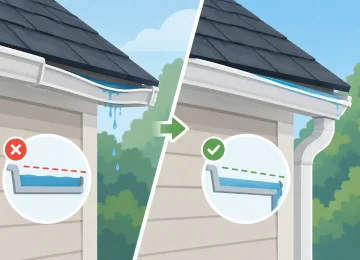
Clean gutters regularly so leaves, roof grit, seed pods, and other debris cannot block the channel or downspout outlet. A gutter that looks clear from the ground may still hold a compacted blockage at an elbow or underground connection. Water should move freely through the entire system, not spill over the front edge or run behind the gutter board.
Proper sizing and pitch matter as much as cleanliness. Undersized gutters may overflow in heavy rain, while gutters installed with poor slope can hold standing water and drain slowly. Loose hangers, separated seams, damaged corners, and sagging sections also create overflow points exactly where a property needs controlled drainage.
Downspouts should carry water well away from the foundation. As a practical rule, discharge should reach a point where water will continue moving away from the building rather than soak back toward it. Extensions, buried drain lines, and properly planned drainage routes can help, but the right solution depends on the lot layout, local drainage conditions, sidewalks, driveways, and nearby properties.
Gutter guards can reduce the debris that reaches the gutter channel, but they are not a substitute for professional inspection and cleaning support. The right guard system must work with the roof type, surrounding trees, and existing gutter condition. A poorly fitted product can still allow debris buildup or interfere with water flow during intense storms.
Correct Grading and Surface Drainage
Even a well-functioning gutter system cannot solve a yard that directs water toward the house. The ground around the foundation should slope away from the structure so rainfall naturally moves outward. Over time, mulch beds, settlement, landscaping changes, and hardscape work can alter that slope without an owner noticing.
Check for low spots near basement walls, especially below roof valleys and downspouts. Regrade those areas with appropriate fill so water does not sit against the foundation. Keep mulch and soil below siding, brick weep holes, and other exterior details that need to remain clear. Piling material too high can trap moisture and create additional exterior maintenance problems.
Patios, walkways, and driveways require attention as well. A paved surface that pitches toward the home can send a large volume of water directly to the basement wall. In some cases, a drainage channel or adjustment to the surface slope may be needed. The solution should move water safely without redirecting it toward a neighboring property or creating an icy walking hazard in winter.
Maintain the Systems Below Ground
Many basements rely on sump pumps, perimeter drains, or exterior drainage systems to manage groundwater. These systems are valuable, but they need routine checks. A sump pump that has not been tested may fail at the exact moment it is needed most.
Test the pump according to the manufacturer’s instructions, inspect the discharge line for blockages, and make sure it sends water away from the foundation. If the discharge freezes, clogs, or empties beside the house, the system cannot do its job. Homes with frequent water issues or storm-related power outages may benefit from a battery backup or secondary pump.
Window wells also need to drain properly. Clear leaves and debris from the well, confirm the drain is open, and use a secure cover where appropriate. Water filling a window well can place direct pressure on basement windows and create a fast route indoors.
For recurring seepage, an experienced waterproofing or drainage professional may need to evaluate the foundation, footing drains, and interior drainage options. Exterior improvements should come first when roof runoff and surface water are obvious contributors, but deeper drainage work can be necessary when groundwater conditions are the primary issue.
Do Not Ignore Small Gutter Problems
A minor gutter issue can become a foundation issue over repeated storms. Pay attention to these warning signs:
- Water spills over the gutter edge or runs behind the gutter during rain.
- Downspouts drain beside the foundation or disconnect from extensions.
- Gutters sag, pull away from the roofline, or show visible seam leaks.
- Soil is washed out, mulch is displaced, or puddles form near exterior walls.
- Basement walls show dampness, staining, peeling paint, or a persistent musty odor.
These conditions do not always mean a basement flood is imminent, but they show that water management is not working as it should. Addressing them promptly protects siding, fascia, landscaping, and the foundation along with the basement itself.
Match the Fix to the Property
There is no single answer for every home or commercial building. A property with mature trees may need regular cleaning and gutter guards. A steep roof or large roof area may require larger gutters, additional downspouts, or a revised drainage layout. A flat lot with dense soil may need more deliberate surface drainage than a property with a naturally sloped yard.
For commercial properties, the stakes can be higher because roof runoff may be concentrated across larger areas and drainage failures can affect tenants, entrances, equipment, and parking areas. Property managers should include gutter inspections, downspout checks, and drainage review in seasonal maintenance planning rather than waiting for a tenant report after a storm.
A licensed, insured gutter specialist can evaluate whether the existing system has the capacity, condition, and discharge layout needed for the property. Cavallari Gutters helps New Jersey and Staten Island property owners address gutter installation, repair, replacement, and guard needs with drainage performance in mind.
Before the next heavy rain, take a few minutes to look up, look down, and follow where the water goes. A clear gutter, secure downspout, and proper slope may be the practical work that keeps a manageable rainstorm from becoming a basement emergency.


Leave a Reply