
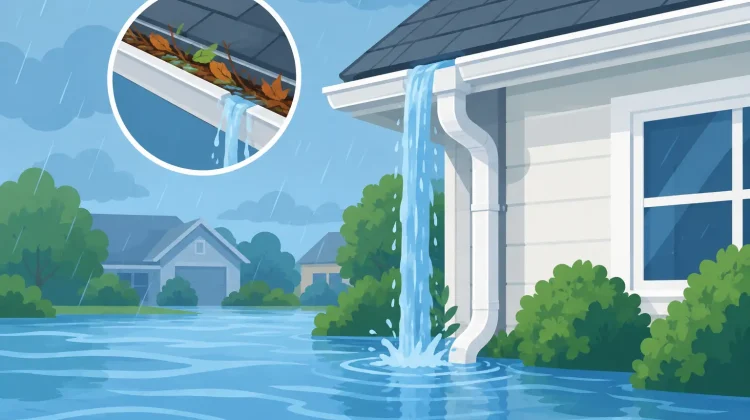
A heavy New Jersey rainstorm can expose a gutter problem in minutes. Water spilling over the edge, pooling beside a foundation, or pouring from an upper roofline is more than a nuisance. Can gutters cause flooding? Yes. When a gutter system cannot collect, carry, and discharge roof runoff correctly, it can send large volumes of water exactly where a property owner does not want it.
For homes, commercial buildings, and mixed-use properties, that misplaced water can contribute to basement flooding, wet crawl spaces, damaged landscaping, stained siding, ice hazards, and foundation concerns. The good news is that many gutter-related flooding issues can be identified and corrected before they become a major repair.
Can Gutters Cause Flooding? Yes, When Water Has Nowhere to Go
Gutters are designed to move rainwater away from the roof and through downspouts to a safe discharge point. A working system does not eliminate every flooding risk. Saturated ground, a high water table, poor site grading, and overwhelmed municipal drains can all play a role during severe weather. Still, gutters are often one of the first places to inspect when water collects near a building.
A typical roof sheds a surprising amount of water. Even a moderate rainfall can produce hundreds of gallons of runoff from a residential roof. If that water overflows at the roof edge or exits a downspout directly beside the foundation, it concentrates moisture in a small area. Over time, repeated saturation can find its way through cracks, joints, window wells, or other vulnerable points below grade.
The issue is not always a dramatic gutter failure. A system may appear acceptable in dry weather but perform poorly during a hard, wind-driven storm. That is why observing where water goes during rainfall is so valuable.
The Gutter Problems Most Likely to Create Flooding
Clogs that force water over the gutter edge
Leaves, roof grit, seed pods, and nesting material can block a gutter channel or downspout. Once water meets that blockage, it backs up and spills over the front or rear of the gutter. Front overflow often erodes planting beds and soaks the ground near the foundation. Rear overflow can run behind the gutter, wet the fascia board, and contribute to hidden wood damage.
A clogged downspout can be especially misleading. The gutter may look clear from the ground, yet water can still overflow because it cannot move through the vertical section and away from the building.
Incorrect pitch or loose gutter sections
Gutters need a slight, consistent slope toward the downspouts. If the pitch is too flat, water can sit in the trough. If a section sags, water collects at the low point instead of reaching the outlet. Standing water adds weight, pulls on hangers, and can worsen the sag over time.
Poor pitch may also leave water behind after a storm. While a small amount of residual moisture is not always a concern, obvious puddles, overflowing seams, or water traveling the wrong direction deserve professional attention.
Downspouts that are too small or too few
Gutter capacity has to match the roof area and local rainfall conditions. An undersized system may handle a light shower but overflow in a summer downpour or a fast snowmelt event. Long roof runs, steep roof pitches, and roof valleys can concentrate runoff in one location, increasing the demand on the gutter and downspout below.
Adding a downspout, increasing gutter size, or improving the layout can make a meaningful difference. The right solution depends on the roof design, drainage patterns, and where water can safely discharge on the property.
Discharge points too close to the foundation
A clear, properly pitched gutter can still contribute to flooding if its downspout ends beside the building. Water released at the base of a wall has a direct path into the soil surrounding the foundation. When that soil becomes saturated, hydrostatic pressure can push moisture toward basement walls and floors.
Downspout extensions, underground drainage connections, or properly designed splash control may help direct water farther away. The goal is not simply to move water off the roof. It is to move it to a location where it will not return to the building or create a hazard on a walkway, driveway, or neighboring property.
Damaged seams, outlets, and connections
Leaks at seams and end caps can release a steady stream of water in one damaging spot. A disconnected elbow or crushed downspout can do the same. These issues are often less obvious than a major overflow, but repeated leaking along one wall can gradually undermine mulch beds, stain masonry, and oversaturate the ground.
Flooding Is Not Always a Gutter-Only Problem
It is worth being realistic: replacing gutters will not solve every wet basement or yard drainage problem. If the property slopes toward the building, underground drains are blocked, a sump pump is failing, or groundwater is rising from below, those conditions need their own solutions.
However, a poorly performing gutter system can make each of those problems worse. Think of it as the first line of water management. When roof runoff is controlled at the roofline, there is less unnecessary water added to the already difficult drainage conditions around the property.
For commercial properties, this distinction is particularly important. A low area near an entrance, loading area, or parking surface may involve pavement grading and drainage infrastructure, but overflowing gutters can add water to the problem and create slippery conditions. A complete assessment should look at the roof edge, downspouts, discharge locations, and surrounding grade together.
Warning Signs to Watch for During and After Rain
Property owners do not need to climb a ladder to spot every issue. From a safe position on the ground, look for a few clear signs during a storm and shortly afterward:
- Water pouring over the gutter edge or running behind the gutter
- Downspouts that drip weakly or not at all during heavy rain
- Water pooling against the foundation or around basement windows
- Eroded soil, displaced mulch, or trenches beneath downspouts
- Sagging gutters, visible gaps at seams, or downspouts pulling away from the wall
- Damp basement walls, musty odors, or recurring water near the same interior area
One isolated overflow during an extreme storm does not automatically mean the entire system must be replaced. A simple cleaning, minor repair, or downspout adjustment may be enough. Recurring overflow, widespread sagging, rust, cracked seams, or a system that is clearly too small for the roof are stronger signs that a larger correction is needed.
How to Reduce Gutter-Related Flooding Risk
The most effective approach starts with routine maintenance. Gutters should be cleaned often enough to prevent debris from restricting flow, especially after leaf drop and before seasons known for heavy rain. Properties surrounded by mature trees may require more frequent attention than homes with open rooflines.
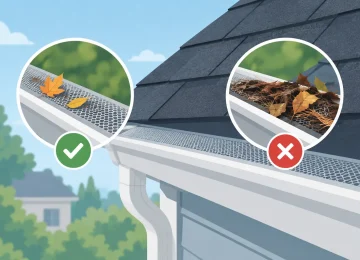
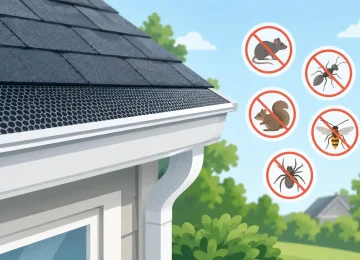
Gutter guards can reduce the amount of debris entering the system, but they are not a substitute for proper sizing, correct installation, and occasional inspection. The right guard system should allow water into the gutter while matching the roof and debris conditions. Some properties benefit greatly from guards, while others may only need scheduled cleaning and targeted repairs.
Next, make sure each downspout discharges away from the foundation. A short extension can sometimes improve a problem immediately, but the final path of the water matters. It should not be directed toward a neighbor, across a path where it can freeze, or into an area that already stays saturated.
Finally, have persistent issues evaluated rather than repeatedly patching around them. Proper gutter installation considers roof area, roof pitch, valleys, fascia condition, downspout placement, and drainage at ground level. A customized system can be more dependable than a one-size-fits-all replacement, particularly on older homes or buildings with complicated rooflines.
When to Call a Gutter Specialist
If you see overflow in normal rain, standing water in the gutters, loose sections, leaking seams, or water collecting near the foundation, it is time to schedule an inspection. The same is true if basement moisture appears after storms and the downspouts terminate close to the building.
Cavallari Gutters helps homeowners and property owners in New Jersey and Staten Island evaluate drainage concerns, repair damaged sections, and install properly sized gutter systems designed for the property. A clear assessment can separate a straightforward maintenance issue from a larger drainage concern, helping you make a practical decision without guessing.
Water management works best before the next hard rain puts it to the test. Keeping gutters clear, securely installed, correctly pitched, and directed away from the foundation is one of the most practical ways to protect the parts of your property that are hardest and most expensive to repair.

Leave a Reply