

A gutter system rarely fails all at once. More often, a small clog, loose hanger, or leaking seam is left alone until a heavy New Jersey rainstorm exposes the problem. Learning how to extend gutter lifespan comes down to preventing those small issues from turning into water damage at the roofline, siding, foundation, and landscaping.
Gutters work hard in every season. They carry roof runoff away from the building, but they also collect leaves, grit, shingle granules, ice, and standing water. A few consistent maintenance habits can protect your investment and help your system perform as it should for many years.
How to Extend Gutter Lifespan With Routine Care
1. Clean out debris before it creates standing water
Debris is one of the most common causes of premature gutter wear. When leaves, twigs, seed pods, and roof grit build up inside a gutter, water cannot move freely to the downspouts. The trapped material holds moisture against the metal, adding weight and encouraging corrosion, sagging, and overflow.
For most homes, cleaning in late spring and again after fall leaf drop is a sensible starting point. Properties with mature trees close to the roof may need more frequent attention. Commercial buildings and multi-unit properties should also be checked after major storms, particularly where flat or low-slope roof areas deliver a high volume of runoff.
Cleaning should include the downspout openings, not just the visible gutter channel. A gutter can look clear from the ground while a compacted blockage sits at the elbow or underground drain connection.
2. Keep water moving through properly sized downspouts
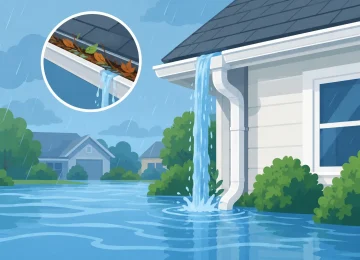
A clean gutter still cannot do its job if the downspouts are undersized, poorly located, or clogged. During a heavy rain, watch where water goes. If it spills over the front edge of the gutter, it may indicate a blockage, improper pitch, inadequate capacity, or a roof valley that sends too much water into one area.
Water should exit the downspout and move away from the foundation. If it pools beside the building, it can contribute to basement moisture, foundation stress, settling soil, and damage to planting beds. Extensions, splash blocks, or a correctly designed drainage connection may help, depending on the property layout and local drainage conditions.
There is no one-size-fits-all downspout plan. Larger roofs, steep roof pitches, long gutter runs, and concentrated roof valleys often need additional drainage capacity. Correct sizing is especially valuable when replacing an older system that has repeatedly overflowed in storms.
3. Address loose hangers and sagging sections early
Gutters need the right support to maintain their shape and slope. When hangers loosen, a section may begin to pull away from the fascia or sag in the middle. Water then settles in the low spot instead of draining, increasing the load on the gutter and putting added stress on the fasteners.
Look for visible dips, gaps behind the gutter, or areas that hold water long after rainfall. These are repair issues, not cosmetic details. A properly secured gutter with the correct pitch allows water to flow toward the downspout without creating standing pools.
Ignoring sagging can lead to more extensive fascia damage, bent gutter sections, and eventual detachment. Timely repairs are usually simpler and less disruptive than waiting until the system has failed under the weight of water, debris, or ice.
4. Repair small leaks before they spread
Drips at seams, corners, end caps, and outlet connections are common warning signs. Even a slow leak can stain siding, saturate trim, erode soil, or allow repeated moisture exposure around the roof edge. Over time, what started as a failing seal may become a larger repair involving the gutter, fascia, or exterior finish.
Inspect gutters during or shortly after a steady rain if it is safe to do so. Water trails on the outside of the gutter, darkened wood, peeling paint, and damp spots near seams deserve attention. Do not assume every leak can be solved by applying more sealant. If the gutter is improperly pitched, pulling away from the fascia, or heavily corroded, the underlying condition needs to be corrected.
For older systems with multiple leaking seams, replacement with seamless gutters may be a better long-term value. Fewer joints mean fewer common leak points, though every gutter system still needs routine care.
5. Trim back branches and manage roof debris
Overhanging branches create more than a leaf-cleaning problem. They can scrape gutters during wind, drop heavy limbs in storms, and keep sections of the roof and gutter shaded and damp. Pine needles, helicopter seeds, and small leaves can also bypass some gutter protection products and form dense blockages over time.
Keeping branches safely trimmed back from the roof reduces this debris load and lowers the risk of physical damage. It also makes inspections easier. If branches are near utility lines or require climbing, use a qualified tree professional rather than attempting risky work from a ladder.
Roof debris matters as well. Shingle granules commonly collect in gutters as a roof ages. A sudden increase in granules can be worth discussing with a roofing professional, while the gutter itself should be cleaned so the material does not restrict drainage.
6. Consider gutter guards for the right property
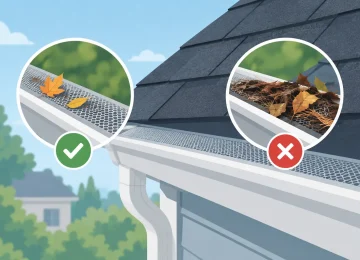
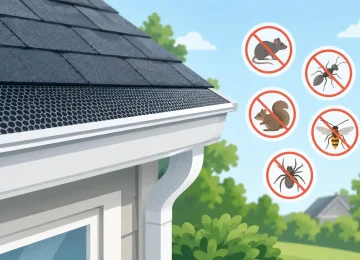
Gutter guards can reduce the amount of large debris that reaches the gutter channel, making regular maintenance more manageable. They can be especially helpful for homes with heavy leaf coverage or owners who want less frequent cleaning support.
However, gutter guards are not maintenance-free. Fine debris can collect on top of the guard, and the system still needs periodic inspection to confirm that water enters properly and downspouts remain clear. The quality of the guard, the roof type, nearby trees, and installation method all affect results.
A properly selected and professionally installed guard should complement the gutter system, not create new drainage problems. It is worth evaluating the full roofline rather than choosing a product based only on a promise of never cleaning gutters again.
7. Pay attention after winter and severe weather
Winter can be demanding on gutters in New Jersey and Staten Island. Ice, snow, and freeze-thaw cycles put extra stress on hangers, seams, and downspouts. Ice dams are usually connected to heat loss and ventilation conditions in the roof system, but their effects often show up at the gutter edge.
After winter, check for bent sections, pulled fasteners, leaking joints, and water-stained fascia. Following high winds or heavy storms, look for branches, loose downspout straps, and overflow marks. Prompt attention after severe weather helps prevent a one-season issue from becoming a recurring source of water intrusion.
Avoid chipping ice aggressively from gutters with sharp tools. This can puncture or deform the material and may damage the roof edge. If ice buildup is frequent, the better solution is to identify the drainage and roof conditions contributing to it.
8. Schedule professional inspections before repairs become replacements
Some gutter problems are easy to see from the ground, but others are not. Improper slope, hidden fascia deterioration, loose attachments, undersized drainage, and poorly placed downspouts can all shorten a system’s service life. A professional inspection provides a clearer picture of whether targeted repair, cleaning, guard installation, or replacement makes the most sense.
For property managers, an inspection schedule is also a practical way to document maintenance and catch issues before tenants or customers notice water entering an entryway or damaging the exterior. For homeowners, it offers peace of mind before the next season of heavy rain.
Cavallari Gutters helps property owners evaluate drainage concerns with practical recommendations based on the building, roofline, and existing system. Licensed, insured workmanship and clear communication matter when the goal is protecting the structure, not simply patching a visible drip.
Know When Maintenance Is No Longer Enough
Routine care can add years to a well-installed gutter system, but it cannot reverse widespread corrosion, repeated seam failures, crushed sections, or major fascia damage. If the same areas overflow after cleaning and repair, the system may have a design or capacity problem rather than a simple maintenance issue.
Replacement can be the more cost-effective choice when repairs are becoming frequent, water is repeatedly reaching the foundation, or the gutter system no longer matches the building’s drainage needs. A customized system in the correct size, style, and color can improve both water management and curb appeal.
The best time to protect your gutters is before the next downpour makes a small weakness obvious. A clean, secure, properly draining system quietly protects the property every time it rains.
Leave a Reply