
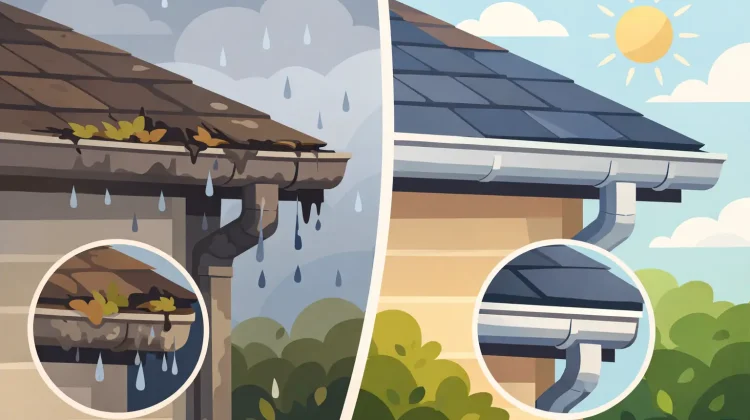
A gutter system can look like a small part of a property until the next hard New Jersey rainstorm. Then the gutter replacement before and after difference becomes obvious: water stops spilling over the roof edge, downspouts carry runoff where it belongs, and the area around the foundation stays far less exposed to damaging moisture.
For homeowners, property managers, and commercial owners, replacement is not just an exterior upgrade. It is a practical investment in protecting the roofline, siding, masonry, landscaping, and structure from repeated water exposure. The right system should also look clean, fit the building, and continue performing through changing seasons.
What Failing Gutters Look Like Before Replacement
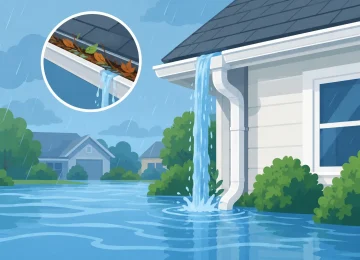
The warning signs are often visible long before a gutter fully pulls away from the building. You may see water pouring over the front edge during rain, dark streaks on the siding, peeling paint near the eaves, or soil that has washed away beneath a downspout. In some cases, gutters sag under their own weight or hold standing water days after a storm.
Leaks at seams, corners, and end caps are another common concern. A small drip may not seem urgent, but water repeatedly landing in the same spot can stain siding, erode mulch beds, damage walkways, and create wet conditions near the foundation. On commercial properties, poor drainage can also affect entry areas, pedestrian safety, and the appearance of the building.
Older sectional gutters tend to have more joints, which means more potential leak points over time. Rust, corrosion, loose fasteners, cracked sealant, and improper slope can all reduce performance. A gutter that was installed correctly years ago may simply have reached the point where repairs no longer offer a dependable long-term answer.
It is also worth looking beyond the gutter itself. If a downspout is too short, disconnected, clogged, or aimed toward the foundation, even a gutter in decent condition may not manage runoff effectively. A professional assessment should consider the whole drainage path, from the roof edge to where water discharges on the property.
Gutter Replacement Before and After: The Functional Changes
After replacement, the biggest improvement is controlled water flow. Properly sized gutters collect runoff from the roof and direct it to downspouts without constant overflow. Correct pitch helps water move rather than pool, while secure hangers keep the system stable under the weight of heavy rain and wet debris.
The difference can be especially noticeable on larger roof sections, steep rooflines, and properties with valleys that send a high volume of water into one area. Standard-size gutters may not be enough for every building. In those situations, a larger gutter profile, additional downspouts, or a revised drainage layout may be the better solution.
A replacement project also provides the opportunity to eliminate recurring problem areas. Instead of resealing the same leaking seam each season, a seamless aluminum gutter system reduces the number of joints along each run. Fewer joints generally mean fewer places for water to escape. That does not make the system maintenance-free, but it can improve reliability and reduce future repair needs.
Downspout placement matters just as much as gutter installation. Water should be routed away from the foundation and away from areas where it can damage landscaping or create puddles near entrances. Depending on the property layout, extensions, elbows, additional downspouts, or other drainage adjustments may be appropriate.
The Visible Difference Matters, Too
Functional drainage comes first, but appearance is part of a quality replacement. Old gutters can make an otherwise well-maintained home or commercial property look neglected. Sagging sections, mismatched repairs, rust marks, and overflowing debris are noticeable from the curb.
New gutters create a straighter, cleaner line along the fascia. With multiple sizes, styles, and colors available, the system can be selected to complement the siding, trim, brick, or roofing rather than distract from it. A well-matched gutter installation should look intentional, not like an afterthought.
This is particularly valuable for property owners preparing to sell, landlords maintaining rental units, and commercial owners who want their buildings to present well to tenants and customers. Curb appeal alone should not drive the decision, but it is a meaningful benefit when replacement is already needed for performance reasons.
When Repair Makes Sense and When Replacement Is Smarter
Not every gutter issue calls for complete replacement. A localized leak, one loose hanger, a damaged elbow, or a minor separation at a connection may be repairable if the rest of the system is sound. Timely repairs can extend the life of a gutter system and prevent a small problem from becoming a larger exterior repair.
Replacement becomes the more practical option when damage is widespread or keeps returning. Multiple leaks, persistent sagging, extensive rust, repeated overflow caused by poor sizing, and gutters pulling away from the fascia are all signs that a patchwork approach may cost more over time. If the existing layout does not handle the roof’s water volume, repairing individual sections will not fix the underlying design issue.
The condition of the fascia and roof edge should also be checked. Water escaping behind a gutter can rot wood and create hidden damage. Addressing these conditions during a replacement project helps ensure the new system has a sound surface for attachment.
A straightforward inspection provides the clearest answer. The goal is not to sell more work than a property needs. It is to identify whether repairs can restore dependable drainage or whether a new system will provide better value and protection.
What a Professional Replacement Should Include
A quality gutter replacement begins with measurements and a close look at the roofline. The installer should account for roof area, pitch, valleys, drainage patterns, and the locations where runoff can cause problems. This planning determines the appropriate gutter size, downspout size, number of downspouts, and placement.
Installation details matter. Gutters need proper slope so water moves toward the downspouts, but the slope should not be so pronounced that it looks uneven from the ground. Hangers should be securely fastened to support the system through rain, snow, and seasonal debris. Seams, corners, and end caps should be carefully sealed where applicable.
Clean job execution matters to property owners as well. The work area should be respected, old materials should be removed, and the finished system should be checked for alignment and drainage. Licensed and insured gutter specialists bring focused experience to these details, along with product warranty support and accountability after the job is complete.
Cavallari Gutters approaches replacement as a water-management project, not simply a matter of hanging new metal along the roof edge. That focus helps homeowners and commercial clients make decisions based on their property’s real drainage needs.
Should You Add Gutter Guards at the Same Time?
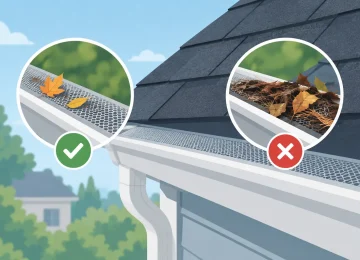
Gutter replacement can be a good time to consider gutter guards, especially for properties with mature trees or recurring debris buildup. Guards can reduce the amount of leaves, twigs, and roof debris entering the gutter, helping water keep moving during storms. They can also reduce how often the system needs cleaning.
There is a trade-off: no guard eliminates the need for maintenance entirely. Fine debris can still collect on top of certain guard styles, and downspouts still need to remain clear. The best choice depends on the surrounding trees, roof material, gutter design, and the owner’s maintenance preferences.
For many properties, pairing quality guards with periodic cleaning support provides the most practical balance. It helps protect the investment in the new gutter system without creating unrealistic expectations about maintenance.
Protect the Property Before Water Finds Another Way In
Waiting until water reaches the basement, stains the siding, or washes out a planting bed usually means the drainage problem has been developing for some time. A timely replacement can prevent repeated exposure from becoming a more expensive repair involving fascia, roofing, masonry, or foundation areas.
If you are seeing overflow, leaks, sagging, or water collecting near the building, request a professional gutter evaluation. The right replacement should leave you with more than a cleaner roofline. It should give you confidence the next heavy storm is being managed where it belongs.
Leave a Reply