
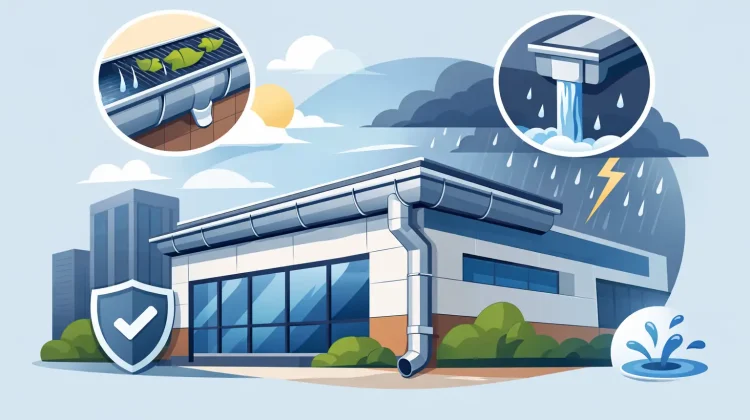
A commercial gutter system has to do more than look clean along a roof edge. It must move a large volume of water away from the building during heavy rain, protect the foundation and exterior, and hold up under years of weather exposure. The best commercial gutter systems are designed around the property itself – its roof area, drainage challenges, building materials, and the amount of water the system needs to manage.
For commercial property owners and managers in New Jersey and Staten Island, that planning matters. A gutter that is undersized, poorly pitched, or connected to inadequate downspouts can overflow during the exact storm when the building needs protection most. Water can stain masonry, damage siding, wash out landscaping, create slippery walkways, and contribute to foundation moisture problems.
What Makes a Commercial Gutter System Effective?
The right system starts with capacity. Commercial roofs often collect far more runoff than a typical single-family home, especially on office buildings, mixed-use properties, warehouses, multifamily buildings, and facilities with broad or low-slope roof sections. The gutter profile, width, downspout size, and number of outlets must work together to carry that water safely away.
Material also matters, but it is not the only decision. A heavy-duty gutter made from the right metal can still fail if it is fastened incorrectly, has poor slope, or discharges water too close to the building. Professional installation focuses on the complete drainage path, from the roofline to the final discharge point.
Appearance is another practical consideration. Many commercial properties need gutters that complement the siding, fascia, masonry, trim, or roofing color. A properly selected system can protect the property without making the exterior look like an afterthought.
Best Commercial Gutter Systems by Property Need
There is no single gutter style that fits every commercial building. The best choice depends on roof size, architectural design, expected rainfall, exposure to debris, and budget for long-term maintenance.
Seamless Aluminum Gutters
Seamless aluminum gutters are a common choice for many commercial and mixed-use properties. They are lightweight, resistant to rust, available in many colors, and can be formed on site to fit long roof runs with fewer joints. Fewer seams generally mean fewer locations where leaks can develop over time.
Aluminum is a strong option for properties that need dependable drainage without the higher material cost of copper or heavier steel systems. For larger roofs, however, the gutter size and hanger spacing need to be selected carefully. Standard residential sizing may not provide enough capacity for a commercial application.
Box Gutters
Box gutters are often used on larger buildings or structures with substantial roof drainage needs. Their squared profile provides more water-carrying capacity than many standard K-style systems. They can be especially effective when a roof has long runs, broad surfaces, or concentrated water flow near valleys and roof transitions.
Because box gutters are frequently integrated into a building’s design, installation quality is especially critical. Improper pitch, weak support, or a poorly planned outlet can allow water to pool and create problems that are not visible until damage has already started. These systems should be evaluated as part of the overall roof and drainage design.
Heavy-Gauge Steel Gutters
Galvanized or coated steel gutters can be a practical choice where added strength is needed. Steel is more rigid than aluminum and may be suitable for buildings exposed to snow loads, ice, wind, or demanding conditions. The trade-off is that steel requires proper coating and maintenance to reduce the risk of corrosion over time.
For the right building, steel provides a durable, professional-looking solution. It is not always necessary for every property, though. If budget, appearance, and corrosion resistance are higher priorities, seamless aluminum may offer better long-term value.
Copper Gutters
Copper gutters are usually chosen for high-end commercial properties, historic buildings, churches, and distinctive architectural projects. They offer exceptional longevity and develop a natural patina as they age. Copper can be an excellent investment when the appearance of the property is a major consideration.
The higher initial cost makes copper less common on standard commercial buildings. It also requires experienced installation because material handling, soldered joints, expansion, and compatibility with nearby metals all affect performance. When specified correctly, copper is both a drainage system and an architectural feature.
Sizing Is Where Many Gutter Problems Begin
A gutter can look substantial and still be too small for the roof it serves. Proper sizing considers the square footage of the roof area draining into each section, roof pitch, valley locations, local rainfall intensity, and the number of available downspouts.
Six-inch gutters are often appropriate for larger roof areas, but some commercial projects require seven-inch gutters, oversized box gutters, or larger custom profiles. Downspouts must be sized accordingly. A larger gutter connected to undersized downspouts can still back up during heavy rain.
Downspout placement matters as much as size. Water should not have to travel an excessive distance through a gutter before reaching an outlet. Long runs may need multiple downspouts, particularly where roof valleys direct concentrated flow into one location. The goal is controlled movement of water, not simply collecting it at the roof edge.
Installation Details That Protect the Building
The best commercial gutter systems rely on careful installation, not just quality materials. Gutters need a consistent pitch so water flows toward the downspouts rather than standing in the trough. Even a small area of standing water can accelerate wear, attract debris, and place added strain on the system.
Secure fastening is equally important. Commercial gutters may carry significant weight during a storm, particularly when leaves, ice, or snow are present. Properly spaced hangers and solid attachment points help prevent sagging, pulling away from the fascia, and misalignment.
The discharge area should be part of the plan. Downspouts should direct water away from foundations, entrances, walkways, loading areas, and landscaped beds. Depending on the property, that may involve extensions, underground drainage connections, splash control, or coordinated site drainage. Sending water out of the gutter is only half the job if it pools beside the building afterward.
Gutter Guards Can Reduce Maintenance, Not Eliminate It
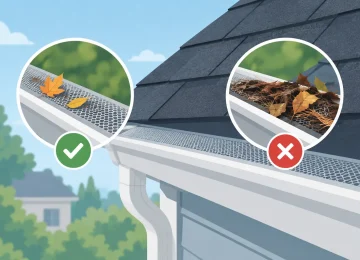
Commercial buildings surrounded by mature trees can collect leaves, seeds, pine needles, and roof grit quickly. Gutter guards can help reduce large debris buildup and keep water moving more freely through the system. They are especially useful on properties where access is difficult or where regular cleaning is disruptive to operations.
Still, no guard makes a system maintenance-free. Fine debris can collect on top of some guard styles, and outlets, downspouts, and underground drains should be checked periodically. The right guard should match the roof type, debris conditions, and gutter design rather than being treated as a one-size-fits-all add-on.
Signs Your Commercial Gutters Need Replacement
A repair may be enough when an isolated seam leaks or one downspout has been damaged. But repeated overflow, widespread corrosion, sagging sections, failing fasteners, or recurring leaks often point to a system that needs replacement or redesign.
Pay attention to stains beneath the roofline, deteriorating fascia, peeling exterior paint, soil erosion, puddles near foundations, and water entering lower-level spaces. These signs are often connected to poor drainage, even when the gutter issue is not immediately obvious from the ground.
If a system has been patched repeatedly without solving the source of the problem, replacement can be the more cost-effective choice. A properly sized and professionally installed system helps avoid the cycle of emergency repairs after every major storm.
Choosing a Commercial Gutter Contractor
Commercial gutter work should begin with an on-site assessment, not a guess based only on the building’s square footage. A qualified contractor should inspect roof lines, valleys, drainage paths, fascia condition, existing outlets, and areas where water has caused damage.
Ask whether the proposed system is sized for your roof’s runoff, how the downspouts will be placed, what material and gauge will be used, and how water will be directed away from the building. Licensed and insured service, clear communication, workmanship standards, and product warranty details should all be part of the decision.
Cavallari Gutters helps property owners and managers in New Jersey and Staten Island evaluate drainage concerns and build gutter systems around real site conditions. The right system is one that protects your building in the next hard rain and continues doing its job long after the installation is complete. If water is overflowing, staining the exterior, or collecting near your foundation, a professional gutter assessment can give you a clear path forward.


Leave a Reply