
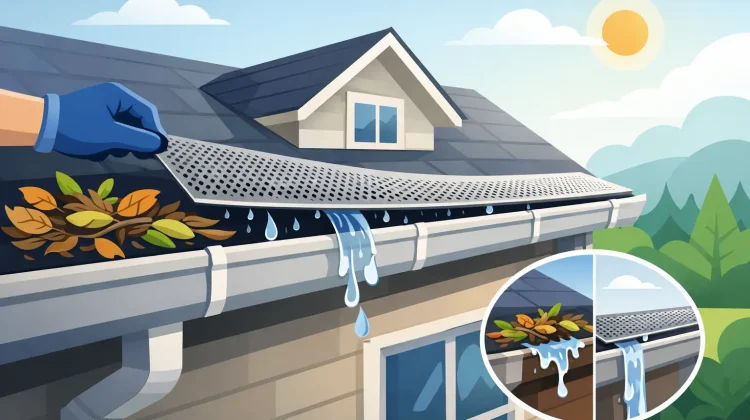
If you have ever pulled handfuls of wet leaves out of a gutter while balancing on a ladder, you have probably asked yourself whether gutter guards worth it is even a real question. For many property owners, it is. The right gutter guard can cut down on debris buildup, reduce how often your gutters need attention, and help water move where it is supposed to go. But they are not a magic fix, and they are not the right answer for every building.
That is the part many sales pitches skip. Gutter guards can be a smart investment, but only when the gutter system is properly sized, correctly pitched, and in sound condition to begin with. If the gutters are loose, leaking, undersized, or already struggling during heavy rain, adding a guard on top will not solve the real problem.
Are gutter guards worth it in real-world conditions?
In practical terms, gutter guards are often worth it when your property deals with recurring debris, difficult roof access, or frequent maintenance needs. Homes surrounded by trees usually benefit the most. Pine needles, seed pods, oak leaves, maple helicopters, and small twigs can all collect fast, especially in New Jersey and Staten Island where seasonal debris can be constant.
For a one-story home with minimal tree cover, the value may be more modest. You may still want guards for convenience, but the savings in maintenance may not be as dramatic. On a taller home, a multi-unit building, or a property with sections that are hard to reach safely, gutter guards often make more sense because they reduce how often someone has to get up there in the first place.
The key is to think of gutter guards as a maintenance reducer, not a maintenance eliminator. They are designed to limit the amount of debris entering the gutter trough. They do not guarantee a debris-free system forever.
What gutter guards actually do
A good gutter guard creates a barrier over the gutter opening while still allowing rainwater to enter. That barrier helps keep out leaves and larger debris that would otherwise sit in the gutter, hold moisture, and eventually lead to clogs.
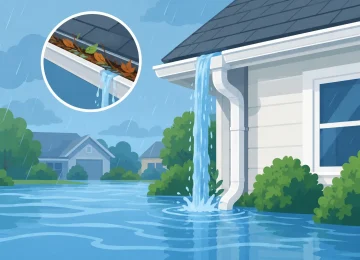
When that happens, the benefits are straightforward. Water is less likely to overflow near the foundation. The fascia is less exposed to standing moisture. Landscaping takes less of a beating from runoff. During freezing weather, there is also less chance of packed debris trapping water in ways that add weight and strain to the system.
For commercial buildings and mixed-use properties, guards can also support a more predictable maintenance schedule. Property managers often prefer anything that reduces surprise clogs and emergency cleanings, especially in high-traffic or hard-to-access areas.
Where gutter guards help the most
The strongest case for gutter guards usually comes down to a few conditions. One is heavy tree coverage. Another is recurring overflow caused by debris collecting near downspouts. A third is safety. If gutter cleaning on your property requires long ladder work, steep rooflines, or awkward access points, reducing service frequency has real value.
Age and occupancy matter too. If you own a rental property, a second home, or a commercial building where routine visual checks do not happen often, guards can help lower the risk of a small clog turning into a bigger drainage problem.
This is also why professional installation matters. Even the best guard performs poorly if it is paired with a gutter system that was not installed to drain correctly. Water management is a system, not a single product.
When gutter guards may not be worth it
There are situations where gutter guards are oversold. If your gutters rarely collect debris and are easy to clean, the return on investment may be limited. Some homeowners simply do not need them.
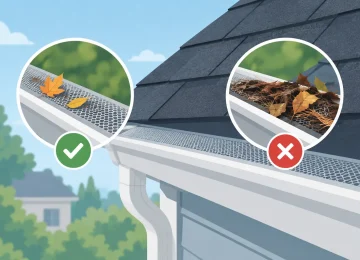
They can also disappoint when the wrong style is chosen for the environment. Fine mesh may perform well in one setting but struggle if roof grit and small particles build up on top. Reverse-curve products may work in some applications but can be less effective with certain debris patterns or roof runoff speeds. Cheap snap-in guards sold as a quick fix often fail early, sag, or create more cleaning headaches than they prevent.
And again, gutter guards do not fix underlying defects. If water is overshooting the gutter during storms, you may have a sizing issue. If gutters are separating at seams or pulling from the fascia, that needs repair. If downspouts are undersized or poorly placed, guards will not correct drainage capacity.
The trade-off most homeowners should understand
The biggest misunderstanding is this: people hear “gutter guards” and assume “no more gutter cleaning.” That is rarely how it works.
Most gutter guards reduce the frequency and severity of cleanings. They do not eliminate maintenance entirely. Debris can still collect on top of the guard. Fine material can still enter in some cases. Downspouts still need to be checked. On certain homes, especially under heavy tree cover, periodic service remains part of the picture.
That does not make gutter guards a bad investment. It just means expectations should be realistic. A well-installed system should lower maintenance, improve water flow consistency, and reduce clog-related issues. That is different from promising zero upkeep forever.
How to tell if your home is a good candidate
If you are deciding whether gutter guards are worth it, start with the condition of your current system. Are the gutters securely fastened? Do they drain properly during heavy rain? Are there signs of overflow, standing water, staining, or erosion below the roofline? If so, the first step is not choosing a guard. It is correcting the system.
Then consider your debris load. If you clean your gutters more than once or twice a year because of nearby trees, guards are more likely to offer clear value. If you have experienced clogs at downspout outlets, water spilling over entryways, or plant growth in the gutters, that is another sign they may help.
It also helps to think in terms of long-term property protection. Water that escapes the gutter system does not just disappear. It ends up against siding, around foundations, near walkways, and in landscaping beds. Over time, poor drainage can contribute to rot, staining, erosion, and avoidable repair costs.
Choosing the right guard matters as much as choosing to install one
Not all gutter guards are built the same, and not all homes need the same type. Roof pitch, shingle style, gutter size, tree coverage, and rainfall patterns all matter. So does the quality of the installation.
A proper assessment should look at more than the gutter opening. It should evaluate the entire drainage setup, including pitch, hanger spacing, downspout placement, and whether the current gutters are the right size for the roof area they serve. In many cases, homeowners get better results when gutter guard installation is paired with cleaning support or system adjustments rather than treated as a stand-alone add-on.
That is especially true on older homes and commercial properties where drainage problems may have built up over time. A specialized gutter contractor will usually spot issues a general exterior company may miss.
Cost versus value
The price of gutter guards varies based on material, design, roofline complexity, and whether repairs are needed first. So the better question is not just what they cost, but what they help you avoid.
If guards reduce service calls, lower clog risk, and protect against water damage, many property owners see that as worthwhile. If the home rarely has debris problems and the gutters are easy to maintain, the value calculation shifts.
That is why honest recommendations matter. A dependable contractor should be willing to say when gutter guards make sense and when a standard cleaning plan may be enough. At Cavallari Gutters, that practical approach is part of doing the job right. The goal is not to sell a shortcut. It is to improve drainage performance and protect the property over time.
So, are gutter guards worth it?
For many homes and buildings, yes, especially when debris is a constant problem and the gutter system is otherwise in good shape. They can reduce maintenance, improve drainage reliability, and help protect the parts of your property that suffer when water goes where it should not.
But they are worth it only when they are matched to the property, installed correctly, and backed by realistic expectations. If you are considering gutter guards, the smartest next step is not guessing from the ground. It is having the full gutter system evaluated so the recommendation fits the building, the environment, and the way water actually moves across your roof.
Leave a Reply