
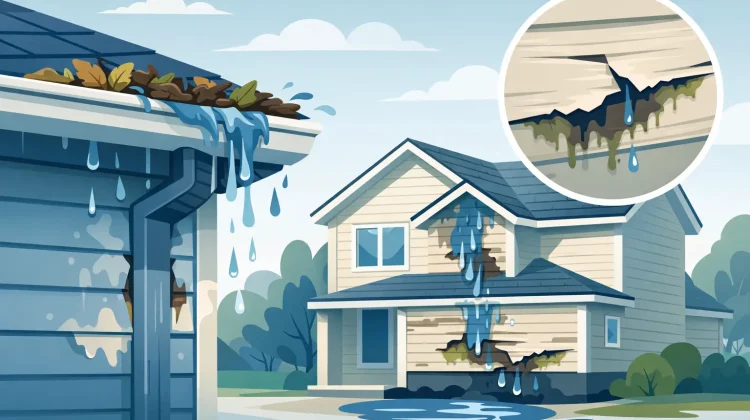
A heavy New Jersey rainstorm can reveal a gutter problem fast: water spills over the front edge, runs down the exterior wall, and leaves a dirty streak beneath the roofline. So, can clogged gutters damage siding? Yes. What begins as trapped leaves, roof grit, and standing water can lead to staining, warped panels, loose trim, rot behind the siding, and moisture problems that are far more expensive than a routine gutter cleaning.
Siding is designed to handle normal weather exposure. It is not designed to receive repeated sheets of water pouring over the same area every time it rains. Keeping gutters clear is one of the most practical ways to protect the exterior of a home or commercial property.
How Clogged Gutters Damage Siding
A working gutter system captures rainwater at the roof edge and directs it safely to downspouts. When a gutter or downspout is clogged, that path is interrupted. Water backs up until it flows over the gutter, often onto the fascia, soffit, siding, windows, and ground below.
The damage depends on the siding material, the volume of water, and how long the problem has been happening. A single overflow during an extreme storm may leave little more than a temporary mark. Repeated overflow is different. Persistent moisture can work its way into seams, behind trim boards, and into the wall assembly.
Water stains and discoloration
The earliest sign is often a vertical stain below the gutter line. Overflowing water carries dirt, asphalt shingle granules, algae, and debris from the roof. As the water dries, those materials remain on the siding.
Vinyl siding may develop dark streaks, green algae growth, or mildew. Painted wood and fiber cement can show water marks or peeling paint. Brick and stone can develop white mineral deposits called efflorescence. Cleaning may improve the appearance, but the stains will return if the gutter overflow is not corrected.
Warping, cracking, and loose panels
Vinyl siding is durable, but it can be affected by ongoing moisture and the movement of water behind its panels. Water entering around improperly sealed trim or openings can contribute to loose sections, distorted edges, and hidden moisture at the sheathing.
Wood siding is more vulnerable. Repeated wetting and drying causes wood to expand and contract, which can crack paint, split boards, and create openings for more water. If the wood stays wet, rot can develop. Fiber cement resists rot better than wood, but it still relies on proper installation, paint maintenance, and dry wall components behind it.
Rot behind the siding
The most serious damage is often not visible from the ground. Overflow can soak fascia boards and run behind siding near the roofline, windows, and corner trim. Over time, damp sheathing and framing can deteriorate.
This is why a small area of peeling paint or a soft piece of trim should not be ignored. It may be a surface-level repair, or it may point to a drainage issue that has been feeding water into the wall for months. The sooner the source is addressed, the better the chance of limiting the repair to gutters, trim, and minor siding work.
Signs Your Gutters Are Affecting the Exterior
You do not need to wait for obvious siding failure to act. After a steady rain, look from a safe distance for water cascading over gutter edges or down the face of the building. Overflow at one spot can indicate debris buildup, a blocked downspout, an improperly pitched gutter, or a gutter that is undersized for the roof area.
Other warning signs include recurring black or green streaks below the gutters, bubbling or peeling paint, soft fascia boards, mildew near upper exterior walls, and siding that appears loose near corners or rooflines. Puddles close to the foundation are another concern. The same clogged gutter that damages siding can also send water toward basements, walkways, landscaping, and foundations.
For commercial properties, check roof drainage routes around entrances, loading areas, exterior walls, and lower roof transitions. A blockage on a larger system can move a surprising amount of water quickly, creating both property damage and slip hazards.
Why Downspouts Matter as Much as Gutters
A gutter can look clear from the ground while the system still fails during a storm. Downspouts commonly clog where they connect to the gutter, at elbows, or near the bottom outlet. Water may back up and spill out several feet away from the actual blockage.
Downspout placement also matters. Water should discharge far enough from the building that it does not saturate the soil beside the foundation or splash continuously against lower siding. Extensions, underground drainage connections, and proper grading may be part of the solution, depending on the property.
The goal is not simply to get water out of the gutter. The goal is to move it away from the building in a controlled, reliable way.
Can Gutter Guards Prevent Siding Damage?
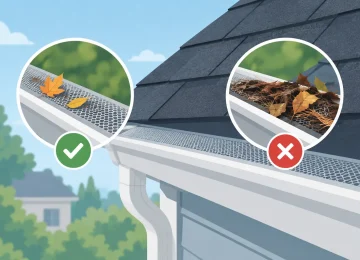
Gutter guards can reduce the amount of leaves and larger debris entering a gutter, which may lower the risk of clogs and overflow. They are especially helpful around mature trees or on properties where safe, regular cleaning is difficult. However, guards are not a maintenance-free promise.
Fine debris, roof grit, seeds, and shingle particles can still collect over time. Some guard types can also allow debris to sit on top, requiring occasional brushing or cleaning. The best choice depends on roof pitch, nearby trees, gutter condition, and how water flows off the roof during hard rain.
A properly selected and installed guard system, paired with periodic inspection and cleaning support, can make maintenance more manageable. It should complement a sound gutter system, not cover up gutters that are leaking, pulling away from the fascia, or incorrectly pitched.
When Cleaning Is Enough and When Repair Is Needed
If gutters are structurally sound and the problem is limited to leaves or a blocked downspout, a thorough cleaning may restore proper flow. It is wise to have the system checked after cleaning, since accumulated debris can hide loose hangers, seam leaks, and corrosion.
Repair or replacement may be the better long-term answer when gutters overflow even while clean, sag between hangers, separate at seams, or fail to carry water to the downspouts. In some cases, the gutter is too small for the roof area or has too few downspouts for the amount of runoff it receives. Homes with steep rooflines, large roof planes, or frequent heavy rainfall may need a better-designed drainage system rather than repeated spot fixes.
A gutter specialist can assess the full water path: roof edge, gutter size, pitch, outlets, downspouts, and discharge location. That approach matters because replacing a stained piece of siding without correcting the overflow only treats the symptom.
Protecting Siding Before the Next Storm
The best time to address a gutter issue is before water is visibly pouring over the edge. Plan cleaning around the seasons when leaves, twigs, and seed pods are most likely to collect. Many properties benefit from service in late fall and again in spring, though heavily wooded lots may require additional attention.
Avoid climbing a ladder in wet conditions or trying to force a blockage from a height. Gutters can be slippery, and leaning on them can cause damage or injury. A professional inspection is particularly worthwhile if you have noticed recurring overflow, staining near the roofline, or concerns about hidden wood rot.
For homeowners and property managers in New Jersey and Staten Island, Cavallari Gutters can evaluate whether cleaning, repairs, gutter guards, or a replacement system will provide the right level of protection. Clear communication and a properly functioning drainage system help preserve the siding, roofline, foundation, and appearance of the property.
If rainwater is leaving marks on your exterior walls, treat it as an early warning rather than a cosmetic nuisance. Addressing the gutter problem now can help keep a manageable maintenance task from becoming a siding and structural repair project later.


Leave a Reply