
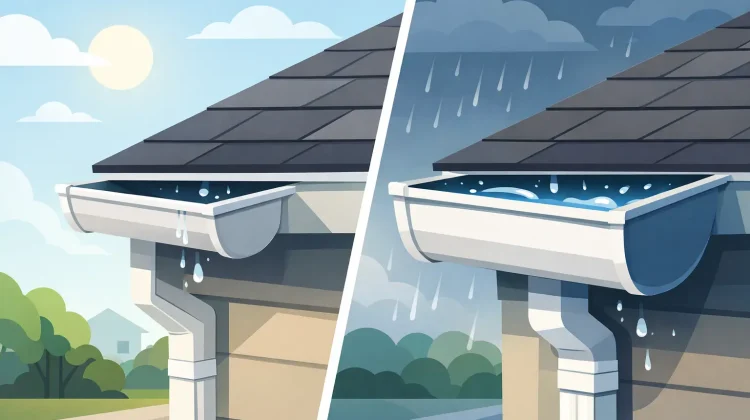
A gutter can look perfectly normal on a clear day and still be undersized for the roof above it. The real test comes during a hard New Jersey or Staten Island downpour, when oversized versus standard gutters can mean the difference between controlled drainage and water spilling over the edge near your foundation, siding, and walkways.
For many properties, standard gutters are the right fit. For others, a larger system is a practical investment in better water control. The best choice depends on more than the square footage of the home. Roof shape, pitch, drainage layout, downspout placement, surrounding trees, and local weather all affect how much water the system needs to handle.
What Is a Standard Gutter System?
Most residential properties use 5-inch K-style gutters. This is commonly considered the standard residential size because it provides dependable drainage for many average-sized roofs without changing the appearance of the roofline too much. Standard gutters are available in several materials and colors, allowing the system to complement the exterior while moving roof runoff away from the building.
A properly installed 5-inch system can perform very well when it has the right pitch, securely fastened hangers, properly sized downspouts, and clear outlets. Problems often blamed on gutter size are sometimes caused by poor installation, clogged downspouts, sagging sections, or a drainage plan that sends too much water toward one area.
That said, a standard gutter has a capacity limit. When a large or steep roof funnels water into a relatively short section of gutter, intense rainfall can exceed that capacity. Water may overflow even when the gutter is clean and in good condition.
Oversized Versus Standard Gutters: The Key Difference
Oversized gutters are generally 6-inch K-style gutters or larger half-round systems designed to carry more water. A 6-inch K-style gutter has noticeably more capacity than a 5-inch version, but the visual difference is often modest from ground level. For many homeowners, that extra capacity offers a cleaner solution than repeatedly addressing overflow after major storms.
The larger gutter should typically be paired with appropriately sized downspouts. This matters because water can only leave the gutter as quickly as the downspouts allow. Installing a larger trough without considering the outlet size and number of downspouts may limit the benefit of the upgrade.
Oversized systems usually cost more because they use more material and may require larger downspouts, additional outlets, or adjustments to the drainage layout. However, the added cost can be justified when it helps protect a foundation, prevents water from staining siding, reduces erosion near landscaping, or stops runoff from pooling near entrances and paved areas.
When Standard Gutters Are Usually Enough
A standard-size system is often a sound choice for a one-story or two-story home with a typical roof design, moderate pitch, and manageable drainage area. If the roof does not concentrate large volumes of water into valleys or long runs, 5-inch gutters can offer effective, attractive protection.
Standard gutters may also make sense when an existing system is being replaced and has performed well over the years. If the current gutter size is not overflowing, the downspouts are well placed, and the primary issue is age, leaks, loose fasteners, or damaged sections, there may be no need to increase the size.
Installation quality remains central. Gutters must be pitched correctly so water travels toward the downspouts rather than standing in the channel. They also need secure fastening along the fascia, sealed joints where appropriate, and discharge locations that direct water away from the structure. A well-designed standard system will outperform a poorly planned oversized one.
Signs Your Property May Need Oversized Gutters
Some buildings place heavier demands on their gutters than others. The most common reason to consider 6-inch gutters is persistent overflow during hard rain despite regular cleaning and a system that is otherwise in good repair.
Large roof areas are an obvious factor, but roof geometry matters just as much. A steep roof sheds water faster than a low-slope roof. Valleys collect runoff from multiple roof planes and release it into one concentrated point. Long gutter runs can also carry a large volume of water before it reaches an outlet. On a commercial property or a large residential building, these conditions can quickly overwhelm a standard system.
You may also benefit from an oversized design if water regularly rushes over entryways, patios, driveways, or planting beds. Besides being inconvenient, this runoff can wash away mulch and soil, create slippery surfaces, and contribute to foundation moisture concerns. Repeated splashback can leave marks on siding and accelerate wear near lower exterior walls.
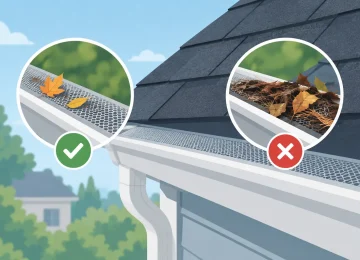
Heavy tree cover does not automatically require larger gutters, but it deserves attention. Leaves, needles, seed pods, and roof grit reduce the open space available for water. Gutter guards can help limit debris entry, but they do not replace proper sizing or occasional cleaning support. The system still needs enough capacity to manage the water reaching it.
Downspouts Are Part of the Decision
Gutter sizing should never be considered separately from downspout sizing and placement. Downspouts are the exit route for roof runoff. If too few downspouts serve a long gutter run, water may back up during heavy rain, even if the gutter itself is oversized.
A professional assessment looks at where roof water collects, how far it must travel through the gutter, and where it can safely discharge at ground level. In some cases, adding a downspout or repositioning an outlet solves the problem more effectively than replacing every gutter with a larger size. In other cases, the right recommendation is a larger gutter paired with larger or additional downspouts.
The discharge point also matters. Water should be guided away from the foundation and areas where it can create erosion or ponding. A gutter system is only as effective as its complete path from roofline to safe drainage location.
Appearance, Materials, and Long-Term Value
Homeowners sometimes worry that oversized gutters will look too large for the house. On many properties, 6-inch K-style gutters still present a clean, proportionate appearance, particularly on larger homes or homes with substantial rooflines. Selecting a color that coordinates with trim or fascia can help the system blend into the exterior.
Material choice also affects durability and appearance. Seamless aluminum is a popular residential option because it is lightweight, available in many colors, and minimizes the number of joints along a run. Commercial buildings and certain architectural styles may call for a different approach based on their drainage needs and exterior design.
The goal is not simply to install the largest gutter available. Oversizing without a reason can add expense without meaningful performance gains. Undersizing, on the other hand, can leave the property exposed to recurring overflow and the repair costs that follow. A properly matched system offers the best long-term value because it handles expected rainfall without creating unnecessary visual or budget concerns.
Why a Site Assessment Matters
Online gutter charts can provide a starting point, but they cannot see the conditions that make one property different from the next. Roof valleys, chimney sections, dormers, uneven fascia, prior installation issues, and grading around the building all influence the right recommendation.
A qualified gutter contractor should inspect the roofline, identify high-volume drainage areas, evaluate existing overflow patterns, and discuss whether cleaning, repairs, guards, new downspouts, or a full replacement will provide the most practical result. This approach avoids treating every water problem with the same product.
Cavallari Gutters helps property owners throughout New Jersey and Staten Island choose drainage systems based on the building’s real requirements, not a one-size-fits-all assumption. Licensed, insured workmanship and clear communication matter because gutters protect far more than the edge of a roof.
If your gutters overflow only during the heaviest storms, do not assume the issue is something you simply have to live with. A careful evaluation can determine whether standard gutters with better drainage planning will do the job or whether added capacity is the smarter way to protect your property for years ahead.


Leave a Reply