
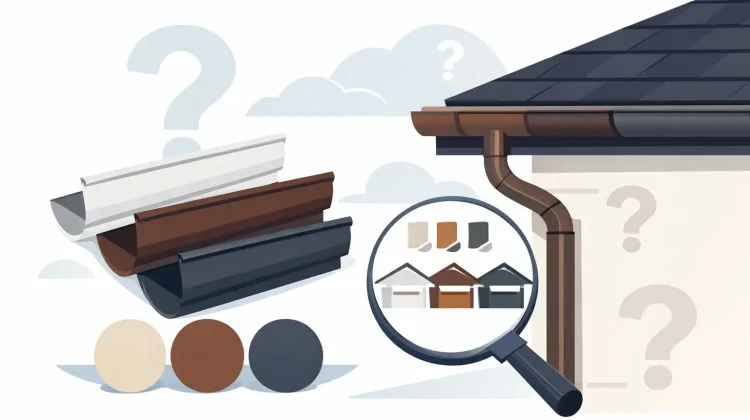
A new gutter system can protect your roofline, foundation, siding, and landscaping for years, but many property owners get stuck on one question: what color gutters should I choose? It sounds like a simple design decision until you realize the wrong color can make gutters stand out too much, clash with the exterior, or look dated long before the system wears out.
The good news is that there is usually a clear answer once you look at the home as a whole. Gutter color should support the appearance of the property without taking attention away from it, and it should still make sense for maintenance, resale, and long-term curb appeal.
What color gutters should I choose for the best overall look?
For most homes, the safest approach is to match the gutters to the trim, fascia, or another consistent accent color on the exterior. That keeps the system looking intentional and helps it blend into the roofline instead of calling attention to itself. On many homes, white, black, bronze, almond, and brown remain popular because they work with a wide range of siding and roofing combinations.
That said, there is no single best color for every property. A gutter color that looks right on a white colonial in New Jersey may not be the right fit for a brick mixed-use building in Staten Island. The right choice depends on what you want the gutters to do visually. Some owners want them to disappear. Others want a sharper, more defined trim line.
If you are choosing for a commercial property, the same principle applies. Most owners and managers prefer a clean, coordinated look that supports the building facade without making drainage components the focal point.
Start with the fascia and trim
If you want the easiest and most reliable rule, look at the fascia board and trim color first. Gutters run along the roof edge, so matching that area usually creates the most natural appearance. When gutters and fascia are close in color, the system tends to look built in rather than added on later.
White gutters are common for that reason. They pair easily with white trim and work on many vinyl-sided homes. But white is not always the best choice. On darker homes, white gutters can create a strong outline around the roofline. Some owners like that contrast, while others feel it makes the system too noticeable.
Black or dark bronze gutters have become more common because they can look clean and tailored, especially on homes with black windows, dark shutters, or modern exterior finishes. The trade-off is that dark gutters will stand out more on lighter trim unless that contrast is part of the design.
Should gutters match the roof or siding?
This is where the answer often depends on the look of the house.
If the roof is the strongest visual feature, matching or closely coordinating with the roof color can help the gutters recede. This works well when the gutters sit close to the eaves and you want the roofline to feel continuous. It can be especially effective with darker asphalt shingles, metal roofing, and homes with minimal trim detail.
If the siding defines the house more than the roof, matching the siding can make the gutters feel less prominent from the street. That approach can work well on simple facades where you want a cleaner, less broken-up appearance.
In practice, though, many of the best-looking installations tie the gutters to the trim rather than the roof or siding exactly. Trim usually acts as the visual bridge between those surfaces. Matching it often gives you the most balanced result.
Think about your home’s style
Traditional homes usually benefit from classic, understated gutter colors. White, cream, beige, brown, and bronze tend to age well and fit naturally with colonial, cape, ranch, and tudor-style exteriors. These colors do not compete with the architecture.
Modern homes can handle more contrast. Black gutters on light siding or metal-accented exteriors can create a crisp edge that feels intentional and current. Gray can also work well on contemporary homes, especially when the windows, roofing, or soffits share similar tones.
Brick homes deserve a little extra thought. Matching brick exactly is usually not possible, and trying too hard can look off. In many cases, bronze, dark brown, black, or a trim-matched neutral works better than a red-toned gutter. The goal is to support the exterior, not to force a color match that is never quite right.
Maintenance matters more than people expect
Color is not only about appearance. It also affects how clean the system looks between maintenance visits.
White and very light gutters can show dirt, mildew streaks, oxidation, and splash marks more quickly. That does not mean you should avoid them, especially if they are the right fit for the house, but you should know they may show wear sooner. On the other hand, very dark gutters can show dust, pollen, and fading over time, especially on sides of the building that get strong sun exposure.
Mid-tone neutrals often strike a good balance. Almond, clay, bronze, and certain browns can hide normal outdoor grime better than bright white or deep black. For busy property owners, that can be worth considering.
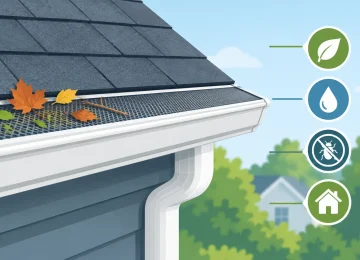
If you are also installing gutter guards, color still matters. Guards are there to improve performance and reduce debris buildup, but the visible parts of the system should still coordinate with the building. A good-looking system should also be a functional one.
Consider resale and long-term appeal
A gutter system is not a feature most buyers talk about first, but they notice when it looks off. A color that clashes with the siding, roof, or trim can make the entire exterior feel less polished. On the other hand, a well-matched gutter system supports curb appeal in a quiet way.
If you plan to stay in the property for a long time and love a bold contrast, that may be the right move for you. But if resale is a priority, neutral and coordinated choices are usually safer. You want something that looks current without tying the home to a short-term color trend.
This is one reason many owners avoid highly specific or unusual gutter colors unless the building design clearly calls for them. Standard neutrals tend to hold up better visually over time and are easier to work around if roofing or siding changes later.
What color gutters should I choose if I’m replacing only the gutters?
If your roof, siding, and trim are staying the same, choose a color that fits what is already there rather than what might be trendy right now. Partial exterior updates work best when they look integrated.
This is especially important on older homes and commercial properties where several exterior elements may already have weathering or established color variation. A perfect factory-fresh match may not exist, so the best choice is often the one that looks most natural from the curb, not the one that seems closest on a sample chip.
It also helps to look at the property in daylight from different angles. Colors can read very differently in shade, direct sun, and under tree cover.
A practical way to narrow it down
If you are deciding between several colors, start by eliminating anything that fights with your trim, fascia, windows, or roof. Then ask a simpler question: do you want the gutters to blend in or frame the roofline?
If you want them to blend in, stay close to the fascia or trim color. If you want a cleaner outline, choose a darker or more contrasting shade that still connects to another feature of the home, such as shutters, window frames, or roofing.
It also helps to keep the full system in mind. Downspouts should coordinate with the gutters, but they are even more visible against siding and corners. Sometimes a gutter color looks great at the roofline but creates downspouts that are too noticeable on the walls below. That is why experienced guidance matters. At Cavallari Gutters, color selection is part of making sure the finished system looks right and performs the way it should.
The best gutter color is the one that fits the whole property
The right gutter color should feel like it belongs on the building from day one. It should work with the roofline, the siding, the trim, and the level of maintenance you are comfortable with. Most of the time, that means choosing a reliable neutral that supports the exterior instead of trying to make the gutters a design statement.
If you are unsure, trust the wider view of the property rather than one isolated sample. Gutters are there to manage water and protect the structure, but when the color is chosen well, they also make the exterior look more finished, more consistent, and better cared for.

Leave a Reply