
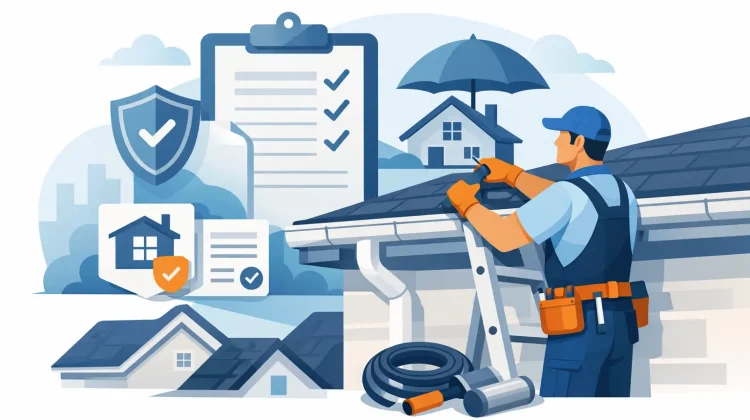
A gutter issue rarely stays a gutter issue for long. What starts as overflow at the roofline can turn into stained siding, washed-out landscaping, foundation water problems, and wood rot around fascia and soffits. That is why hiring a licensed insured gutter contractor matters more than many property owners realize. You are not just paying for gutters to be attached to a building. You are paying for water to be managed correctly, safely, and in a way that protects the property over time.
For homeowners and commercial property owners, the difference between a specialist and a general fixer often shows up after the next heavy rain. A system can look fine on installation day and still fail under real storm conditions if sizing, pitch, outlet placement, fastening, or drainage planning were handled poorly. Licensing and insurance help protect you legally and financially. Trade-specific experience helps protect the building itself.
What a licensed insured gutter contractor actually brings
The phrase gets used a lot in contractor advertising, but it should mean something concrete to the customer. A licensed insured gutter contractor is a company that operates with the proper credentials for its work and carries insurance coverage designed to protect both the business and the client if something goes wrong.
Licensing matters because it signals accountability. Requirements vary by location, but in general, licensing helps confirm that a contractor is operating as a legitimate business rather than as an unverified side operation. That does not guarantee perfect work, but it does create a clearer standard for professionalism and responsibility.
Insurance matters for a more immediate reason. Gutter work happens on ladders, along roof edges, near landscaping, siding, windows, walkways, and parked vehicles. If property damage or an on-site injury occurs and the contractor is not properly insured, the fallout can become the property owner’s problem. That risk is often underestimated until a claim has to be made.
Then there is the gutter-specific side of the work. Gutters are not a cosmetic add-on. They are part of the building’s water management system. A contractor focused on this trade understands how runoff volume, roof shape, fascia condition, downspout placement, drainage direction, and debris exposure affect long-term performance.
Why gutter specialization matters as much as licensing
A licensed company is a good start, but not every licensed contractor is a gutter specialist. That distinction matters.
A general exterior contractor may be able to replace a damaged section. But full system performance depends on details that are easy to miss if gutters are not a core service. The width of the gutter, the number of downspouts, the pitch, the hanger spacing, and the way water exits near the foundation all affect whether the system works in actual weather.
This is especially important on properties with recurring overflow, ice issues, clogs, or uneven roof drainage. In those cases, the problem is often not just old material. It may be poor design, undersized components, or an installation that never matched the structure. A true gutter contractor looks at the cause, not just the symptom.
For residential homes, that can mean matching the system to roofline complexity and curb appeal. For commercial properties, it may involve heavier water loads, larger roof spans, and more demanding maintenance planning. The right approach depends on the building.
How a licensed insured gutter contractor protects your investment
The biggest value is not the line item on the estimate. It is the reduction of future problems.
When gutters are installed or repaired correctly, they help protect siding, windows, trim, foundations, entries, and landscaping. They also reduce the chance of water pooling where it should not. On commercial sites, proper drainage can help limit slip hazards, facade staining, and ongoing maintenance issues around entrances and walkways.
When work is done poorly, the cost tends to spread. You may not only pay for a second gutter job. You may also pay for fascia repairs, repainting, masonry cleanup, drainage correction, or foundation-related work. That is why the cheapest estimate is not always the lowest-cost decision.
A properly insured contractor also adds a layer of protection that many customers do not think about until after an incident. If a ladder damages trim, a tool cracks glass, or an accident happens on site, insurance helps keep the situation from becoming a financial mess. That is part of what you are buying when you choose professionalism.
Signs you may be hiring the wrong company
Some warning signs are obvious, and others are easy to overlook when you just want the problem handled quickly.
If a contractor cannot clearly explain what is wrong with the existing gutter system, that is a concern. If the recommendation is immediate replacement without discussion of sizing, pitch, downspouts, fascia condition, or drainage path, that is also worth questioning. Good contractors explain the issue in plain terms.
Another red flag is vague paperwork. If the estimate does not spell out the scope of work, materials, color options, removal, cleanup, and warranty terms, misunderstandings become more likely. The same goes for contractors who are difficult to reach before the job starts. Communication usually does not improve once a deposit has been paid.
And of course, if licensing and insurance are mentioned but not backed up when requested, move carefully. A professional company should be ready to verify its credentials.
Questions worth asking before you book
Hiring a licensed insured gutter contractor should feel straightforward, not confusing. A few practical questions can tell you a lot.
Ask whether the contractor handles gutter work as a primary service or as one item among many. Ask what type and size of gutter system they recommend for your property and why. Ask how they plan to address drainage at the bottom of the downspouts, not just at the roof edge.
You should also ask about material options, color matching, warranties, cleanup, and whether repairs are realistic or replacement is the better long-term choice. Sometimes a repair makes perfect sense. Other times, patching an aging or poorly designed system just delays a larger expense.
For properties with frequent clogs, ask whether gutter guards make sense for your tree coverage and maintenance goals. Guards can reduce debris problems, but they are not one-size-fits-all and they do not eliminate every maintenance need. Honest contractors will explain both the benefits and the limits.
Licensed insured gutter contractor for repairs vs. replacement
Not every project needs a brand-new system. In many cases, a targeted repair is the right move. Loose hangers, separated joints, minor leaks, localized storm damage, or a damaged downspout can often be addressed without replacing everything.
That said, repairs only work when the existing system is still structurally worth saving. If the gutters are pulling away in multiple areas, rusting through, improperly pitched, chronically overflowing, or attached to deteriorated fascia, replacement may be the smarter investment. Spending money repeatedly on temporary fixes can add up fast.
This is where experience matters. A dependable contractor will not push replacement when a repair will do, and will not sell a repair when the system is already past that point. The answer depends on age, condition, and how well the current system fits the building’s drainage demands.
Why local experience makes a difference
Gutter performance is shaped by local weather, local building styles, and local maintenance realities. In places like New Jersey and Staten Island, heavy rain, seasonal debris, winter conditions, and a mix of residential and commercial property types create real demands on gutter systems.
A contractor familiar with the area is more likely to understand common drainage issues, typical roof designs, and the maintenance patterns that affect long-term performance. That practical knowledge helps when choosing system size, downspout placement, and guard options.
It also helps with service. Local companies depend on reputation, referrals, and follow-through. If they plan to keep serving the same neighborhoods, they have a stronger incentive to do the job right and stand behind it. That is one reason many property owners prefer a focused local specialist over a company passing through with a low quote.
Cavallari Gutters is built around that kind of service approach – clear communication, dependable workmanship, and gutter systems designed to protect the property rather than simply check a box.
Choosing confidence over guesswork
When you hire a gutter contractor, you are trusting someone with an important part of your building’s defense against water damage. That choice should be based on more than price alone. Licensing, insurance, trade knowledge, clear communication, and a solid scope of work all matter because they reduce risk and improve results.
If a company can explain the problem clearly, recommend the right fix for the structure, verify that it is properly licensed and insured, and stand behind the work, you are in a much better position. Gutters may not be the most glamorous part of a property, but when they fail, the damage gets expensive quickly. A careful hiring decision now can save a great deal of trouble after the next storm.


Leave a Reply